Continued from Part 1: Following the analysis of Peru’s anchovy quota, coastal El Niño and the effects on Ecuadorian shrimp feed and Chilean salmon feed, Part 2 examines practical strategies for reducing dependence on marine ingredients.
6. Commercially relevant alternative ingredients
The 2026 supply shock is accelerating the use of ingredients that had previously moved gradually through research and validation. They are becoming operational tools rather than optional diversification measures.
6.1 Rendered terrestrial animal by-products
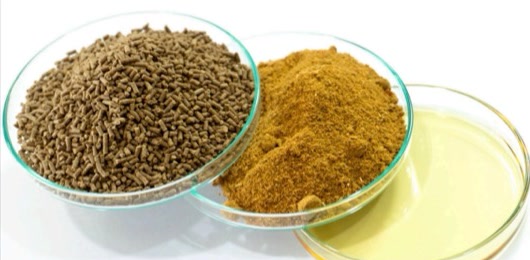
Poultry by-product meal, meat and bone meal, blood meal, hydrolysed feather meal and animal fats are among the most accessible protein and lipid alternatives. Trials indicate that properly balanced combinations can replace substantial fishmeal inclusion without materially reducing growth.
The strongest approach is not reliance on one substitute but a multi-protein blend. Complementary rendered proteins can balance amino-acid limitations, improve consistency and convert food-processing residues into valuable feed ingredients.
6.2 Antarctic krill: high functional value at low inclusion
Antarctic krill does not compete with fishmeal on volume or price. Its value lies in palatability, phospholipid-bound EPA and DHA, astaxanthin, free amino acids and other feeding stimulants. Inclusion at about 2–5% may help maintain feed intake and marine-lipid functionality in reduced-fishmeal diets.
The principal constraint is cost. However, when fishmeal approaches USD 2,500 per metric ton, the gap narrows and strengthens the economic case for krill as a functional ingredient rather than a bulk protein source.
6.3 A broader substitution ecosystem
- Insect meal: black soldier fly meal provides substantial protein, a useful amino-acid profile and lauric acid, with industrial capacity expanding in Europe, North America and Asia.
- Single-cell proteins and microalgae: scalable sources of protein, EPA and DHA that do not depend on wild fisheries.
- Legume proteins: soybean, lupin and pea meals are cost competitive but require control of anti-nutritional factors and species-specific inclusion limits.
- Aquaculture-processing by-products: shrimp-head meal, squid meal and salmon trimmings support both nutrition and circular-economy goals.
7. Global market dynamics and value-chain pressure
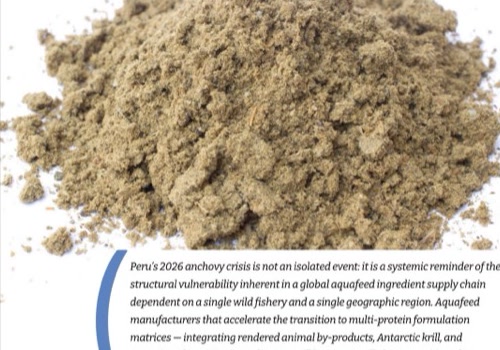
Wild-capture supply is constrained, so future marine-ingredient growth must increasingly come from better use of fishery and aquaculture processing by-products. The market also faces buyer concentration, scarcity of certified supply, unequal purchasing power and only partial relief from geographic diversification.
For feed manufacturers, resilience requires a deliberate multi-protein matrix that optimizes amino acids, lipid quality, palatability, digestibility, ingredient cost, local logistics and sustainability requirements at the same time.
8. Outlook and strategic recommendations
- Forward procurement and supplier diversification: secure contracts for marine ingredients and qualified terrestrial proteins across multiple origins.
- Ingredient validation: conduct species-specific feeding trials and model amino-acid balance and digestibility before large-scale substitution.
- Krill integration assessment: evaluate 2–5% inclusion for palatability and phospholipid omega-3 delivery.
- Cost scenario modelling: stress-test fishmeal prices above USD 2,000 per metric ton over a 12–18 month horizon, including reformulation costs.
- Scientific and regulatory monitoring: follow IMARPE biomass assessments, ENFEN El Niño reports and PRODUCE decisions.
Conclusion
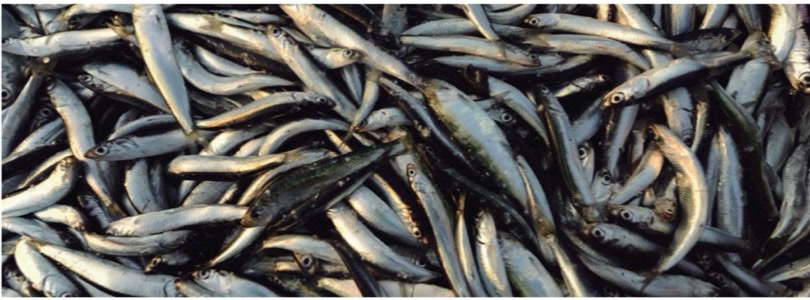
The combination of a record-low quota, prolonged fishing suspensions and historically high fishmeal prices makes Peru’s 2026 anchovy season a major stress test for the global aquafeed sector. The immediate commercial impact is concentrated in Ecuadorian shrimp feed and Chilean salmon feed, but the supply shock reaches every market that sources marine ingredients from Peru.
A resilient response requires more than reactive procurement. Feed manufacturers need to accelerate the controlled use of rendered animal by-products, deploy Antarctic krill strategically for functional performance and construct multi-source protein matrices capable of absorbing supply shocks without compromising animal performance.
Source: Aquaculture Magazine Editorial Team. Peru’s Anchovy Fishery Crisis: A Systemic Alert for the Global Aquaculture Feed Industry, June 2026. Fishing-suspension information was cross-checked against Peru’s Ministry of Production (PRODUCE).