
1. Understanding TPD
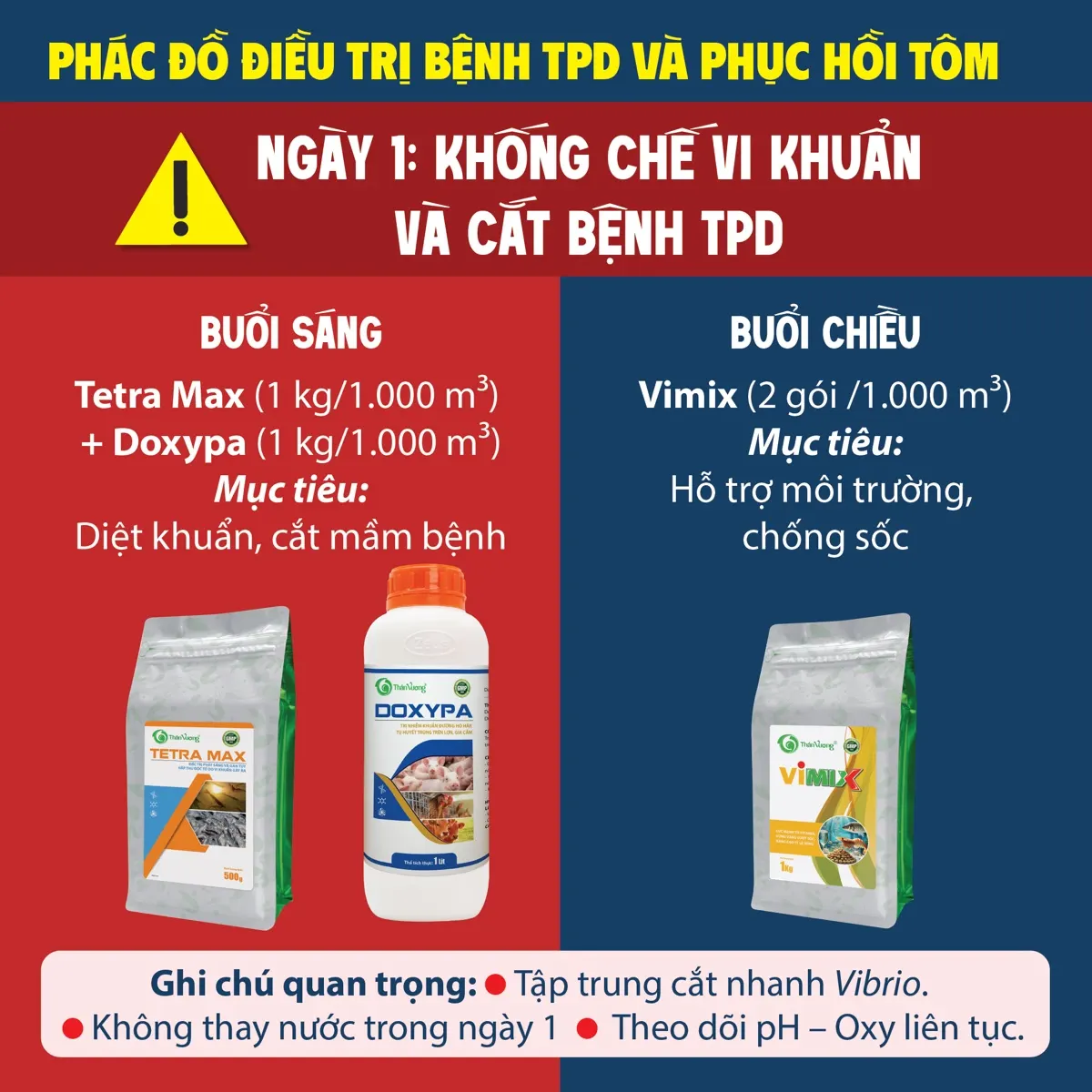
TPD is caused by Vibrio parahaemolyticus strain VP4-24 carrying toxin genes that erode the hepatopancreas and gut of post-larvae (PL5 – PL15). Mortality can hit 80 – 100% within days, especially dangerous in nursery. Symptoms: translucent PL, atrophied liver, empty gut, bottom-clinging.
Unlike EMS / AHPND, TPD doesn't visibly soften the shell — it attacks the digestive mucosa directly, so protocols must both kill pathogens and rebuild the mucosa.
2. Track 1 — Pathogen control
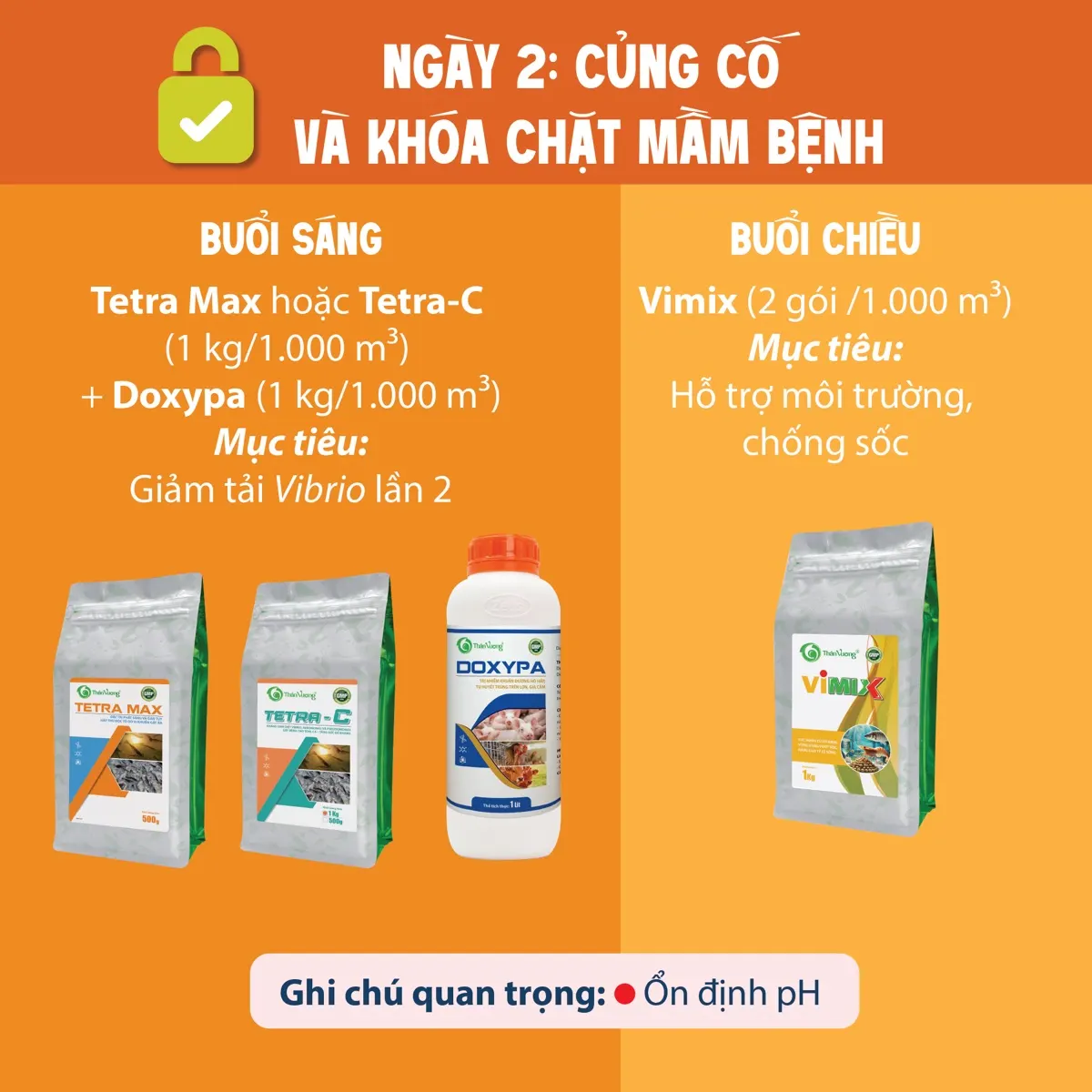
Goal: drop Vibrio pressure below the threshold within 48 hours.
- CLEVER 5 – 7 g/kg feed, 4 meals/day — disrupt Quorum Sensing and biofilm.
- PRO SUR 7 – 10 g/kg feed, 2 – 3 consecutive days — proven 2.3 cm inhibition zone against VP4-24 at 1.5%.
- Alternate Vibrio Clear or BKC water disinfection (24h apart) to break water-column biofilms.
- Boost aeration, hold DO ≥ 5 ppm.
3. Track 2 — Shrimp recovery
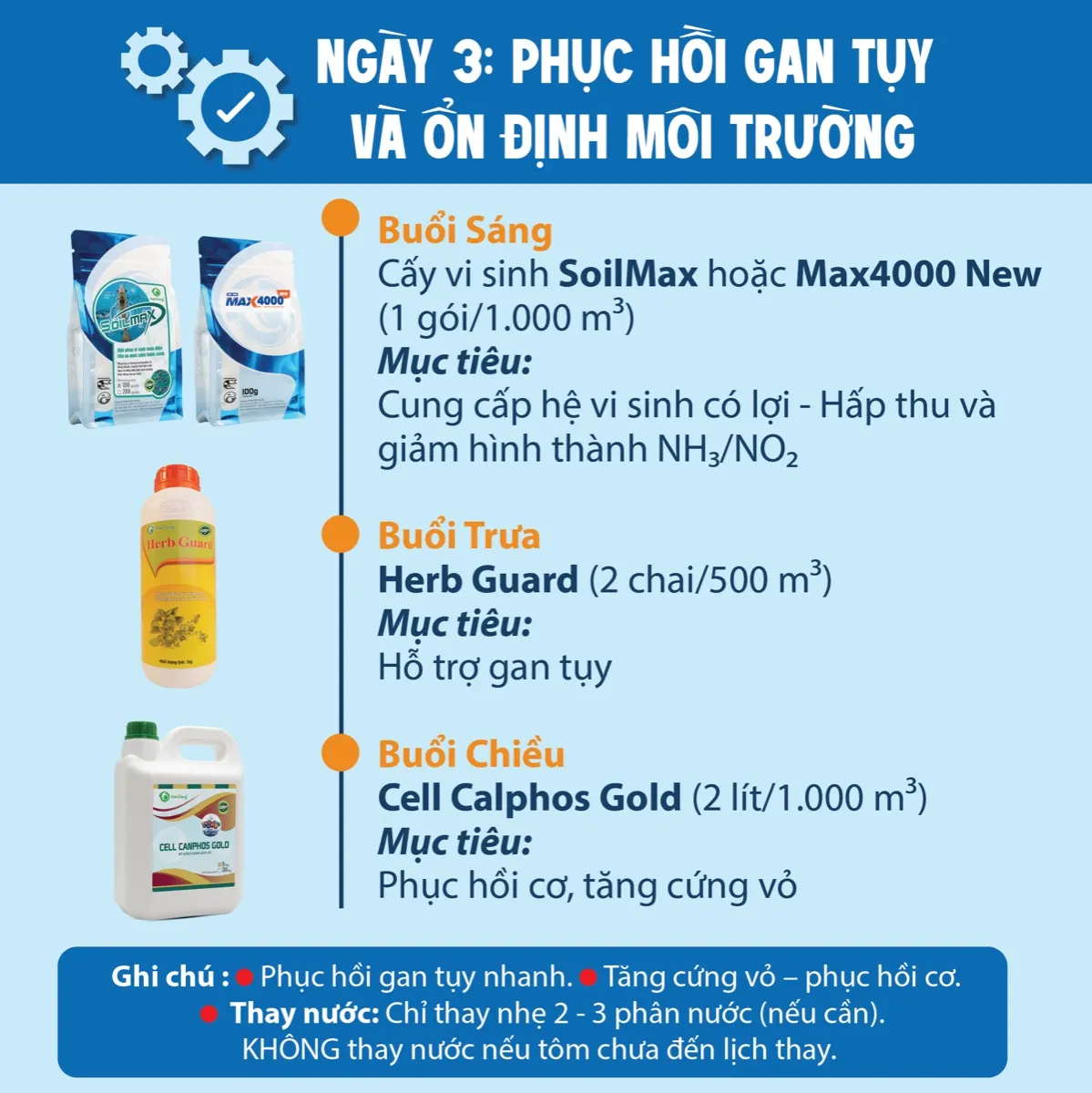
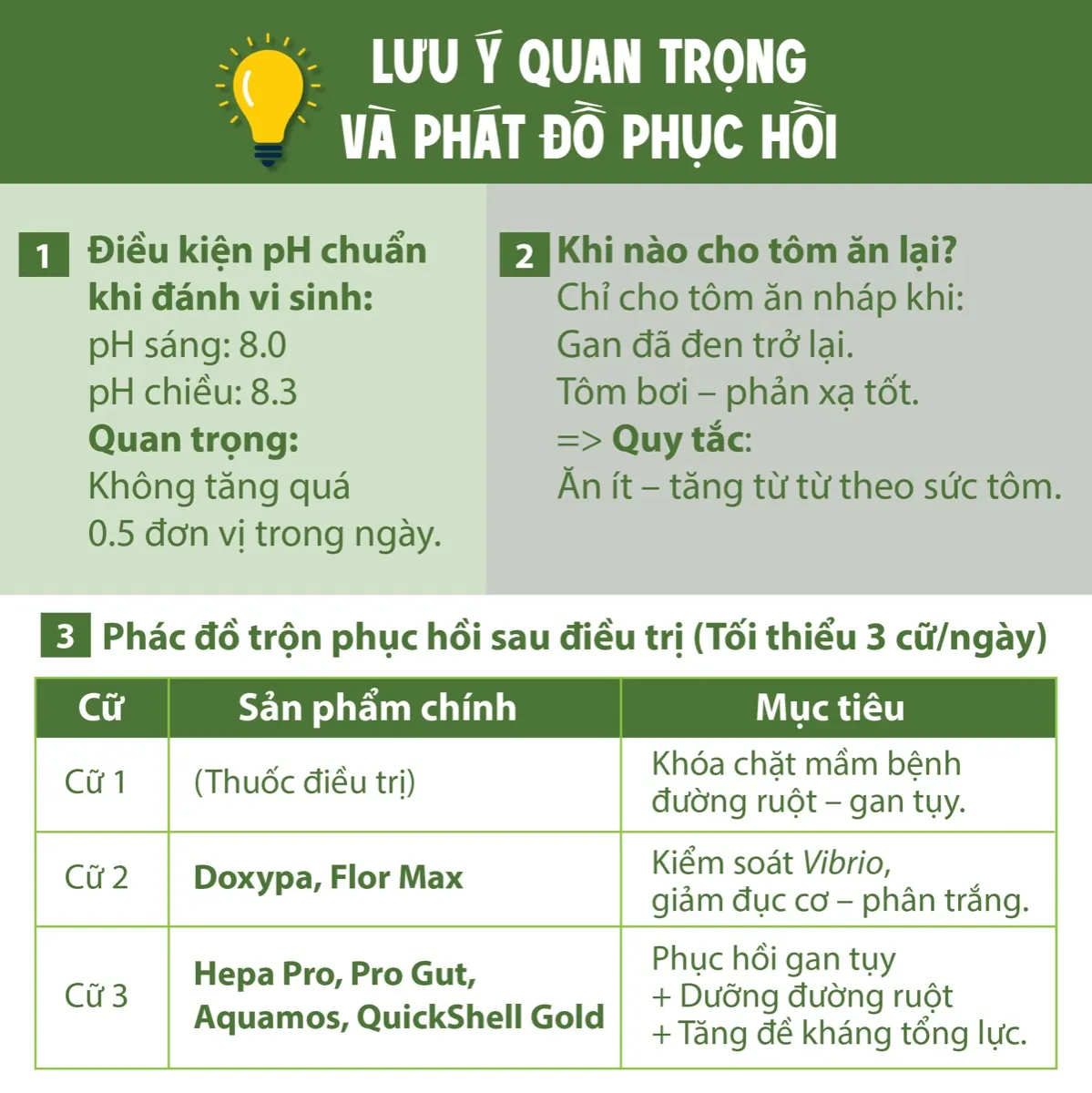
Goal: rebuild the hepatopancreas and gut mucosa in parallel with pathogen control.
- Alternate HEPA PRO 5 – 7 ml/kg + HERB GUARD 5 – 7 ml/kg every 2 – 3 days for liver recovery.
- AQUAMOS 3 – 5 g/kg feed — beta-glucan + inactive yeast for resistance.
- MIXBOOM + CALPHOS GRO minerals — even moulting during recovery.
- Cut feed ≥ 50% for the first 2 – 3 days to relieve liver load.
4. Prevent TPD at the hatchery
Prevention beats treatment — especially with TPD, since infected PL rarely recover:
- PCR test for V. parahaemolyticus + EHP for every PL batch before stocking.
- Disinfect equipment between nursery tanks.
- Seed SOILMAX / LALSEA BIOREM 2 – 3 days before stocking.
- Feed CLEVER 2 g/kg + AQUAMOS 3 g/kg from day 1 of nursery.
5. Cautions & monitoring
Monitor green Vibrio counts on TCBS daily for the first 7 days after applying the protocol. If mortality doesn't stop within 48 h, run urgent PCR to confirm the strain and escalate the protocol. Contact Than Vuong technicians for nearest lab support.
Original infographic series
Suspected TPD in your PL — don't wait overnight!
Call/Zalo Than Vuong technicians at 0867 957 568 the moment TPD is suspected. A rapid-response protocol arrives within 1 hour, plus nearest lab guidance.