Summary: Whiteleg shrimp is one of the leading export commodities in the aquaculture industry. However, white feces disease causes up to 30% mortality and reduces production growth. White feces disease is caused by the accumulation of certain Vibrio bacteria in the pond and shrimp gut. One of the local herbs with anticoagulant, antidiabetic, and antitoxic properties commonly used in human disease treatment is Physalis angulate, also known as ciplukan. The purpose of this study is to obtain ciplukan extract with antibacterial activity against Vibrio sp., and to analyze the antibacterial effect of ciplukan extract on Vibrio bacteria from whiteleg shrimp infected with white feces disease.
This study used descriptive and experimental methods with a randomized block design. Data collection was carried out through direct observation of the research subjects. The results showed that ciplukan plant extract contains antibacterial active compounds. Chloroform solvent extract had the best antibacterial activity with an inhibition zone of 13 mm on blue bacterial colonies and 16.5 mm on yellow bacterial colonies originating from shrimp infected with white feces disease. The best concentration provided the highest inhibition zone when 10% chloroform extract was obtained.
- Introduction
White feces disease usually appears during the farming period from 30 – 80 days, with signs of white shrimp feces floating on the water surface, reduced feed intake, slow growth, and gradual mortality.
White feces disease is closely related to the Vibrio spp. group. Bacterial species found in white feces disease include: V.parahaemolyticus (blue colony), V. fluvialis (yellow colony), V. Vulnificus (blue colony), V. mimicus (blue colony), V. alginolyticus, and V. cholera.
Recent efforts by shrimp farmers to control white feces disease involve controlling Vibrio growth in both pond water and shrimp. An alternative to many natural ingredients found around aquaculture and healthcare is Physalis angulate, also known as ciplukan.
Ciplukan is an herb commonly found in many tropical regions. Ciplukan contains saponins, flavonoids, steroids, polyphenols, alkaloids, etc. These natural components have good antimicrobial activities such as anticancer, anti-ulcer, and antibacterial properties. Based on several documents, it can be seen that the ciplukan plant has potential as a source of useful bioactive compounds.
The activities of P. angulate L oil extract are antibacterial and antifungal, with higher antifungal activity.
Goztok, F, Zengin, F (2013) found that P. peruviana fruit extract has antibacterial and antifungal properties, which can be used as an antimicrobial agent in the development of new drugs to control infectious diseases.
Methanol extract from P. angulate has antibacterial activity against Bacillus subtilis
Water and ethanol extracts from P. angulate inhibited the growth of Staphylococcus aureus and Escherichia coli
A study was conducted to test ciplukan plant extract against Vibrio spp in shrimp with white feces disease.
- Methods and Materials
The materials used in this study were ciplukan plants.
This study collected ethanol, chloroform, n-hexane, ethyl acetate, and Vibrio bacteria from whiteleg shrimp infected with white feces disease.
The methods used were descriptive and experimental with a Randomized Block Design. The descriptive method was used to find solvents that produce ciplukan extracts capable of inhibiting the growth of bacterial strains causing white feces disease. The experimental method was used to determine the antibacterial inhibition of the selected extract. The treatment method applied was to find the different concentrations of ciplukan extract, replicated 4 times with blue and yellow colony groups from the gut and from the pond water of shrimp infected with white feces disease.
The collected ciplukan plants were cleaned of dirt, separated into stems, leaves, and roots, and dried. After drying, they were ground using a grinder and stored in sealed containers. A total of 50 grams of ciplukan powder was added to 500 ml each of N-hexane, chloroform, ethyl acetate, and ethanol, and stored for two days. The extract was separated from the pulp by filtering it and then dried.
Vibrio spp bacterial isolates were obtained through bacterial culture originating from pond water and from shrimp infected with white feces disease. The culture results were isolated from both blue and yellow colonies for antibacterial testing and inhibition zone examination.
- Results and Discussion
- Antibacterial Activity against White Feces Disease
Antibacterial activity tests were used to determine the antibacterial activity of each extract obtained by N-hexane, Chloroform, Ethyl Acetate, and Ethanol solvents. In this study, antibacterial tests were performed on extracts from ciplukan leaves and stems against yellow and blue bacteria isolated from shrimp gut and pond water infected with white feces disease. The results showed that each extract obtained had different antibacterial activity.
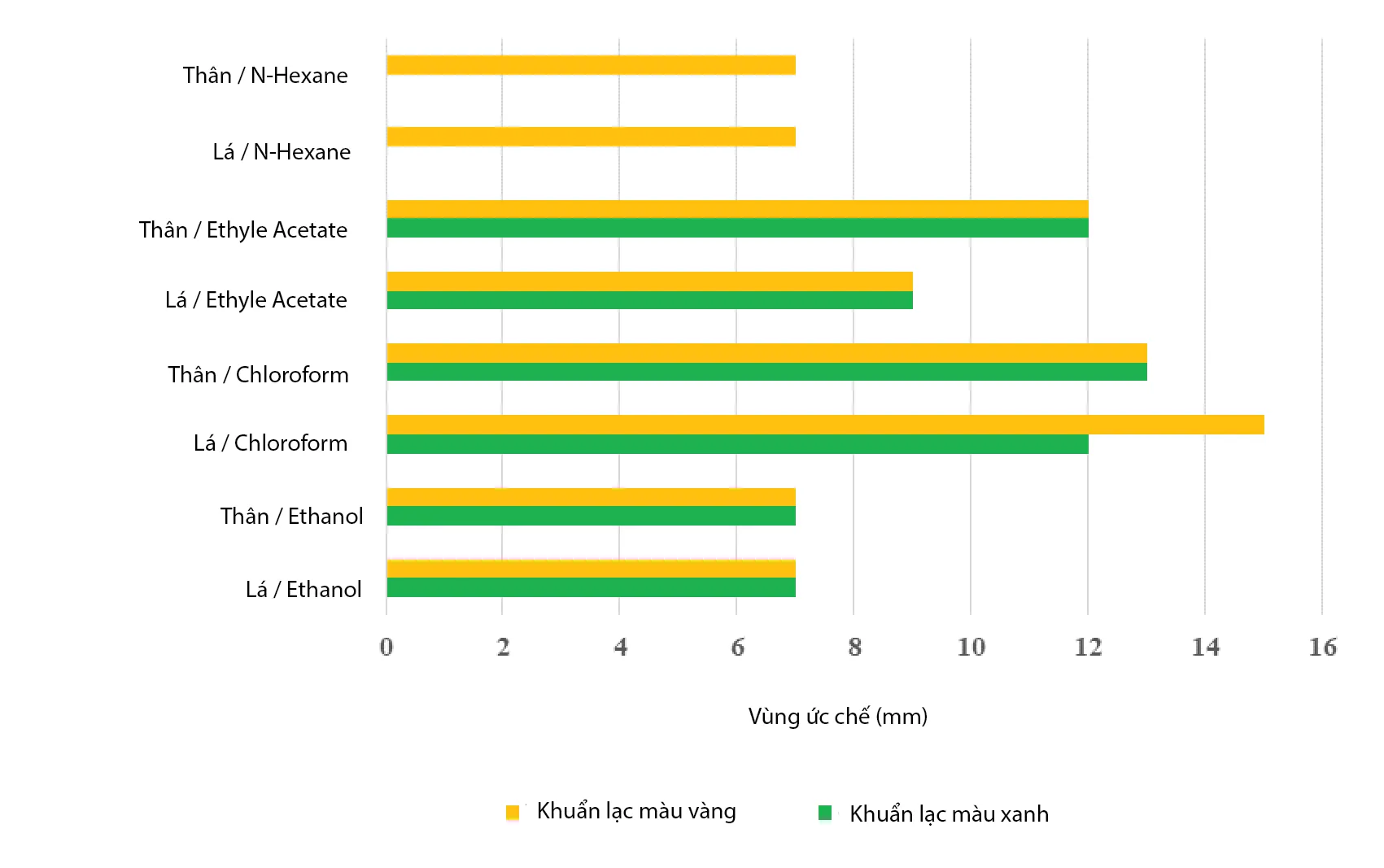
Figure 1. Results of antibacterial testing of extracts from Ciplukan stems and leaves against Vibrio spp. bacteria from pond water infected with white feces disease
Based on the results of the antibacterial tests, it was found that the extract yielding the highest antibacterial activity was ciplukan extract with chloroform solvent, followed by ciplukan ethyl acetate. The antibacterial activity of ciplukan extract on blue colonies was relatively lower than on yellow colonies. This is due to the higher pathogenicity of blue colonies compared to yellow colonies.
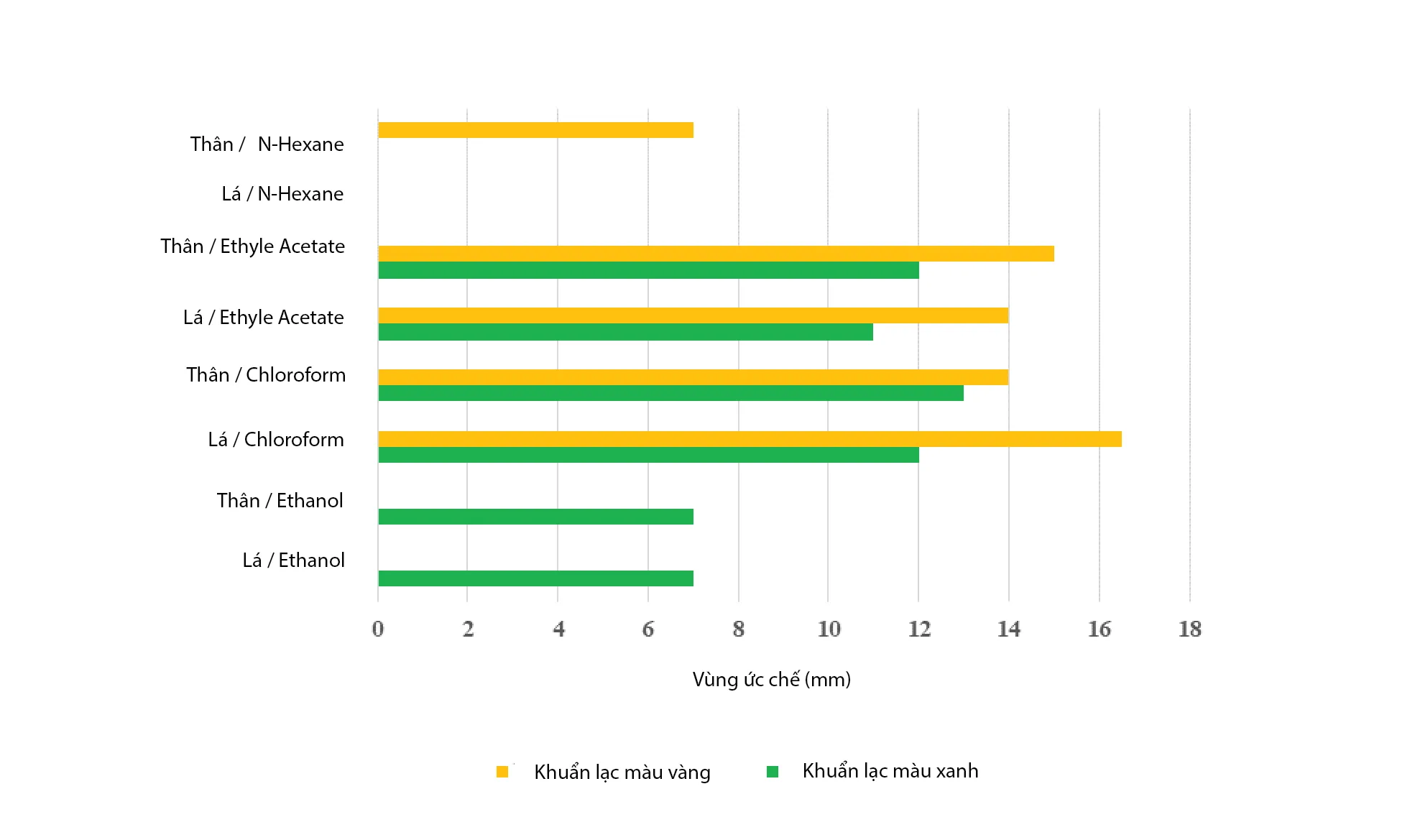
Figure 2. Results of antibacterial testing of Ciplukan extracts from stems and leaves against Vibrio spp. bacteria from the gut of shrimp infected with white feces disease
Based on the results of the antibacterial tests, it can be seen that the extracts providing sufficiently high inhibitory effects were those with chloroform and ethyl acetate solvents, both from stems and leaves. Vibrio bacteria isolated from blue and yellow colonies were the result of isolation from the gut and pond water of shrimp infected with white feces disease. The inhibition zone of blue colonies was lower than that of yellow colonies. This indicates that the resistance of blue colony bacteria is higher than that of yellow colonies. Vibrio bacteria in blue colonies are pathogenic bacteria in farmed shrimp such as V. harveyji and V. parahaemolyticus. Meanwhile, yellow colonies are Vibrio bacteria capable of fermenting sucrose into acid and lowering pH, such as V. cholera, V. alginolyticus. It can be said that ciplukan extract with chloroform solvent has the ability to inhibit the activity of Vibrio spp. Bacterial inhibition zones under 5 mm indicate weak inhibitory activity, zones between 5 – 10 mm are moderate, zones from 10 – 19 mm are classified as strong, and inhibition zones of 20 mm or more are considered very strong.
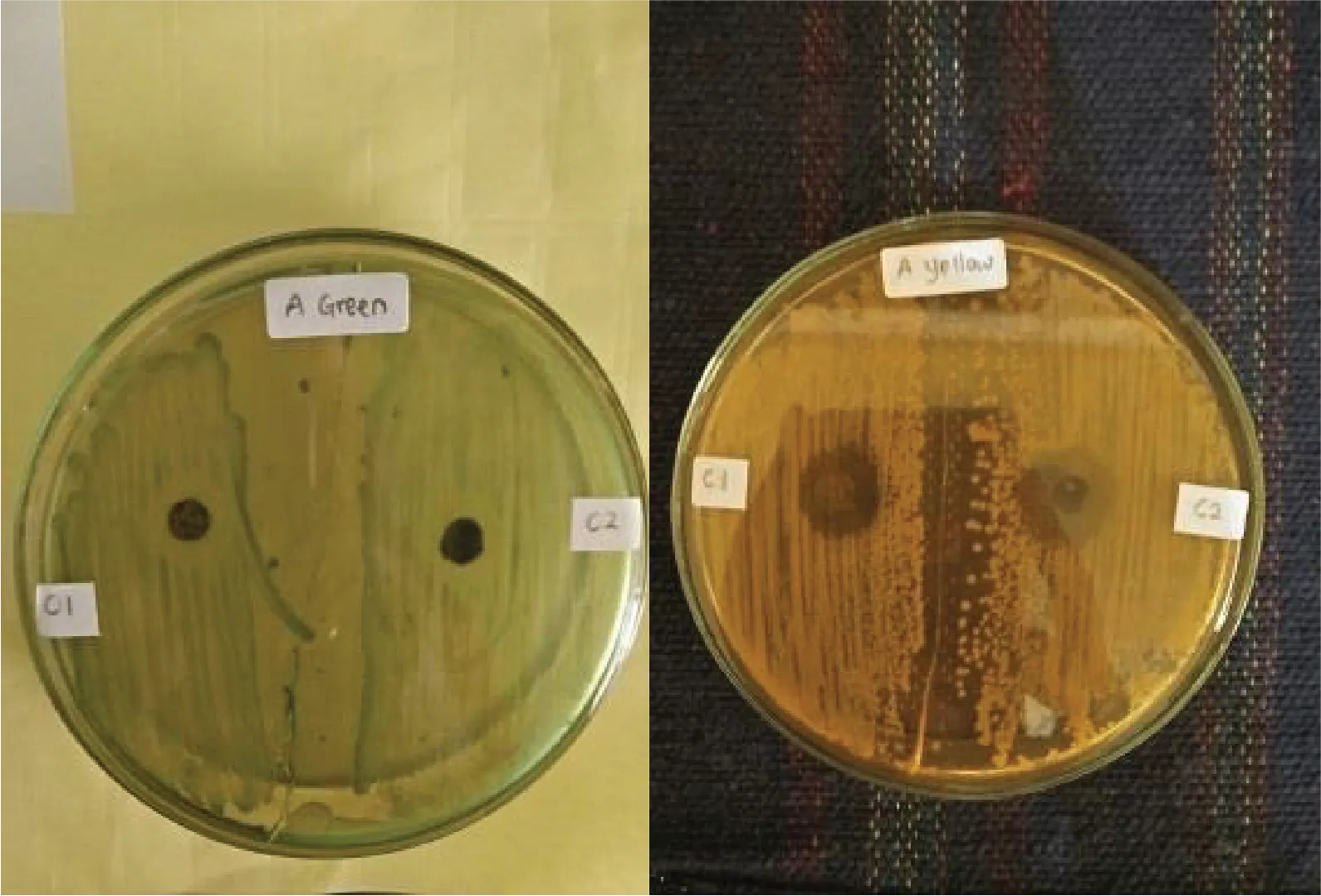
Figure 3. Comparison of inhibition zones of ciplukan extract with Chloroform solvent on Vibrio bacteria in blue and yellow colonies
-
- Ciplukan Extract Inhibition Zone Test
The ciplukan extract inhibition test was performed on ciplukan extracts using chloroform and ethyl acetate solvents, which had the highest antibacterial activity compared to other solvents. Inhibition tests were conducted on blue and yellow Vibrio colonies isolated from pond water and shrimp infected with white feces disease.
The results of variance analysis on the inhibition zone of ciplukan extract with different concentrations on the growth of Vibrio spp bacteria showed that significant differences in concentration greatly affected the inhibition zone of ciplukan extract. Higher concentrations led to an increase in the inhibition zone up to 15% extract concentration, and then decreased. The best inhibition zone was obtained at a 5% concentration.
Based on the analysis results, the extract used for testing was ciplukan extract with chloroform solvent, both from stems and leaves, on the isolation of blue and yellow colonies in pond water as well as shrimp infected with white feces disease.
-
- Toxicity Test of Ciplukan Extract
The survival of whiteleg shrimp after a one-hour immersion in ciplukan chloroform extract showed that a 50% concentration of ciplukan chloroform extract had a toxic effect on whiteleg shrimp, resulting in 50% survival. Meanwhile, lower concentrations were relatively non-toxic, as survival rates ranged from 83 – 100%. Therefore, it can be concluded that ciplukan chloroform extract is safe to use as an antibacterial agent for shrimp if the concentration is lower than 25% for a 1-hour immersion period, or 25% for an immersion period of less than 1 hour.
- Conclusion
This study showed that the ciplukan herb contains active compounds such as steroids, triterpenoids, tannins, flavonoids, and alkaloids. Extracts with chloroform and ethyl acetate solvents had the highest antibacterial activity with an inhibition zone of 16.5 mm. The best concentration for strong inhibition was 10%, resulting in an inhibition zone of 13 mm and no significant difference from 15% and 20% concentrations. Ciplukan herbal extract was toxic at a 50% concentration.