Technical Article

CHANGES IN GUT MICROBIOTA DUE TO GLOBAL WARMING. REGULATING HOST HEALTH AND DISEASE STATUS IN POIKILOTHERMIC ANIMALS

Tóm tắt nội dung chính: Sự nóng lên toàn cầu làm thay đổi hệ vi sinh vật đường ruột của tôm thẻ chân trắng Thái Bình Dương bằng cách tái cấu trúc các kiểu đường ruột (enterotypes), làm tăng nguy cơ mắc các bệnh như hội chứng phân trắng (WFS) và hội chứng hoại tử gan tụy. Nghiên cứu này xác định nhiệt độ là tác nhân chính điều khiển cấu trúc vi sinh vật và đề xuất các "kiểu đường ruột" như một chỉ số sinh thái then chốt để dự đoán sức khỏe động vật biến nhiệt trong bối cảnh biến đổi khí hậu. Giới thiệu Với sự công nghiệp hóa và đô thị hóa hiện đại, sự nóng lên toàn cầu đã trở thành mối đe dọa n Nghiên cứu này xác định nhiệt độ là tác nhân chính điều khiển cấu trúc vi sinh vật và đề xuất các "kiểu đường ruột" như một chỉ số sinh thái then chốt để dự đoán sức khỏe động vật biến nhiệt trong bối • Giới thiệu Với sự công nghiệp hóa và đô thị hóa hiện đại, sự nóng lên toàn cầu đã trở thành mối đe dọa nghiêm trọng đối với các hệ sinh thái, đặc biệt ảnh hưởng đến động vật biến nhiệt (loài có nhiệt • Không giống như động vật có vú, động vật biến nhiệt cực kỳ nhạy cảm với sự thay đổi nhiệt độ, điều này ảnh hưởng đến sự phân bố, hành vi, sinh lý, chuyển hóa và chức năng miễn dịch của chúng. • Một trong những hệ thống bị ảnh hưởng nhiều nhất là hệ vi sinh vật đường ruột (Intestinal Microbiota - IM). Áp dụng hướng dẫn cho ao nuôi cụ thể cần tham khảo kỹ thuật Thần Vương qua hotline 0867 957 568.

Research InsightShrimpFebruary 28, 2026👁 203 views
Click to listen to AI-narrated summary (1.2×)
AI Summary

Generate an English summary for CHANGES IN GUT MICROBIOTA DUE TO GLOBAL WARMING. REGULATING HOST HEALTH AND DISEASE STATUS IN POIKILOTHERMIC ANIMALS

AI-generated summary based on the full article content below.

Tóm tắt: CHANGES IN GUT MICROBIOTA DUE TO GLOBAL WARMING. REGULATING HOST HEALTH AND DISEASE STATUS IN POIKILOTHERMIC ANIMALS

Tóm tắt nội dung chính: Sự nóng lên toàn cầu làm thay đổi hệ vi sinh vật đường ruột của tôm thẻ chân trắng Thái Bình Dương bằng cách tái cấu trúc các kiểu đường ruột (enterotypes), làm tăng nguy cơ mắc các bệnh như hội chứng phân trắng (WFS) và hội chứng hoại tử gan tụy. Nghiên cứu này xác định nhiệt độ là tác nhân chính điều khiển cấu trúc vi sinh vật và đề xuất các "kiểu đường ruột" như một chỉ số sinh thái then chốt để dự đoán sức khỏe động vật biến nhiệt trong bối cảnh biến đổi khí hậu. Giới thiệu Với sự công nghiệp hóa và đô thị hóa hiện đại, sự nóng lên toàn cầu đã trở thành mối đe dọa n Nghiên cứu này xác định nhiệt độ là tác nhân chính điều khiển cấu trúc vi sinh vật và đề xuất các "kiểu đường ruột" như một chỉ số sinh thái then chốt để dự đoán sức khỏe động vật biến nhiệt trong bối • Giới thiệu Với sự công nghiệp hóa và đô thị hóa hiện đại, sự nóng lên toàn cầu đã trở thành mối đe dọa nghiêm trọng đối với các hệ sinh thái, đặc biệt ảnh hưởng đến động vật biến nhiệt (loài có nhiệt • Không giống như động vật có vú, động vật biến nhiệt cực kỳ nhạy cảm với sự thay đổi nhiệt độ, điều này ảnh hưởng đến sự phân bố, hành vi, sinh lý, chuyển hóa và chức năng miễn dịch của chúng. • Một trong những hệ thống bị ảnh hưởng nhiều nhất là hệ vi sinh vật đường ruột (Intestinal Microbiota - IM). Áp dụng hướng dẫn cho ao nuôi cụ thể cần tham khảo kỹ thuật Thần Vương qua hotline 0867 957 568.

Editorial Framing

Why this article matters

    Full Article

    Summary of main content: Global warming alters the gut microbiota of Pacific whiteleg shrimp by restructuring enterotypes, increasing the risk of diseases such as white feces syndrome (WFS) and hepatopancreatic necrosis syndrome. This study identifies temperature as the primary driver of microbial structure and proposes "enterotypes" as a key ecological indicator to predict the health of poikilothermic animals in the context of climate change.

    1. Introduction

    With modern industrialization and urbanization, global warming has become a serious threat to ecosystems, especially affecting poikilothermic animals (species whose body temperature depends on the environment) such as fish and shrimp. Unlike mammals, poikilothermic animals are extremely sensitive to temperature changes, which affects their distribution, behavior, physiology, metabolism, and immune function.

    One of the most affected systems is the intestinal microbiota (IM). IM is a sensitive indicator of temperature changes and plays a crucial role in the host's metabolism and immune processes.

    To better understand the changes in IM, microbial communities are often classified into distinct types called "enterotypes" – groups of microbial components dominated by different key bacterial genera.

    2. Study Subject: Pacific Whiteleg Shrimp (Litopenaeus vannamei)

    Pacific whiteleg shrimp is a major aquaculture species, with production exceeding 5.6 million tons worldwide in 2022. However, it faces major disease threats such as:

    Acute Hepatopancreatic Necrosis Disease (AHPND).

    Hepatopancreatic Necrosis Syndrome (HPNS).

    White Feces Syndrome (WFS). All are associated with gut microbiota dysbiosis. Notably, WFS outbreaks significantly increase at high temperatures (33 - 34°C).

    3. Methods and Results

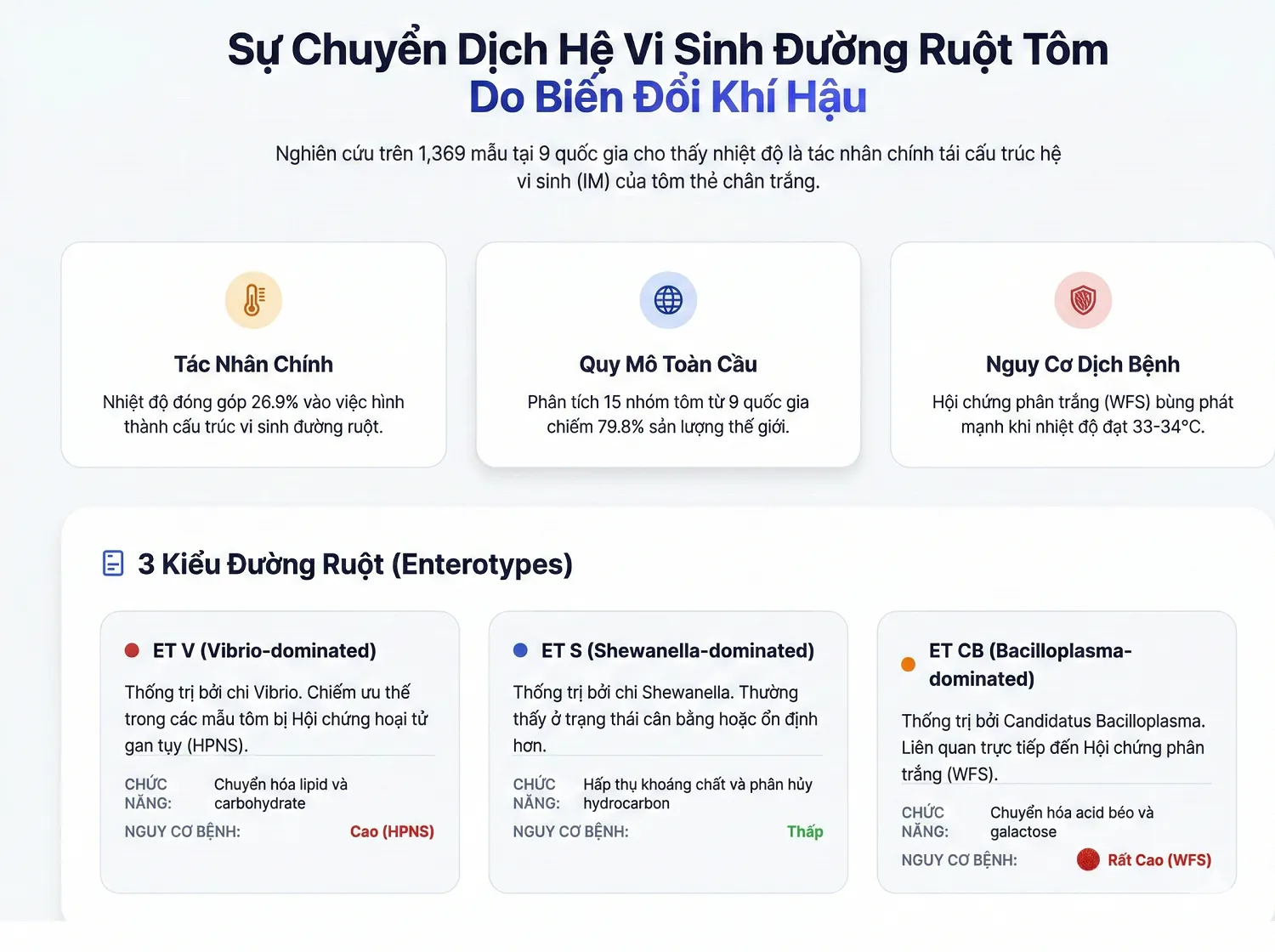
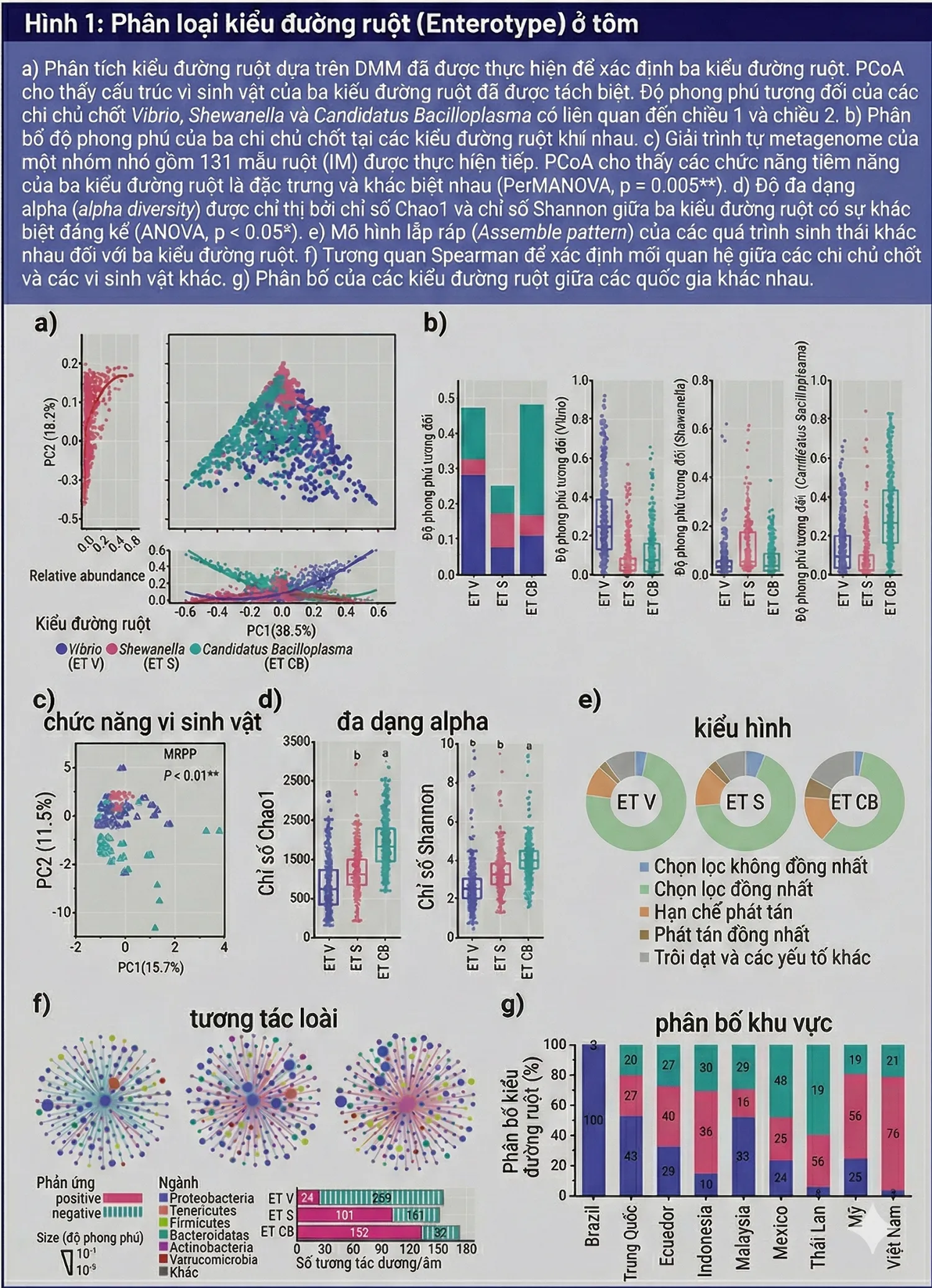
    The study analyzed 1,369 IM samples from 15 shrimp cohorts in 9 major shrimp-producing countries (accounting for approximately 79.8% of global production).

    Classification of 3 main Enterotypes:

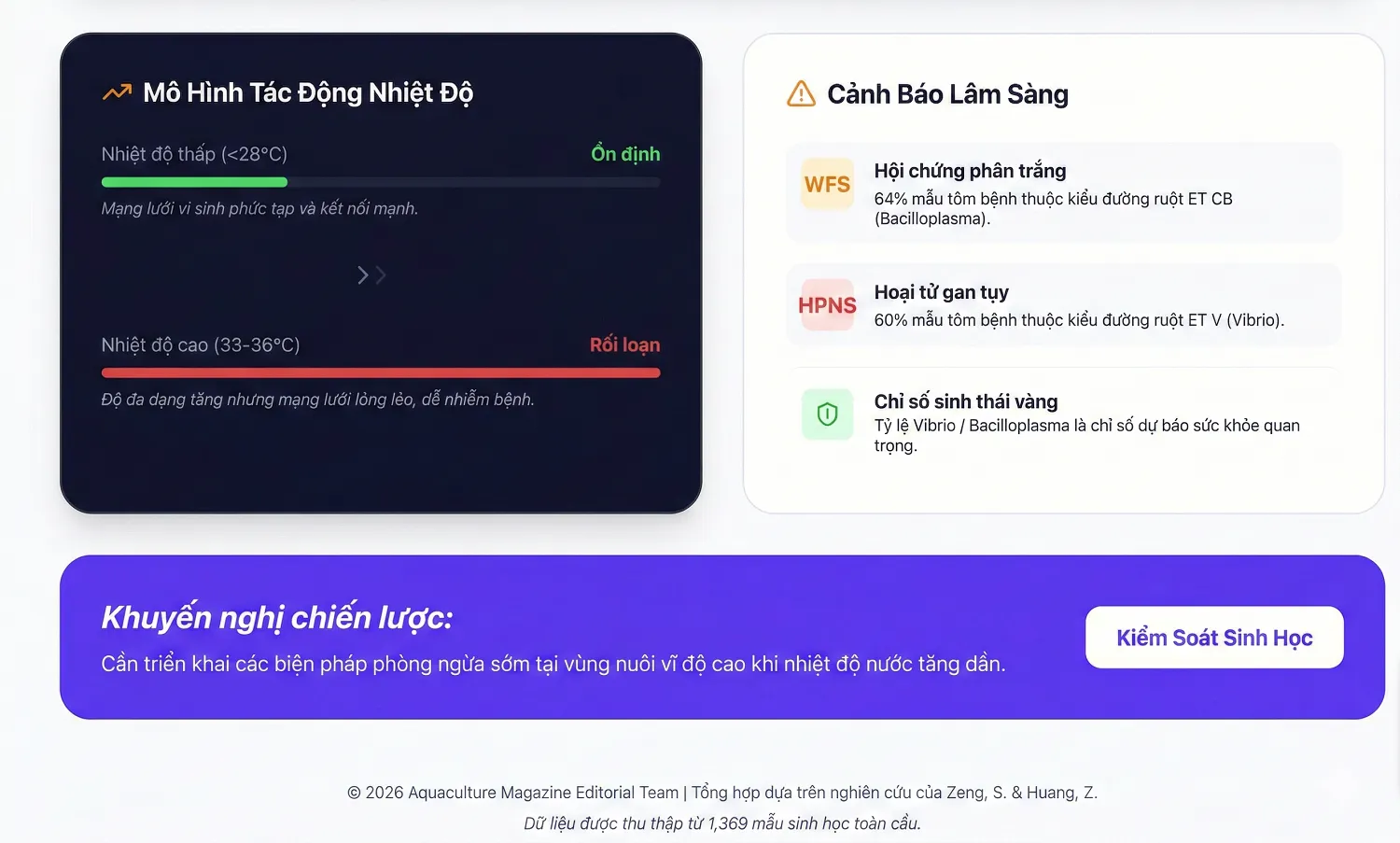
    ET V: Dominated by the genus Vibrio (predominant in samples affected by hepatopancreatic necrosis syndrome - HPNS).

    ET S: Dominated by the genus Shewanella.

    ET CB: Dominated by the genus Candidatus Bacilloplasma (predominant in samples affected by white feces syndrome - WFS).
    Gemini_Generated_Image_8feyqf8feyqf8fey

     Figure_1

    Key findings:

    Temperature is the most critical factor: Analysis showed that temperature contributed 26.9% to the formation of gut microbial structure, surpassing geographical factors.

    Temperature-dependent changes: As temperature increased, Alpha diversity (Chao1 and Shannon indices) increased, but microbial interaction networks became less stable and less connected.

    Controlled experiment: At 36°C, shrimp survival rates decreased and the microbiota shifted significantly towards the ET CB (Candidatus Bacilloplasma) enterotype.

    Gene analysis: Transcriptomic analysis revealed 2,276 differentially expressed genes (DEGs) in response to temperature, including antimicrobial peptides (PENs, ALFs) associated with microbial changes.
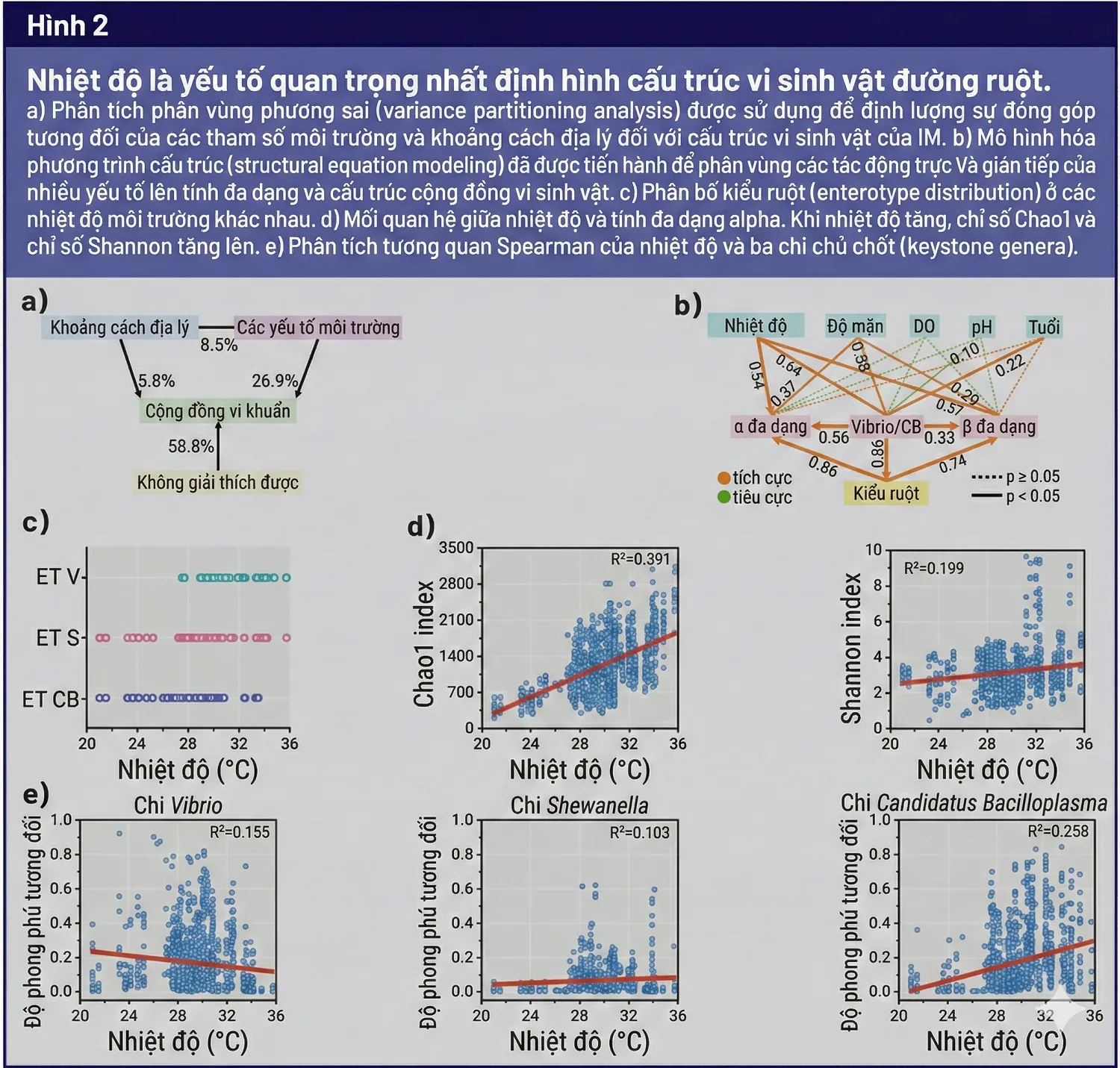
    Figure_2

    4. Discussion and Conclusion

    The study emphasizes that increasing temperature alters the gut microbial composition of shrimp by restructuring enterotypes, thereby increasing the likelihood of disease outbreaks such as WFS and EMS (Early Mortality Syndrome).

    Vibrio / Candidatus Bacilloplasma ratio: Considered a crucial ecological indicator closely linked to enterotypes and health status.

    Regional impact: Warmer regions like Thailand and China showed greater diversity in enterotype distribution, whereas regions with narrower temperature ranges like Brazil exhibited only one enterotype (ET V).

    Resilience: High temperatures reduced the resilience of the microbial system, creating conditions for opportunistic pathogens to thrive.
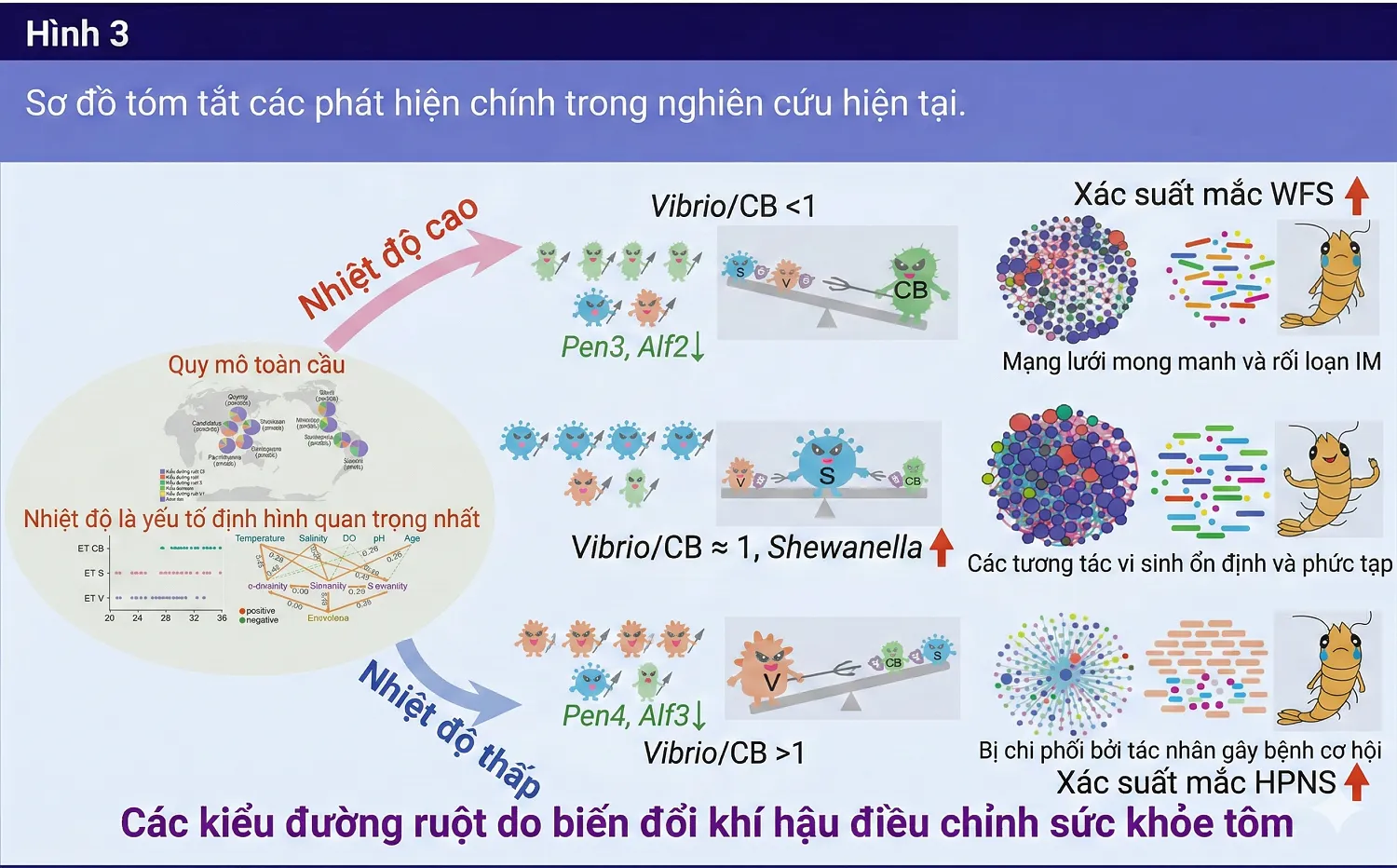
    Figure_3

    Call to action: With white feces syndrome (WFS) spreading to higher latitude regions in recent years, the study calls for immediate preventive strategies in aquaculture to mitigate risks caused by climate change. Shrimp enterotypes can serve as valuable ecological indicators to monitor the impact of global warming on poikilothermic animals.
    Gemini_Generated_Image_lgrtolgrtolgrtol

    Summary source from the article by the author group: Zeng, S. and Huang, Z. (Sun Yat-sen University, China) and colleagues from Thailand and the network of aquaculture centers in Asia-Pacific.


    Related Products

    Products linked to this topic

    Product reference for AQUAMOS
    shrimpThần Vương Blue

    AQUAMOS

    Tăng sức đề kháng và tối ưu tốc độ tăng trưởng

    Product reference for PRO GUT
    shrimpThần Vương Blue

    PRO GUT

    Hệ men tiêu hóa cao cấp chuyên dùng cho nuôi tôm ao bạt

    Product reference for LALPACK PROBIO
    allNguyên liệu

    LALPACK PROBIO

    Men vi sinh đa chủng, hỗ trợ tiêu hóa và cân bằng hệ vi sinh đường ruột

    More Reading

    Related technical articles

    Toàn cảnh thị trường tôm thế giới 2025 — Dữ liệu từ Shrimp Insights (Tháng 2/2026)
    Technical articleShrimpApril 9, 2026

    Global Shrimp Market 2025 Overview — Shrimp Insights Bulletin February 2026

    Tổng hợp thị trường tôm thế giới 2025: Ecuador dẫn đầu xuất khẩu (1.39M tấn, +15%), EU tăng nhập khẩu mạnh nhất (+21%), Mỹ biến động[...]

    CÁ HỒI TRONG ĐIỀU KIỆN STRESS: CỦNG CỐ TUYẾN PHÒNG THỦ ĐẦU TIÊN
    Solution TrackShrimpFebruary 27, 2026

    SALMON UNDER STRESS CONDITIONS: REINFORCING THE FIRST LINE OF DEFENSE

    As the aquaculture industry increasingly develops strategies for animal health protection, functional nutrition has become a key fac[...]

    VI SINH THÔNG MINH CHO NUÔI TÔM – TĂNG TRƯỞNG, CHẤT LƯỢNG NƯỚC VÀ SỨC KHỎE TỐT HƠN
    ProtocolShrimpNovember 24, 2025

    SMART PROBIOTICS FOR SHRIMP FARMING – BETTER GROWTH, WATER QUALITY, AND HEALTH

    The aquaculture industry is increasingly seeking sustainable alternative solutions to antibiotics, especially in intensive farming o[...]

    Technical Advisor

    Aquaculture Q&A

    🦐

    Help us serve you better

    Share your name + phone so we remember your pond next time — no repeating yourself.

    • 🔒 Tech team only — never shared with third parties
    • 📨 No spam, no promotional SMS
    • 💾 History saved on your device — clear anytime