Whiteleg shrimp exposed to blue light yield significantly better results in terms of growth parameters and water quality
The Biofloc Technology (BFT) system is designed to increase aquaculture productivity while improving environmental control, reducing or eliminating water exchange, reducing wastewater volume, limiting disease spread, and thereby increasing biosecurity. This system comprises bacteria, microalgae, protozoa, zooplankton, rotifers, feces, and uneaten feed.
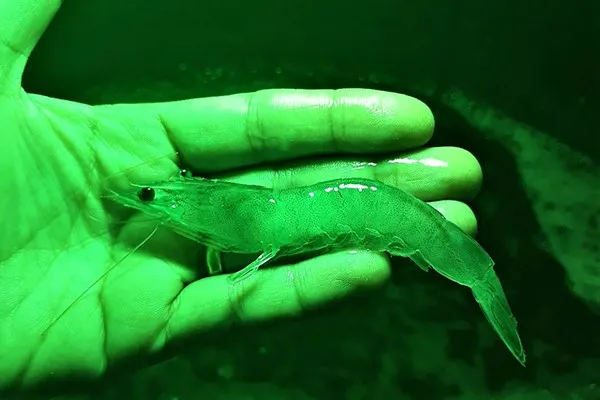
Several factors directly influence the formation and maintenance of bioflocs: Carbon/nitrogen ratio, oxidation, carbon source, light, etc. Light is considered an extremely important abiotic factor for aquatic organisms. Many studies have shown significant differences in the behavior, growth, feed intake, maturation, reproduction, and even swimming activity of shrimp when exposed to different light conditions. Regarding the microbial population in BFT systems, especially when exposed to sunlight, they can often abruptly shift from a heterotrophic system (mainly bacteria and protozoa) to a phototrophic system (microalgae).
The effect of light on shrimp farming has been described by several authors, but there is still a need to evaluate the effect of light separated into different wavelengths and colors. In indoor farming conditions, where natural light is absent and therefore artificial light is used, light-related variables, such as light color, can be controlled more effectively.
Methodology
5 experiments were designed with 3 replicates, each using LED lights of different colors, including yellow, blue, red, green, and white (control). The experimental units holding shrimp were isolated from each other using conical covers on the tanks. Shrimp weighing 0.37 grams were stocked at a density of 500 individuals/m3 in 150-liter tanks, and the experimental period lasted 70 days.
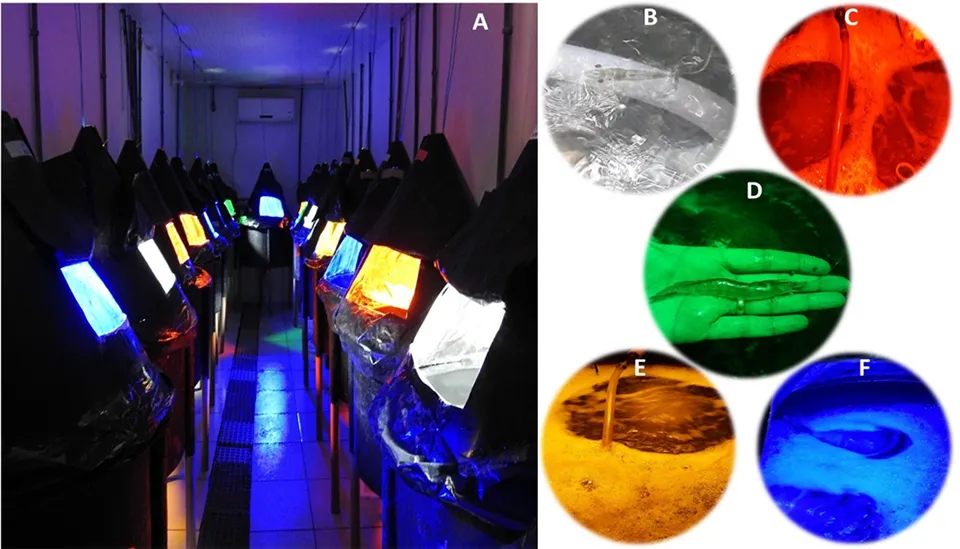
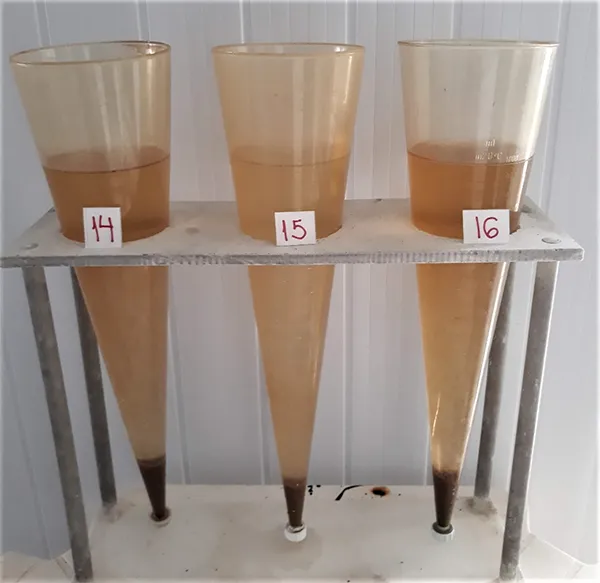
Water quality parameters: Temperature, dissolved oxygen, and pH were monitored twice daily using a multiparameter probe. Total ammonia nitrogen and nitrite concentrations were quantified daily. Alkalinity was checked every 3 days and corrected when values below 150 mg CaCO3/liter were observed. Water turbidity, nitrate, and phosphate concentrations were determined once a week, as well as total suspended solids and settleable solids. Carbon dioxide concentration was calculated using pH and alkalinity measurements.
Organic matter supplementation to the water in the experimental tanks was performed using liquid molasses (C:N ratio of 6:1) whenever ammonia levels reached > 1.0 mg/liter. Water exchange was performed when nitrite levels exceeded 26 mg/liter. The application of a probiotic to the water was performed once a week to maintain water quality.
Shrimp were fed twice daily, using a diet with 38% crude protein. Feed adjustments were made according to estimated growth and feed consumption. All results were analyzed using one-way ANOVA (α = 0.05).
Results and Discussion
Significant differences were identified for water quality parameters such as nitrite, light penetration into the water column, and total water usage during the experimental culture period. No statistically significant differences were found for temperature, dissolved oxygen, pH, ammonia, nitrate, phosphate, alkalinity, carbon dioxide, total suspended solids, settleable solids, turbidity, and Chlorophyll a.
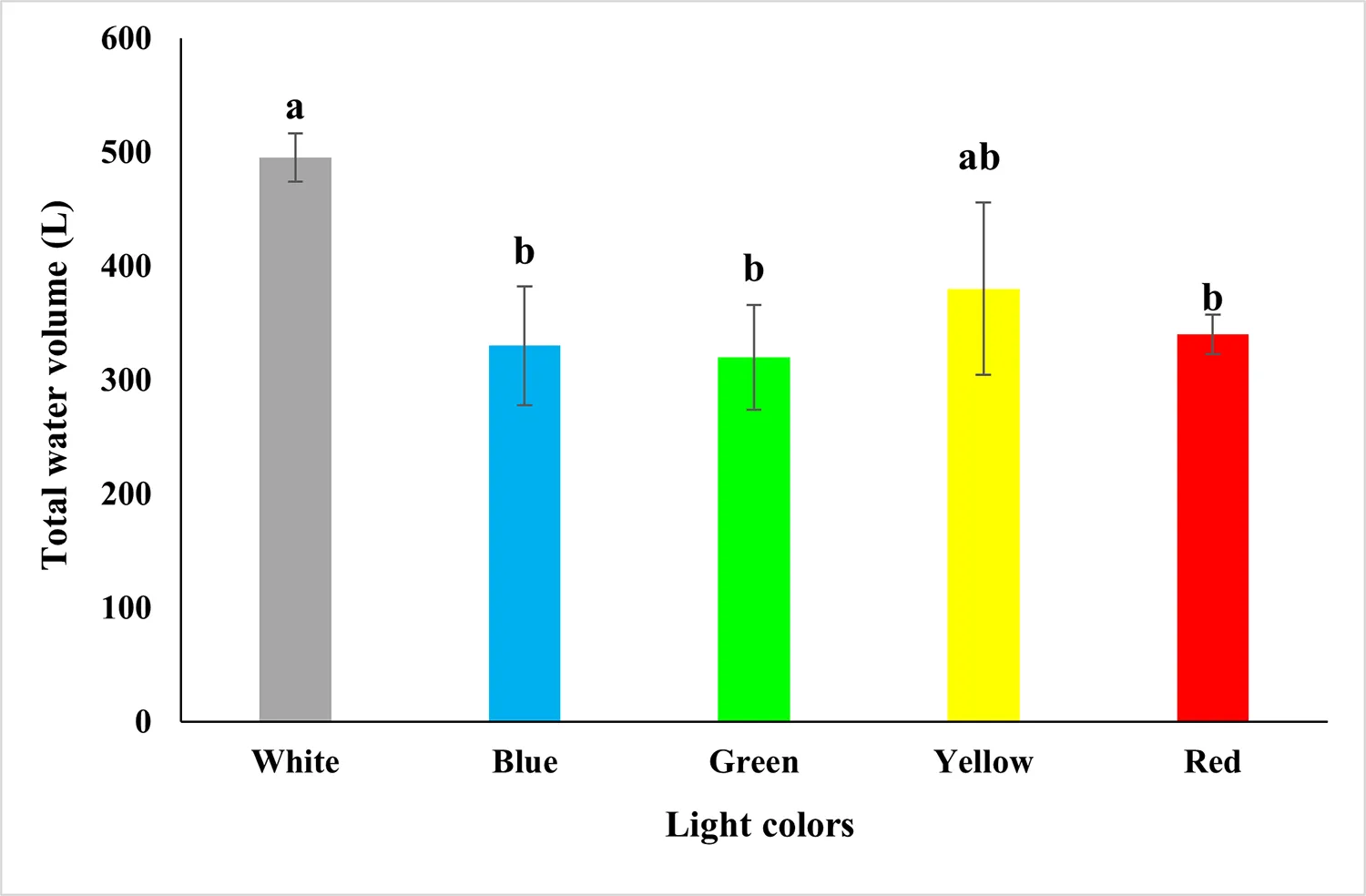
Chart 1. Mean values (± SD) of total water volume (liters) in treatments cultured in biofloc systems with different light colors
The total water volume used for culturing whiteleg shrimp kept in BFT systems with different colored LED lights varied significantly. Green, blue, and red light colors used lower water volumes, with an average of 340 liters, while white and yellow lights had an average value of 495 liters. That is, an additional 155 liters were needed to produce the same shrimp density. This difference in total water volume was related to the number of water exchanges performed when nitrite levels exceeded safe thresholds. The green and blue light treatments showed better nitrification rates compared to the white light (control), with a difference of nearly 20 days.
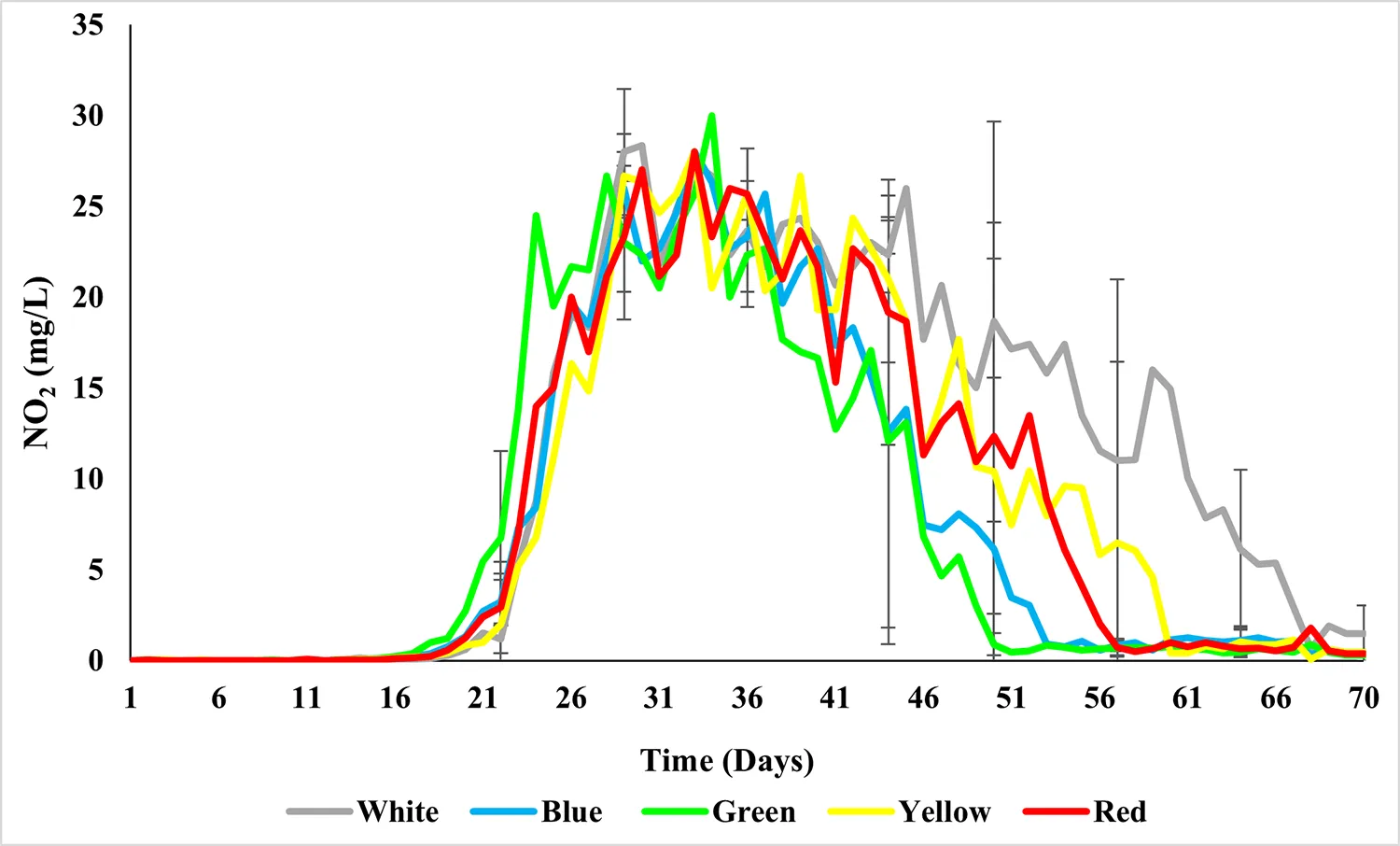
Chart 2. Mean values (± SD) of nitrite (mg/L) in treatments within biofloc systems with different light colors