The necessity of transporting and handling live fish in aquaculture operations has led to the development of fish anesthesia methods that do not compromise their health or commercial value.
Fish that are not properly cared for experience significant stress during capture and transport, leading to physiological and biochemical reactions, and causing endocrine and metabolic disorders in fish. Furthermore, although many chemical anesthetics are available, careful consideration of economics, safety, and regulations is required when using chemical anesthetics on food fish.
One of the safer chemical anesthetics that can be used in fish anesthesia is Sodium Bicarbonate (Natri Bicarbonate). It is also known as baking soda, and when dissolved in water, it releases carbon dioxide, which has an anesthetic effect on fish (Bowser 2001). This gas has been proven safe for humans; therefore, there are no restrictions on its use (Summerfelt and Smith 1990). When used as an anesthetic, Carbon Dioxide gas is bubbled directly into the water via an air stream connected to a source, or indirectly by adding sodium bicarbonate as a source of carbon dioxide (Altun et al. 2009).
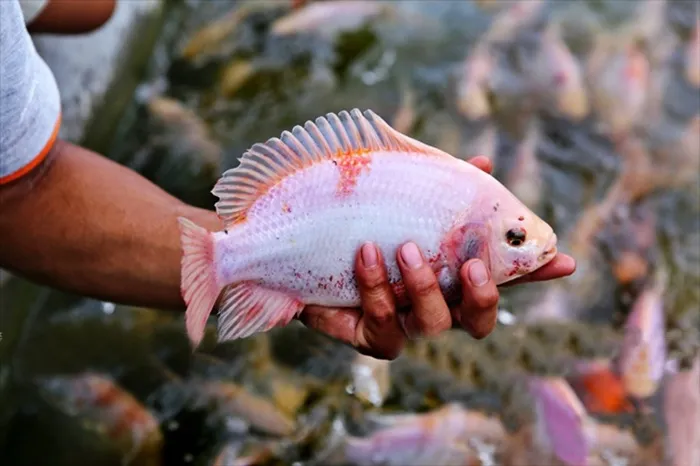
A previous study involving tilapia (Oreochromis niloticus) demonstrated the effectiveness of this chemical anesthetic, and its efficacy was influenced by dosage and fish size (Opiyo et al. 2013). Despite information from previous studies, the efficacy of this anesthetic on the same fish species varies across different salinities. This is because both brackish and marine waters contain significant amounts of carbonate, which can affect the activity of sodium bicarbonate when added to the water. Since aquaculture can be conducted in freshwater, brackish water, and marine water conditions, the potential of sodium bicarbonate as a fish anesthetic under these conditions must be evaluated. Therefore, the study by Arlene L. Avillanosa et al 2019 used juvenile red tilapia to verify the effectiveness of using Sodium Bicarbonate as a fish anesthetic in both freshwater and brackish water conditions.
Results:
The study demonstrated that sodium bicarbonate can be used as an effective anesthetic for juvenile red tilapia. In a previous study, Opiyo et al. (2013) also showed that juvenile tilapia, O. niloticus, responded positively to this substance when used as an anesthetic, with no mortalities observed.
Acceptable anesthetics for fish handling are recommended to induce anesthesia in fish within 3 minutes and full recovery within 5 minutes (Marking and Meyer 1985; King et al. 2005; Ross and Ross 2008). In the current study, the use of Sodium Bicarbonate as an anesthetic in juvenile red tilapia satisfied these requirements, except when the substance was used in brackish water at a concentration of 50g/l, where anesthesia induction averaged over 4 minutes.
Dissolving Sodium Bicarbonate in water releases carbon dioxide gas. This gas is used for anesthetic purposes in fish at various water temperatures and is primarily employed to sedate fish during transport or to allow for the handling of large numbers of fish (Bowser 2001). The study also observed no mortality in juvenile red tilapia during anesthesia and after recovery, due to the slow release of Carbon Dioxide gas in the water after complete dissolution of Sodium Bicarbonate.

Sodium bicarbonate can be an effective anesthetic for juvenile red tilapia during short-term handling and does not result in fish mortality. Juvenile red tilapia reared in brackish water took a longer time to be fully anesthetized compared to those reared in freshwater. In both rearing environments, the anesthetic concentration affected the induction time for fish. This study also highlighted that high concentrations of sodium bicarbonate are necessary to anesthetize juvenile red hybrid tilapia when water temperatures are high. The complete recovery time of fish did not differ significantly in both rearing environments and was not affected by the anesthetic dose. The application of Sodium Bicarbonate at high pH levels can be a good and inexpensive alternative to other fish anesthetics.
Based on the results of this study, an effective Sodium Bicarbonate dose that leads to complete anesthesia of juvenile red tilapia in brackish or freshwater is 50 g/l. At this concentration, fish were anesthetized within a short period and could recover quickly without adversely affecting post-exposure survival.
Source: tepbac.com