According to a new study presented by Lallemand Animal Nutrition at the Asia-Pacific Aquaculture (APA) conference in Indonesia earlier this month, a 42-day trial in Vietnam using Pacific white shrimp post-larvae confirmed the efficacy of microbial applications and their potential to improve shrimp growth performance and health throughout the development phase.
Combined Approach Using Probiotics and Bioremediation Water Treatment Strategy
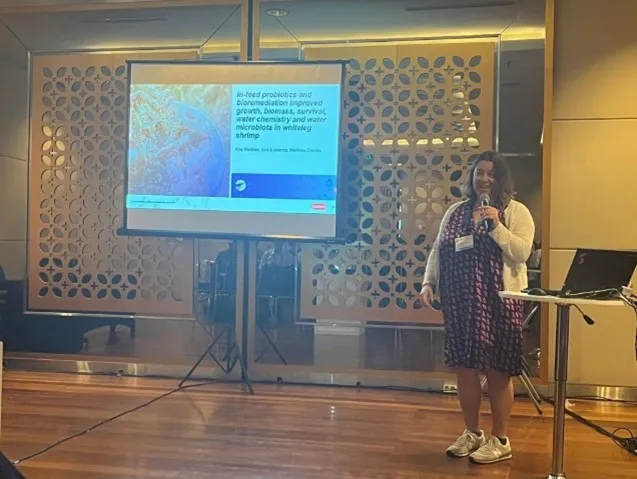
The study, titled “Feed Probiotics and Bioremediation Water Treatment Solutions Improved Growth, Biomass, Survival Rate, Environmental Parameters, and Microbiota in Pacific White Shrimp Litopenaeus vannamei in Vietnam,” presented by Ana Rodiles, a scientist at Lallemand Animal Nutrition, focused on the shrimp grow-out phase and showed that the use of specific bioremediation microbes and feed probiotics is an effective solution to reduce antibiotic use, improve performance, and enhance resistance to abiotic stressors in shrimp.
A previous study conducted by Rodiles demonstrated the benefits of combining beneficial microbes in feed and microbial water management during the nursery and larval rearing phases in hatcheries, according to Lallemand Internal Research (2020).
Experimental Design and Results
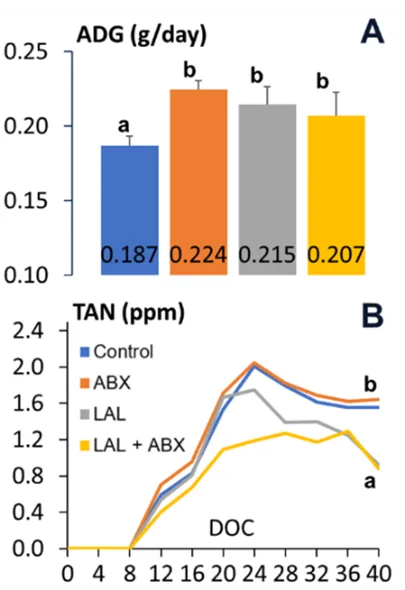
Figure 1. Average Daily Growth (ADG) on day 42 (A); Total Ammonia Nitrogen (TAN) during the trial (B) (P < 0.05)
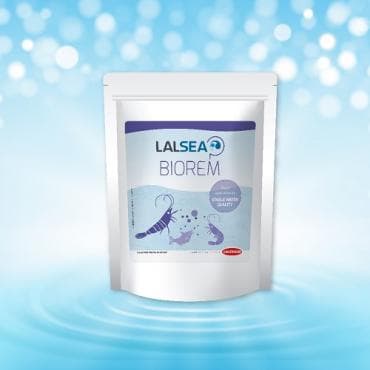
A 42-day commercial grow-out trial was conducted in Vietnam using juvenile Pacific white shrimp reared at high density in outdoor tanks with minimal water exchange under commercial farming conditions. Four treatments were applied: a control group, an antibiotic group (ABX), a Lallemand group (supplemented with LAL – LALPACK Probio and LALPACK Immune in feed and LALSEA Biorem in pond water), and a combined antibiotic + Lallemand group (LAL + ABX).
Stress was induced by sudden exposure to freshwater, and shrimp stress levels were observed to assess their resilience to abiotic stressors. Microbial analysis was conducted to examine the quantity of gut bacteria in shrimp and in the water environment. Additionally, culture water samples were collected for bacterial community analysis via 16S rRNA sequencing. Water physicochemical parameters were also evaluated during the trial.
Results showed a significant improvement in biomass gain and average daily growth in all supplemented groups compared to the control group (Figure 1A). Resilience to stressors was significantly higher in all supplemented groups, with Lallemand-supplemented groups showing an increase in stress resistance from 14% to 50%, and the combined group showing a 29% increase.
Furthermore, ammonia and nitrite levels were lowest in both Lallemand groups (Figure 1B). Lactic acid bacteria counts in water and gut were significantly higher in both Lallemand groups, indicating a healthier gut microbiota. The modulation of the 16S microbial community in the water by the Lallemand group primarily contributed to enhanced carbon metabolism and nutrient absorption, and reduced the NS3a group (associated with dinoflagellate blooms).
Source: Lallemand Animal Nutrition
Translated by: Than Vuong Technical Department