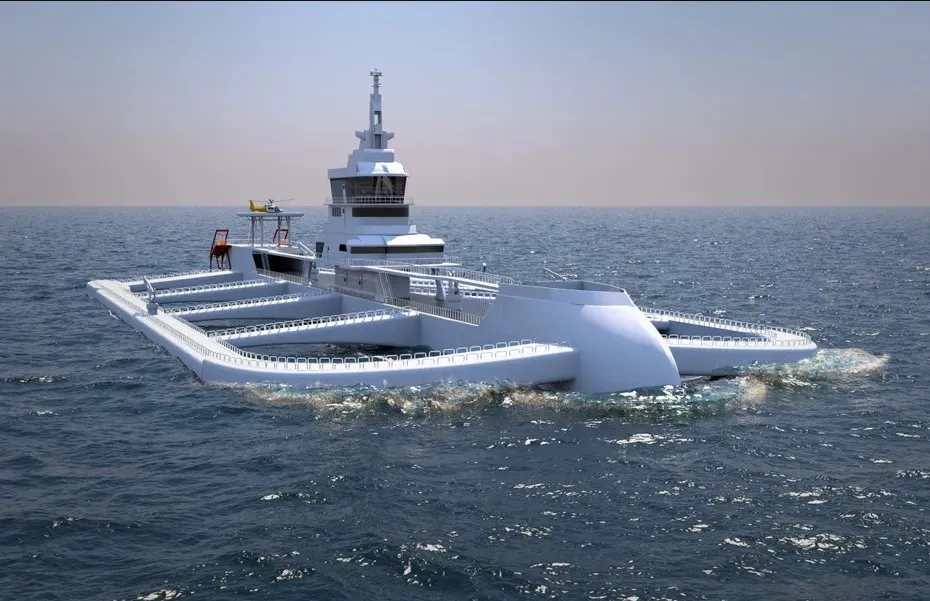
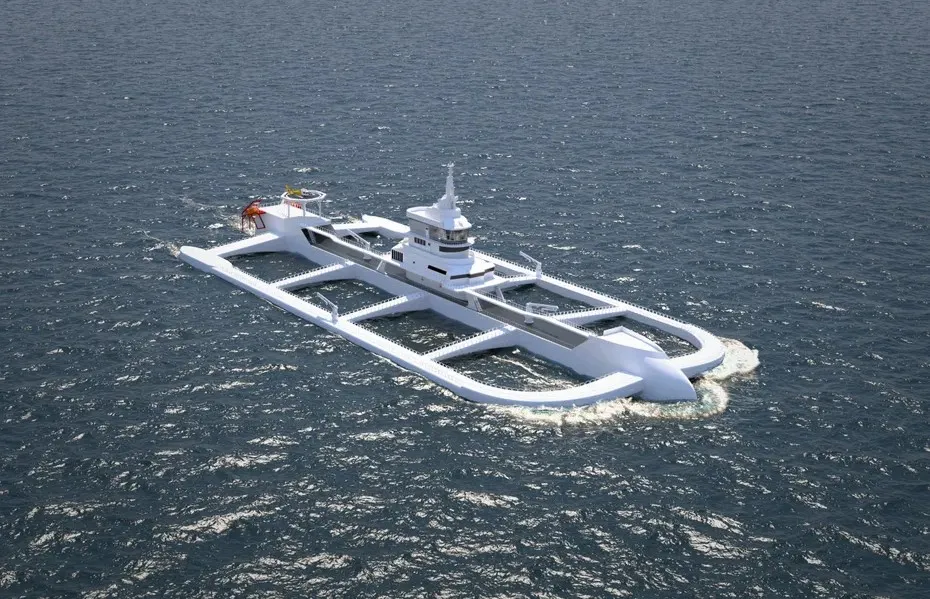
 Ocean Ark will be able to produce 5,000 tons of salmon per cycle and can access offshore waters with good water quality.
Ocean Sovereign, a company established with the participation of strategic ally Ocean Arks Technology (OAT), was founded by Rodrigo Sanchez, who helped introduce the use of copper nets into Chile's aquaculture sector. He is supported by Christino Stange, one of the pioneers of the Chilean aquaculture industry, who has over 45 years of fish production experience; Hector Ruiz, a former Chilean Navy captain, who brings experience in maritime and offshore regulations; and Karl Morris, an offshore expert, who brings experience in maritime, offshore, and environmental regulations.
According to Sanchez, the concentration of coastal aquaculture – especially the salmon industry – is limiting its growth rate and challenging its sustainability. Coastal aquaculture sites are susceptible to a range of issues such as oxygen depletion, algal blooms, red tides, along with the accumulation of parasites and pathogens.
“Essentially, we cut ties with coastal aquaculture, we use a low-emission engine for operation, add fully recyclable copper net technology, and transform aquaculture into a completely mobile operation,” Sanchez added.
Key Specifications
According to the approved plan, Ocean Arks will:
- 174 m long x 64 m wide
- Capable of storing 450 tons of feed
- Can operate without resupply for up to 25 days
- Produce 5,000 tons of fish per cycle
- Have a cruising speed of 3 to 4 knots, depending on the species being farmed
Economic Considerations
Ocean Ark was originally designed to hold up to 3,900 tons of fish and was expected to cost 22 million USD. Ocean Sovereign states that this figure has increased by 50% due to regulatory demands and rising raw material costs. However, partly thanks to the new design increasing the vessel's capacity to 5,000 tons, Morris argues that the Capex will be equivalent to approximately 7 dollars per kg of fish produced – a better figure compared to other offshore production systems.
It also aligns with the costs of vessels used for merchant shipping, the offshore industry, and ocean fishing, he added.
Furthermore, the companies state that they have managed to raise sufficient capital for the first vessels from maritime industry financial institutions and venture capital, thus avoiding additional pressure at this stage.
Vision
Although the design has been deemed seaworthy for both navigation and production, more legislative frameworks will need to be passed before fish farming is truly permitted within each nation's Exclusive Economic Zones (EEZs). Meanwhile, according to Morris, production is already allowed in the high seas.
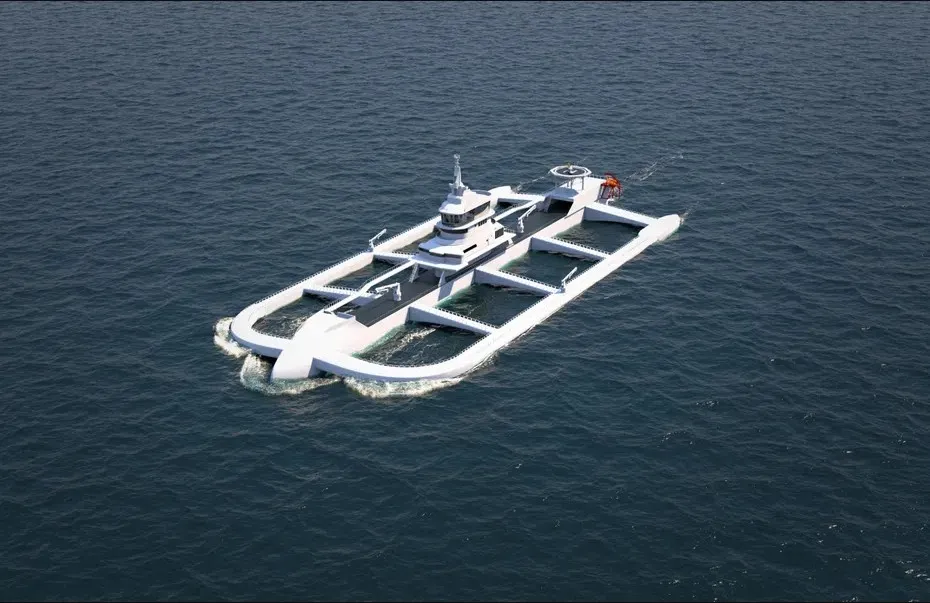 The founders claim that production conditions on Ocean Ark will mimic a natural fish aggregation site.
“Environmental impact assessments are mandatory in EEZs and discretionary in international waters, as the impact is very low – just like any natural fish aggregation site. So, we don't see this as an obstacle, and it is being pursued for EEZs,” he said.
Morris also believes that the mobile nature of the system will help ensure fish health and growth.
Applications in the Marine Aquaculture Industry
According to Morris, Ocean Sovereign is committed to collaborating with the established aquaculture sector.
“For Ocean Sovereign, coming from the maritime world, we are not only willing to collaborate with conventional aquaculture partners, we must do so. And we can count on strong expertise from Chile with the OAT team and other fish farming experts from Europe who will soon be on board,” he explained.
“We want to see our technology reach as many producers as possible because it not only improves their business operations but also helps make aquaculture more sustainable, reduces coastal concentration, and returns fish to the ocean where they belong,” OAT added.
“Our initial deployment plan will be directed towards the European and US markets, as close to the respective coastlines as possible, which will reduce transportation emissions. We will farm warm and cold water species such as salmon, cod, tuna, amberjack, cobia, etc.,” Morris concluded.
According to Rob Fletcher – Thefishsite.