The improper and uncontrolled use of chemicals and antibiotics can negatively impact the environment, the ecosystem of the area, or leave residues in aquaculture products, leading to antibiotic resistance in pathogenic bacteria in fish. This is especially true for freshwater fish, most commonly found in catfish species such as *Hemibagrus* spp., *Mystus* spp., and *Pangasius* spp. Larger fish are often more susceptible to disease.
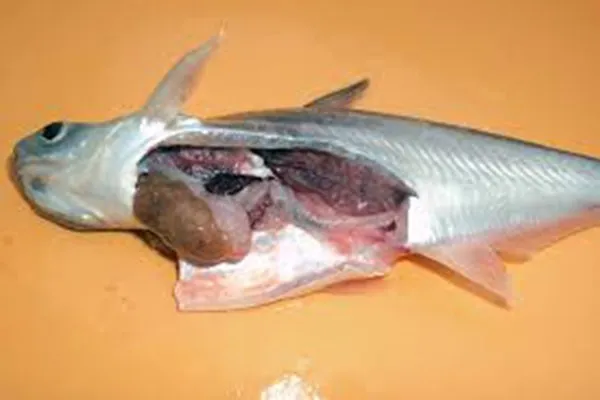
Illustration
When fish are diseased, some signs include: Small lesions appearing on the skin (dorsal side), approximately 3-5 mm in diameter, which will develop into hollow tumors within the muscle, and loss of skin pigmentation. Lesions may also appear beneath the epidermis and muscle; when pressed, foul-smelling gas will be released, and these lesions will cause necrosis in the surrounding muscle tissue. For white spot disease in catfish, the bacterium *E. Tarda* is found in *Pangasius* fingerlings, while *E. Ictaluri* is isolated from *Pangasius bocourti*, *Pangasius hypophthalmus*, *Mystus* fingerlings, and market-sized fish.
Causes and prevention: The disease often appears when the pond environment is poor and the pond water is polluted. In some cases, overstocking fish also provides favorable conditions for pathogens to proliferate. The optimal temperature for disease development is around 30oC.
To prevent pathogens from entering and spreading within the local fish farming system, farmers need to have sedimentation ponds for filtration and disinfect water before pumping it into culture ponds. Pond preparation should follow the correct procedures. Healthy, disease-free fingerlings should be selected. Commonly used tools such as nets, scoops, baskets, and hoses must be disinfected with Chlorine at a dosage of 10-15 g/m3 for 30 minutes, then rinsed with clean water and dried after use. Simultaneously, ensure a clean pond water environment. Periodically, every 10-15 days, treat the water with CaCO3 at a dosage of 2-3 kg/100 m2 spread around the pond, combined with disinfectants such as BKC, Vime-Protex, Vimekon to eliminate pathogenic bacteria and viruses. During the farming process, minimize stressors for fish such as changes in temperature, dissolved oxygen, and handle fish gently during harvesting and transportation to avoid abrasions.
Feed should be cooked or pelleted feed used: When farming fish in cages, farmers can apply an effective disease prevention measure such as hanging lime bags. Lime has a disinfecting effect and increases the alkalinity of the pond water. Typically, this is done once a month; however, during periods of high disease incidence, it can be done once every two weeks, at a dosage of approximately 2 kg CaO/10 m3. The suitable location for hanging lime bags is in the feeding area and upstream of the water flow.
Additionally, farmers should supplement Vitamin C in the feed before the disease season or use medicinal plants with plant-based antibiotics (garlic, *Wedelia chinensis*, *Eclipta prostrata*, *Euphorbia hirta*, *Phyllanthus urinaria*...), vitamins, and other trace elements. Dosage for fingerlings: 4 g of medicine/kg of fish/day; for market-sized fish: 2 g of medicine/kg of fish/day; the medicine is mixed with cooked, cooled concentrate feed, fed to fish for a continuous 3-day period, with each period repeated every 30-45 days.
Furthermore, recent research shows that feed supplemented with methanol extract from the fruit peel of *Sonneratia caseolaris* effectively protects Nile tilapia (*Oreochromis niloticus*) against *E. Tarda* infection.
When disease is detected in the pond, dead fish should be removed as soon as possible; do not discard them indiscriminately into rivers or on the ground, but bury them in an isolated pit with powdered lime for disinfection.
To treat diseases caused by *Edwardsiella spp.* bacteria, antibiotics such as Florphenicol or Doxycycline can be used at a dosage of 3-5 g/100 kg of fish/day, fed continuously for 7 days. Additionally, supplement Vitamin C to enhance fish immunity at a dosage of 2-3 g/100 kg of fish/day, fed continuously for 5 days. The medicine should be mixed into pelleted feed with a binder.
Source: Directorate of Fisheries