
Researcher Simao Zacarias Proves Eyestalk Ablation is Unnecessary and Increases Disease Risk
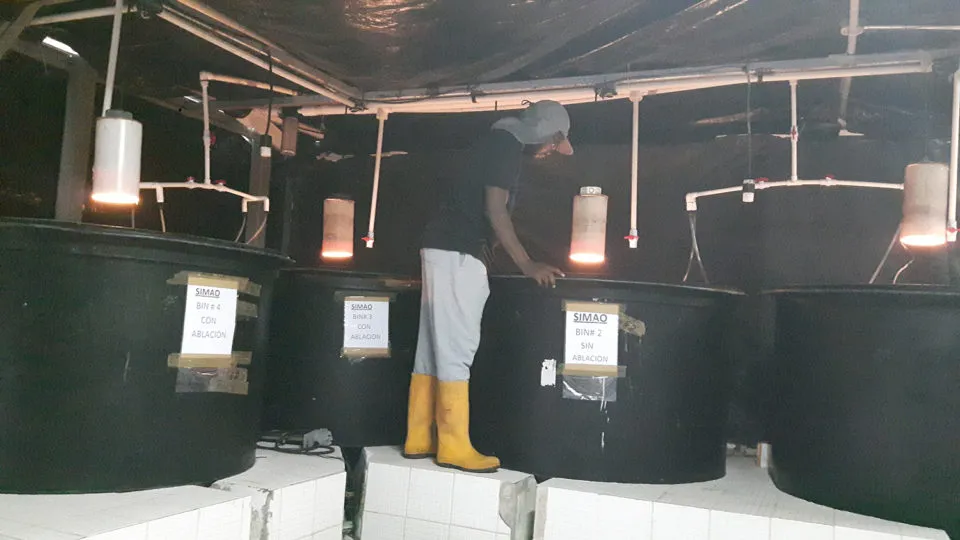
Researcher Simao Zacarias' work on eyestalk ablation in shrimp hatcheries has been selected as one of three finalists for the Global Aquaculture Alliance's annual Global Aquaculture Innovation Award.
Zacarias focused on a key animal welfare issue: the standard hatchery procedure of unilateral eyestalk ablation to achieve higher egg production. Zacarias noted that eyestalk ablation of broodstock not only draws the attention of animal welfare advocates, but also produces larvae that are more susceptible to disease.
This is crucial, as perhaps the biggest challenge for the shrimp industry over the past two decades has been disease. Based on evidence from his research at shrimp hatcheries in Honduras and Thailand, the University of Stirling researcher demonstrated in laboratory trials that post-larvae and larvae from non-ablated broodstock showed higher survival rates when challenged with Acute Hepatopancreatic Necrosis Disease (AHPND, also known as Early Mortality Syndrome EMS) and White Spot Syndrome Virus (WSSV).
Furthermore, Zacarias believes that by providing high-quality, nutrient-rich feed to broodstock during the pre-maturation phase, farmers can achieve similar egg production rates without the need for eyestalk ablation.
He stated: “Dry and fresh feeds, including squid and polychaetes, will stimulate broodstock to mature faster, leading to improved hatchery productivity. Changing the broodstock's light exposure, along with high-quality inputs, will yield positive results.”
Another measure to achieve the same egg production rate is to manage the sex ratio in breeding tanks and increase the male:female shrimp ratio from 1:1 to 1:2.
“We have demonstrated in our research that if the sex ratio is managed, it will produce similar productivity to that achieved with eyestalk ablation,” he noted. Although this requires hatcheries to double the number of female shrimp, it does not mean doubling the cost, because ablated females have a high mortality rate.
“Without eyestalk ablation, broodstock mortality rates are lower. We hope to conduct an analysis in Thailand by the end of the year for a full evaluation of non-ablation. But from information shared by hatchery managers, I have learned that over time, with subsequent generations of non-ablated broodstock, there is no need to increase that spawning rate to achieve similar results. Shrimp will spawn naturally when provided with high-quality supplementary feed.”
He argued: “Retailers and buyers want hatcheries to stop using the eyestalk ablation method. We must use methods that improve welfare and reduce mortality. Firstly, eyestalk ablation affects the health of broodstock and leads to higher mortality rates, which is detrimental to hatcheries. And secondly, offspring from non-ablated broodstock are healthier animals with higher survival rates when challenged by bacterial diseases or White Spot Syndrome Virus. Therefore, even if production costs for hatcheries increase, the value of the final product can still increase.”
“If farmers know that they will have healthier offspring from non-ablated broodstock, they will not perform ablation. This will reduce the need for chemicals and antibiotics to treat diseases, and I will present at the GOAL conference that this has been proven under laboratory conditions.”
Zacarias noted that not all genetic lines of shrimp respond the same way to the cessation of eyestalk ablation; some genetic lines will respond faster than others. Zacarias said hatchery managers may need to evaluate the diversity of shrimp in their tanks, even within the same species.
Conclusion
Stop eyestalk ablation to produce offspring with higher resilience, representing a valuable product with better survival rates and greater economic viability.
He said: “Consumers in Europe and America are demanding a product produced with high welfare standards, so stopping eyestalk ablation can access a larger market share. This innovation can be expected to become an important strategy in future shrimp farming.”
Source: www.aquaculturealliance.org
Translated by: Trần Thị Thúy Quyên