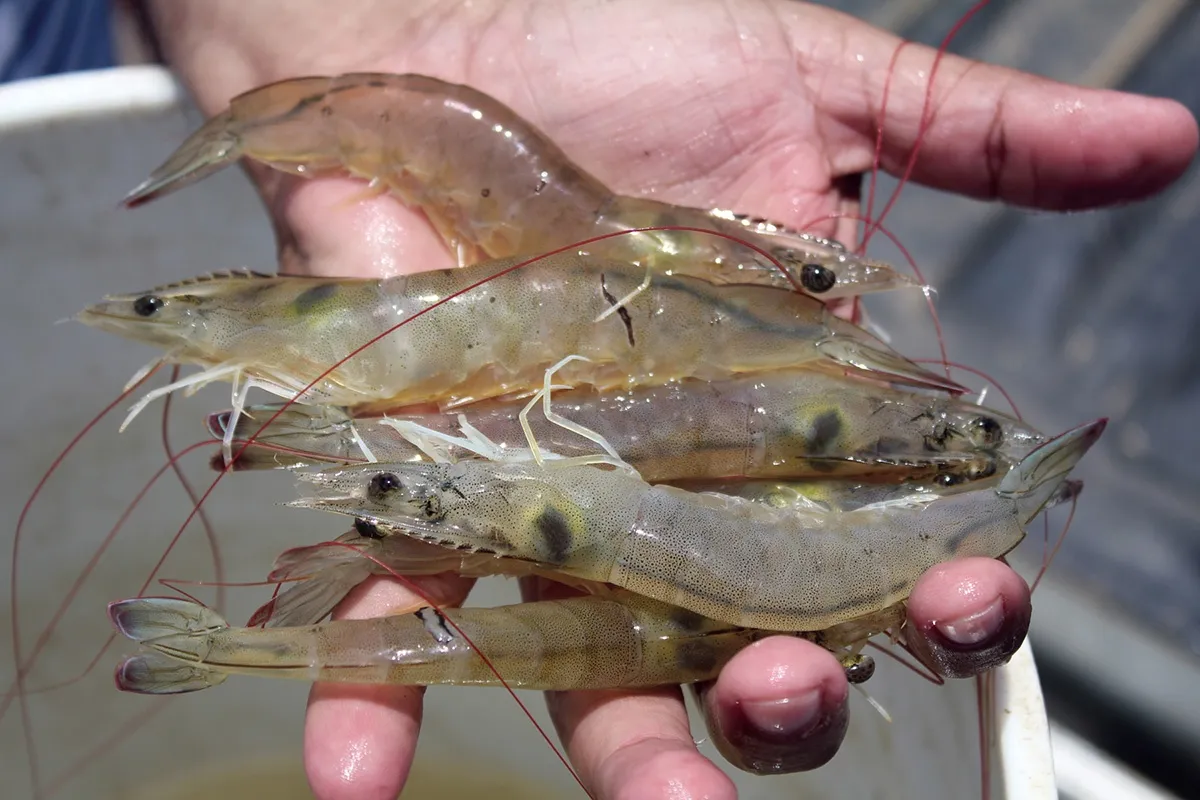
Feed fermented with a bacterial mixture stimulates growth and enhances the immunity of whiteleg shrimp.
Commercial feed is very rich in nutrients; if not effectively digested and absorbed, it will be very wasteful. Therefore, fermented feed containing probiotics has become an effective solution to this problem in recent years. However, to achieve effectiveness in fermentation, the fermentation process needs to be optimized to convert difficult-to-digest plant carbohydrate components in commercial feed.
Optimal conditions for feed fermentation
Solid-state fermented feed typically uses commercial feed as the basic raw material, mixed with probiotics and water, then fermented in aerobic or anaerobic conditions at an appropriate temperature. After fermentation, the feed is dried at 60oC for 30 minutes, then air-dried at room temperature.
The use of a mixed bacterial culture is considered more effective than a single strain. Therefore, a probiotic mixture comprising Lactobacillus plantarum (STBL1), Saccharomyces cerevisiae (STBS1), and Bacillus safensis (SQVG18) was applied for whiteleg shrimp feed fermentation with a bacterial mixture ratio of STBL1: STBS1: SQVG18 = 1%: 3%: 3%.
Fermentation temperature, fermentation time, liquid-to-solid ratio, and bacterial quantity are the main factors affecting the solid-state fermentation process. In this study, temperature was the most important factor affecting fermentation, followed by fermentation time. Accordingly, the optimal fermentation conditions for this bacterial mixture were: temperature 35oC, time 24h, and raw material to water ratio of 1:0.6 g/ml. The addition of water during fermentation can change the color and smell of the feed. The sour smell is mainly due to lactic acid produced by Lactobacillus, which results in lower pH and higher acidity, contributing to the control of shrimp pathogens.
One of the reasons why probiotics are not highly effective when used is the low survival rate of microorganisms in the shrimp gut. The use of feed fermented with a bacterial mixture in this study significantly increased the density of Lactobacillus bacteria in the gut, which is very beneficial for whiteleg shrimp because these lactic acid bacteria can produce various metabolites such as organic acids, hydrogen peroxide, etc., during fermentation.
Probiotic concentrations of 107 CFU/g and 108 CFU/g are suitable for feed fermentation to improve microbial diversity and uniformity in the whiteleg shrimp gut; this indicates that providing too many probiotics can be detrimental to the balance of the shrimp gut microbiota. High probiotic concentrations can also reduce the species diversity of shrimp gut microorganisms.
Positive effects of fermented feed on whiteleg shrimp
The improved growth performance of the group using fermented feed in this study may be due to the increased nutritional value of the fermented feed, such as higher soluble protein and amino acid content.
Limited essential amino acid content is a major problem with commercial feed. In this study, the total amino acids and several essential amino acids (EAA) such as methionine and lysine in the feed fermented with the bacterial mixture were higher than in unfermented feed. Furthermore, through the fermentation process, most amino acid components such as Asp, Thr, Ser, Gly, Ala, Val, Leu, Lys, His, Arg, and Pro in the feed significantly increased.
The use of fermented feed also stimulates the activity of enzymes: protease, amylase, and lipase, which helps in the metabolism of a large amount of carbohydrates, proteins, and lipids in the feed. It can be seen that the activity of digestive enzymes in aquatic animals is closely related to the type and quantity of nutrients in the feed.
Antioxidant enzymes include: T-AOC, SOD, and GSH, which help protect the host from stressors. The activity of T-AOC and SOD significantly increased in the hepatopancreas in treatments using fermented feed. This indicates that the shrimp's antioxidant system is enhanced by the use of fermented feed.
Hepatopancreatic tissue damage is reflected by GPT and GOT. This study showed no significant difference in GPT and GOT activity among all groups, with and without fermented feed, demonstrating that fermented feed with different probiotic concentrations does not harm the hepatopancreas of whiteleg shrimp and can be applied in aquaculture feed production.
In summary, the use of fermented feed for whiteleg shrimp stimulated growth, increased essential amino acid content, reduced the feed conversion ratio (FCR), and helped metabolize difficult-to-digest plant carbohydrate components in the feed. Furthermore, the combination of bacterial strains along with optimal fermentation conditions increased the nutritional content of the feed. The optimal bacterial mixture concentration for solid-state feed fermentation is 1×10⁸ CFU/g.
Source: tepbac.com