Algae play an important role in ponds, helping to stabilize water quality, create shade, and reduce the intensity of direct sunlight into the water. However, the algal density must be appropriate; too little or too much algae is not good for the pond. Common algal groups appearing in ponds include: green, diatom, blue-green, dinoflagellate, euglenoid.
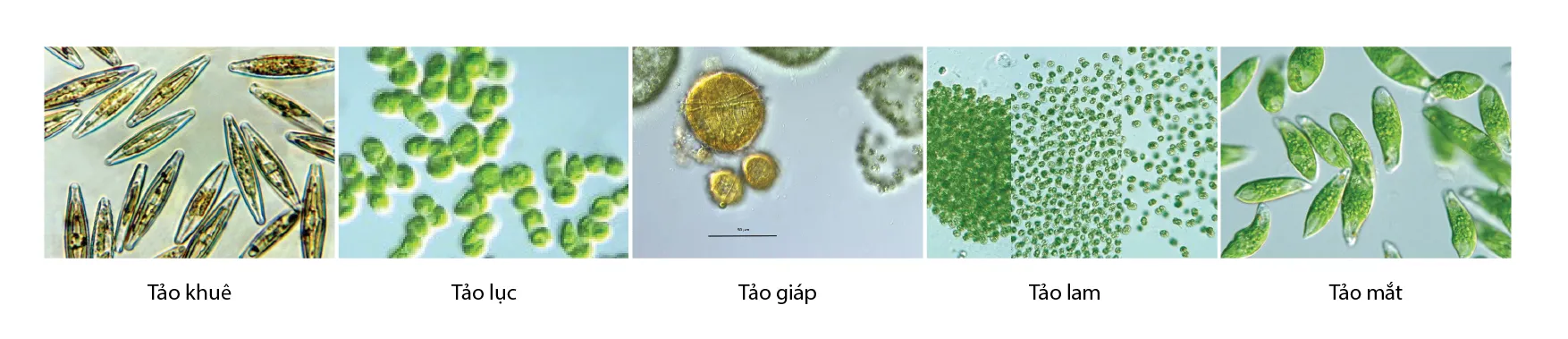
Figure: Algal groups in ponds
Some functions of algae include:
- An important component of the aquatic food chain: Phytoplankton à Zooplankton à Cultured animals (shrimp, fish, etc.)
- Helps balance the pond ecosystem.
- Algae also provide oxygen for shrimp respiration during the day.
- Reduces water transparency (providing a "roof" for shrimp and fish).
- Absorbs excess nutrient salts and organic matter in the water environment (NH4 + , PO4 3 - , NO3 - ). However, in high-density farming systems, this effect of algae is very limited due to the excessively large amount of feed introduced.
Algal changes in ponds
- With a good algal environment and moderate density, water quality is good.
- When algae appear in large quantities in the pond, it is not good, regardless of whether they are beneficial or harmful algae.
- Towards the end of the culture cycle, blue-green algae, dinoflagellates, and euglenoids will mostly be present in the pond due to changes in nutrients and algal cycles. Algal changes in ponds depend heavily on water management experience (feed control, probiotic use, water exchange, and some objective factors like weather).
- Algal species diversity is generally lower than in natural waters and is dominated by the rule of competitive exclusion. In nutrient-poor ponds, species composition is often rich but individual numbers within a species are low, leading to relatively stable algal density. Conversely, in nutrient-rich ponds, some species develop dominantly in number, outcompeting other species, resulting in less diverse species composition. At this point, algal blooms will occur, especially blue-green algae and euglenoids.
- In earthen ponds, algal changes around the 40-day mark often lead to turbid water with little algae, and brown or green patches (two-colored water) often appear. The change in water color in earthen ponds depends heavily on the nature of the pond bottom (clay bottom, loam, sandy soil, etc.).
- In lined ponds during the grow-out phase, the water often develops dense algae, with a lot of scum appearing, and sometimes the rate of algal change in the pond occurs very rapidly within a day.
When do undesirable algae appear in ponds???
- Increasing amounts of feed are introduced without proper control.
- Using low-quality probiotics or extending probiotic application intervals too long.
- High temperatures lead to rapid decomposition of organic matter, causing algal blooms.
- Poor nutrient metabolism in shrimp, resulting in a relatively high proportion of residual protein in feces.
The principle behind the appearance of harmful algae in ponds is the combination of the aforementioned factors, leading to an excessive amount of nitrogen and phosphorus, causing nutrient imbalance in the pond (altered N:P ratio) and eutrophication, at which point dominant harmful algal species will proliferate. And especially when these algal species bloom and die, they release toxins that affect the hepatopancreas, particularly causing intestinal diseases (loose gut, white feces) in practice.
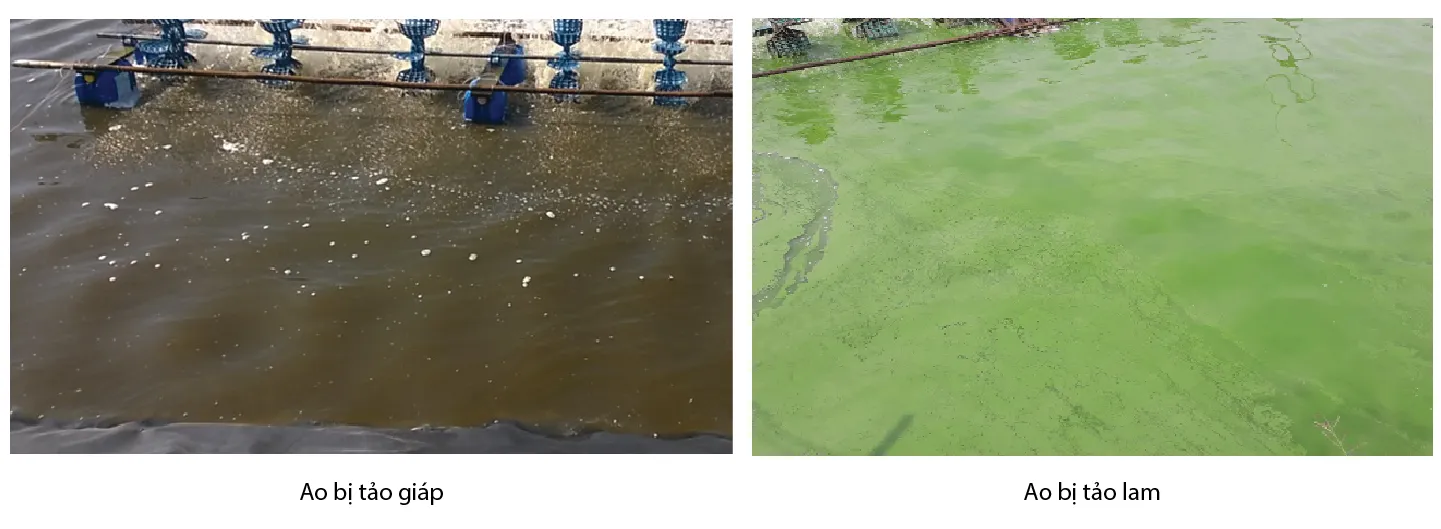
Figure: Undesirable algae in ponds
Algae management in ponds
- Control algae and organic matter with good quality probiotics. The probiotic SoilMax will effectively handle this role.
- Siphon rate, water exchange according to density (combined with CaO lime and probiotics applied at night to reduce the pressure on the treatment probiotics and reduce algae in the pond).
- Adjust feed amount appropriately (can skip meals, reduce feed by 20-30%).
- Can further support with water-cleaning, water-clarifying, and viscosity-reducing products (Siren TV) or water-settling products (AquaBlock Gold); focus treatment when water color shows signs of darkening.
- The use of algaecides is generally not recommended due to safety concerns and sometimes undesirable consequences.
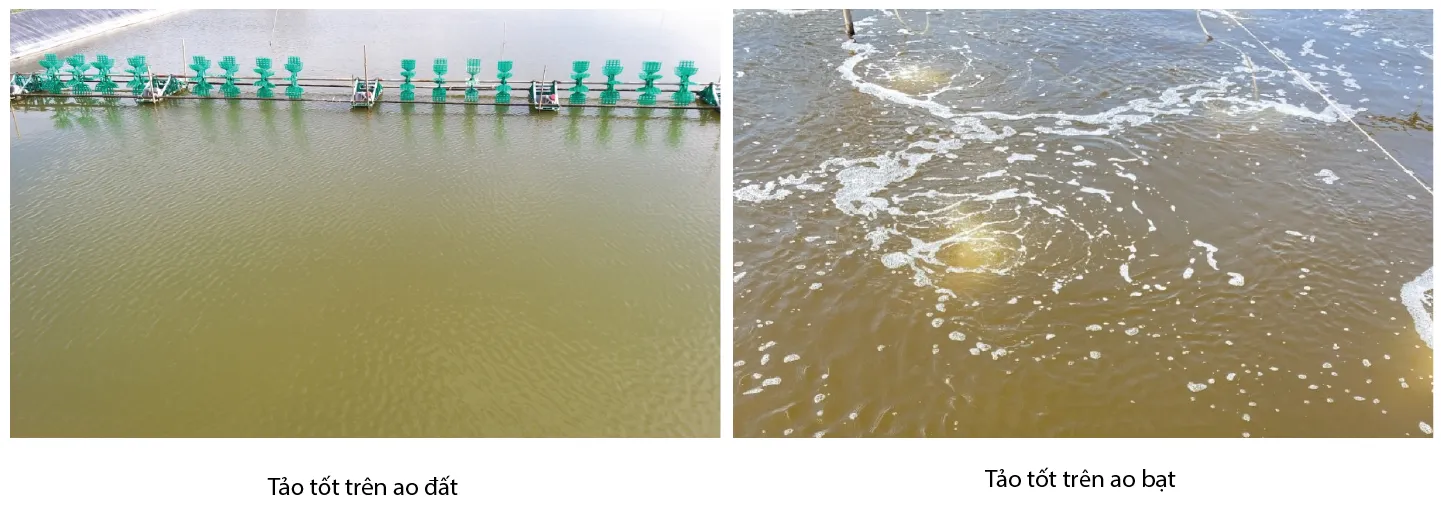
Figure: Good algal color in ponds
Some notes for better algal control
- If the algal color darkens, it is necessary to check pH in the morning and afternoon.
- Pay attention to periods of continuously hot weather and when shrimp are feeding vigorously.
- For even better conditions, use shade nets to partially limit photosynthesis.
Perspective on probiotic application
- Choose a truly good probiotic, ensuring cell count, treatment capability, antagonism against harmful bacteria, etc., as well as visible factors: clear, clean water, clean pond liner, antifungal properties, and long-term water color stability.
- Divide probiotic dosage, using biomass production to reduce costs.
- Be flexible with probiotic treatment times (morning, afternoon, evening) based on observed water color, along with siphoning, water exchange, and strict feed control.
- Tran Cong Viet - Than Vuong Company