The agents causing WFS are still unidentified, but several actions related to shrimp and the environment can be taken to reduce the severe impacts and damage caused by this syndrome.
First described around 2010, White Feces Syndrome, also known as WFS, is a significant disease in shrimp farming in Asian countries, capable of causing severe mortality and economic losses. This disease is a complex syndrome. The causes of WFS are still unknown, and it may not be the result of a single agent. This article describes its etiology and preventive measures.
A syndrome causing mortality and reduced productivity
WFS refers to the presence of white fecal strings floating in the pond. It can be observed in both farmed black tiger shrimp (Penaeus monodon) and Pacific whiteleg shrimp (Litopenaeus vannamei). This syndrome causes several problems, including high mortality rates, slow growth, heterogeneous size, and high feed conversion ratios. Survival rates typically decrease by 20-30% (Tamiarasu et al., 2017), and cumulative mortality can reach up to 50% during summer periods (Hou et al., 2018). Early disease signs (floating fecal strings) appear in feed trays and on the water surface (Figure 1a), along with a sudden decrease in feed consumption. WFS usually occurs in commercial ponds around the second month after stocking.
Shrimp feces change from normal (light brown) to pale white, leading to the disease's name. White feces appear lighter than normal feces and float on the water surface. The shrimp's hepatopancreas also becomes pale, soft, and the intestine is empty due to lack of feed. The midgut is distended and filled with white to yellow substances (Figure 1c). Additionally, emaciated shrimp and darkened gills can be observed.
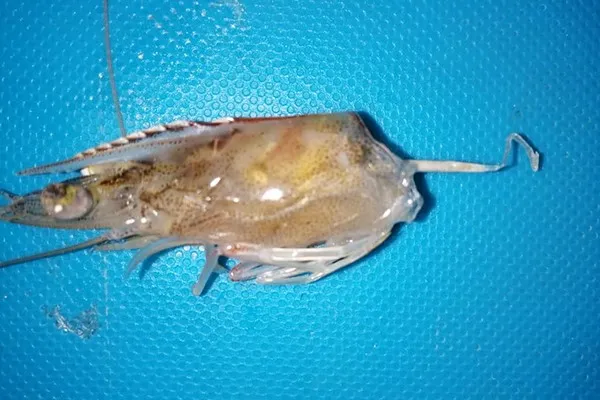
Figure 1. Some common signs of White Feces Syndrome (WFS) showing a) White fecal strings floating on the water surface. (b) White fecal strings in feed trays. (c) Intestine of diseased shrimp. Source: Sriurairatana et al. (2014)
But these feces are not "true" feces. While normal feces primarily consist of digested feed, white feces comprise remnants of tissues from the hepatopancreas and intestinal mucus, and often contain a mixed bacterial composition and a large number of spores from the intestinal parasite Enterocytozoon hepatopenaei - EHP (Pachumwat et al., 2021). Vibrio species are also found in the feces of infected shrimp (Suguna, 2020). When examining the intestine or fecal strings under a microscope, they consist of masses or cells resembling protozoan species (Sriurairatana et al., 2014). This explains why, at some point, it was implicitly assumed that gregarines were the causative agent of WFS.
Sriurairatana et al. (2014) described WFS as a disorder in the microvilli from the epithelial cells of the hepatopancreas. The altered, sloughed-off microvilli are aggregated in the lumen of the tubules and coalesce into vermiform bodies.
With the loss of microvilli, the cells undergo lysis. The vermiform bodies are almost transparent and lack cellular structure; they accumulate with tissue debris, mucus, EHP spores, and finally Vibrio bacteria at the junction of the hepatopancreas and midgut. These aggregated and altered microvilli lead to the formation of white fecal strings, which are eventually expelled (Figure 2).
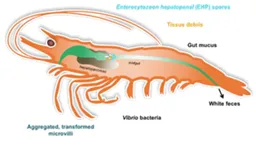
Figure 2. Formation of white fecal strings in shrimp. Source: TECHNA
Histology performed by Sriurairatana et al. (2014) on hepatopancreatic tubule cross-sections (Figure 3a) showed an altered, sloughed-off B-cell in the tubule lumen with microvilli extending over its surface. Epithelial cells with normal microvilli and others with abnormal, thin layers, or covered with microvilli, with ongoing lysis, were also observed.
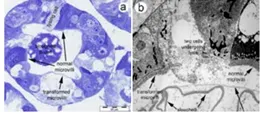
Figure 3. a) Cross-section of a hepatopancreatic tubule stained with toluidine blue showing alteration. B-cell with microvilli extending over its surface
Figure 3. b) Electron micrograph showing altered microvilli and two sloughed-off cells undergoing lysis. Source: Sriurairatana et al. (2014)
By electron microscopy (Figure 3b), hepatopancreatic epithelial cells showed normal and altered microvilli, the initial stage of aggregation of altered microvilli which then slough off, surrounded by a membrane. Subsequently, the altered microvilli synthesize to form granule-like entities.
Environment, microbiota, and stress: Key causes
WFS is a syndrome with complex causes, similar to human diarrhea (Pachumwat et al., 2021), and its origin remains unclear. Recent research suggests that an alteration in the gut ecosystem, rather than a single pathogen, is associated with WFS (Huang et al., 2020). Many studies have demonstrated that adverse environmental conditions and stress are linked to the development of this syndrome. These unfavorable conditions can also facilitate the growth of opportunistic or pathogenic microorganisms and create an imbalanced gut microbial community. Furthermore, anti-nutritional factors and toxins such as mycotoxins present in feed can cause damage to the hepatopancreas, thereby promoting a degraded hepatopancreatic state conducive to the onset of WFS.
Similar to humans, the shrimp digestive system contains a large number of microorganisms dominated by bacteria, forming a complex microbial ecosystem. It has multiple functions and plays a crucial role in maintaining host health, nutrient absorption capacity, or immune response. The balance within the gut microbial population is vital, and a loss of microbial diversity in the gut can cause disease in shrimp.
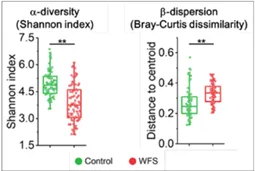
Figure 4. Shannon index and Bray-Curtis dissimilarity of gut, microbial communities or shrimp with white feces. Source: Huang et al. (2020)
Recent studies (Hou et al., 2018; Huang et al., 2020) have reported a strong correlation between gut microbiota dysbiosis and WFS. According to these authors, the gut bacterial community of WFS-affected shrimp is less diverse and more heterogeneous compared to normal shrimp, as shown respectively by the Shannon index and Bray-Curtis dissimilarity in Figure 4.
The structure of the gut bacterial community differs significantly between healthy shrimp and WFS-affected shrimp. According to Huang et al. (2020), an increase in opportunistic pathogens (Vibrio, Candidatus Bacilloplasma, Aeromonas, and Photobacterium species) and a decrease in the abundance of beneficial bacteria (Chitinibacter spp.) are common characteristics associated with WFS-affected shrimp. Furthermore, this study demonstrated that transplanting gut microbiota from WFS-infected shrimp to healthy shrimp resulted in similar symptoms in approximately one-third of the cases. Hou et al. (2018) reported that the overgrowth of Candidatus Bacilloplasma and Phascolarctobacterium species in the gut and the decline of Paracoccus and Lactococcus, known to be beneficial to the host, can lead to the occurrence of WFS.
WFS is often associated with EHP, with spores found in feces and the initial appearance of altered microvilli. As described by Huang et al. (2020), microsporidia were proposed as the causative agent of WFS, but this hypothesis was not supported by subsequent studies. Recently, Pachumwat et al. (2021) indicated that EHP might be a component but not the sole causative agent. According to Sathish Kumar et al. (2022), WFS is a "diarrhea-like" disease in shrimp linked to severe EHP infection and possibly combined with an unidentified agent.
The loss of numerous microvilli can make shrimp susceptible to other intestinal pathogens. A study by Somboon et al. (2012) indicated that most shrimp with white feces had significantly higher amounts of Vibrio bacteria, including V. vulnificus, V. fluvialis, V. parahaemolyticus, and V. alginolyticus, in their hemolymph (shrimp blood) and intestines, compared to control shrimp.
Preventive measures
Although the exact causative agent or trigger for WFS is still unknown, several actions can be taken to prevent outbreaks or at least reduce the severe impacts and losses caused by this syndrome. We can divide the possible actions into two different categories: shrimp and environment.
Shrimp
It has been demonstrated that WFS initially targets the hepatopancreatic cells of shrimp. Therefore, promoting a better condition of this organ can help combat the effects of WFS. This can be achieved by using high-quality, easily digestible feed. Quality ingredients and appropriate formulations will lead to improved digestion and less stress on the hepatopancreas.
The selection of ingredients with low levels of toxins or anti-nutritional factors is also crucial, as these compounds will directly affect the hepatopancreas. Indeed, this organ processes many toxins in the shrimp's body. Furthermore, feeding rates should be adjusted. Overfeeding will cause pressure and stress to shrimp and their digestive system.
We have seen that the impact of WFS on shrimp mortality is largely due to antagonistic pathogens such as EHP or Vibrio bacteria. Specific feed additives can be used to limit the proliferation of these pathogens in the shrimp's digestive tract. The animal's immunity can also be enhanced by using specific ingredients known as immunostimulants.
Environment
Besides the shrimp, the environment must also be considered. Indeed, the pond is a complex ecosystem, directly impacting not only the cultured animals but also surrounding pathogens. It is crucial to monitor parameters and adjust farming practices accordingly.
Firstly, high temperatures (Tamilarasu et al., 2020), and especially strong temperature fluctuations, particularly stress the animals and can intensify WFS outbreaks or increase their severity. Other important parameters to monitor include: pH, alkalinity, ammonia, nitrite, and dissolved oxygen levels. Similarly, maximum and/or minimum levels, as well as strong fluctuations, can contribute to WFS outbreaks or increase their severity. High stocking density, poor pond bottom quality, and excessive algae also negatively affect environmental quality and shrimp.
Feeding and feed quality also impact the environment because undigested feed accumulates in the ecosystem, causing pollution and creating conditions for opportunistic pathogens to thrive. As mentioned above, feeding rates should be adjusted and reduced when risks increase (values close to limits and strong fluctuations).
Strict implementation of biosecurity measures is also crucial to keep environmental pathogens as low as possible. Opportunistic pathogens can have a very strong impact during WFS outbreaks.
Finally, it is important to adapt and anticipate. Indeed, prevention is more effective and less costly than treatment. Farm management needs to be adjusted according to conditions. For example, ammonia toxicity varies with pH and temperature. Therefore, ammonia concentration limits depend on these parameters. Furthermore, if ammonia levels are rising, do not wait until they reach the limit to take action. It is crucial to anticipate. Feeding should also be adjusted according to the general pond conditions, not just the size of the shrimp.
By Sophie Reys and Pierre Fortin