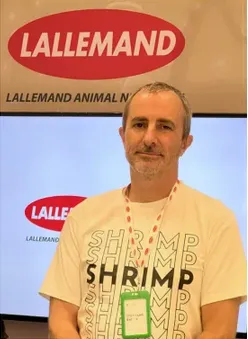
Recently, Stephane Ralite – Global Aquaculture Technical Director for Lallemand Animal Nutrition, spent a significant amount of time in Indonesia after this 122-year-old company – specializing in fermentation and microbial management – received distribution licenses for several probiotic strains for the shrimp farming industry. The use of probiotics as part of Standard Operating Procedures (SOPs) is now common in most shrimp farms in Indonesia, as well as many other Asian countries like India, and also in Ecuador.
Notably, nitrogen (in combination with protein) has very complex dynamics in shrimp ponds, where ammonia is central to many reaction chains. Controlling ammonia helps reduce the risk of direct toxicity, but attention must also be paid to nitrite. Understanding the mechanisms of different nitrogen cycles is crucial for selecting and applying appropriate management measures. For example, for many years, pond farming techniques have recommended supplementing molasses to promote the growth of heterotrophic bacteria in the pond. But Vibrio bacteria are also heterotrophic, and they efficiently utilize organic carbon sources (Figure 1).
Furthermore, water exchange or alkalinity changes can weaken the fragile and slow-growing nitrifying bacterial population, leading to elevated nitrite concentrations.
At the Lallemand booth, Ralite spoke with AAP and shared further insights into how probiotics are supporting farms as a daily management tool and mitigating disease outbreaks.
In Asia, have shrimp farmers gained a better understanding of the importance of microbial management now compared to a few years ago?
Stephane Ralite: Awareness of microbial management has significantly improved. Not long ago, there were still many questions about the importance and effectiveness of probiotics, as well as whether their use was necessary. When I speak with farmers, I clearly sense that the focus now is on how probiotics work and how to use them. The shift lies in a greater understanding and recognition that microbial management plays a crucial role in overall shrimp pond management.
The 'how' remains the main question. Today, with the development of new technologies like gene sequencing, we have more knowledge and clearer explanations of how many products work. However, we must also frankly admit that more research is still needed. Fortunately, that is also Lallemand's strength – with over 100 years of experience, based on three main pillars:
- Research, selection, and production of specific microbial strains.
- Research for deeper understanding of microbial mechanisms and changes in water, soil, and shrimp gut.
- Practical application of solutions.
In Indonesia, Lallemand has been licensed for several probiotic products. What benefits will this bring to the industry?
Stephane Ralite: We have received marketing authorization for several products and are awaiting more licenses. There are many application directions in commercial shrimp farming:
- Improving water and soil quality.
- Enhancing shrimp immunity and supporting the formation of a healthy gut microbiota – all aimed at better health.
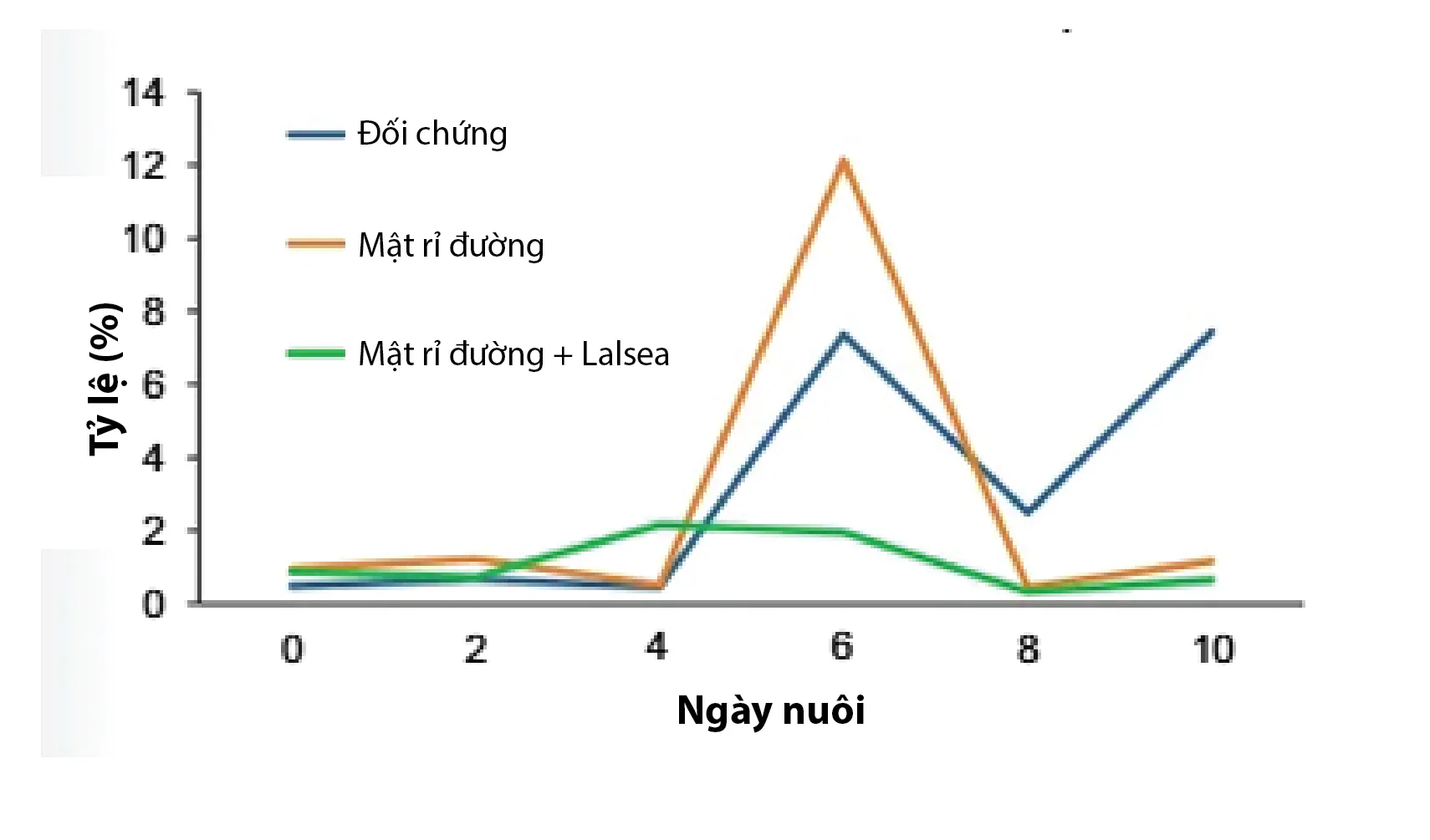
Figure 1. Trial in Vietnam shows Vibrio increased along with total heterotrophic bacteria when molasses was supplemented, and was controlled when used in combination with Lalsea Pack probiotics
Shrimp farmers face many challenges. Beyond market difficulties (e.g., US tariffs being a hot topic), technical management on a shrimp farm is also extremely challenging, as many factors influence outcomes, some of which are beyond the farmer's control. Lallemand strives to bring its expertise (understanding and adjusting microbial populations, quantity, and function) to support farmers in this specific area.
It is important to address current issues by adapting, evolving, becoming more technical, and applying science, although this is a challenge
In Indonesia, a notable characteristic is that the younger generation of technicians is gradually taking on leadership roles. This generation brings a dynamic and open-minded spirit. They are eager to learn, unafraid of barriers, and proactively adapt strategies and management procedures when necessary. This is an opportunity for the Indonesian shrimp farming industry because it is crucial to address current issues by adapting, evolving, and applying scientific technology, despite the challenges involved. Furthermore, at all organized workshops, technicians took very detailed notes, demonstrating their readiness to learn and ask pertinent questions.
What are the limitations of supplementing probiotics into feed?
Stephane Ralite: At the feed level, the biggest challenge when supplementing live microorganisms into feed is the temperature during the pelleting/extrusion process. In the field, farmers can apply them directly, which allows for high flexibility in dosage and timing depending on the situation. However, it is labor-intensive, and farmers need to pay attention to uniformity – which is not always easy to achieve. Some manufacturing companies have successfully implemented processes that allow for the year-round supplementation of microorganisms into feed at stable concentrations.
Disease control through microbial management
In his presentation, Ralite focused on the evolution of bacterial populations. In shrimp ponds, there are many different bacterial species, fluctuating according to living conditions. The risk of Vibrio outbreaks in shrimp ponds is always present. Vibrio often grows faster than Bacillus in 35ppt seawater (Figure 2) and can cause diseases such as Acute Hepatopancreatic Necrosis Disease (AHPND) and White Feces Syndrome (WFS).
Therefore, the prevention strategy involves establishing beneficial microbial systems with good metabolic capacity after disinfection, aiming to create a balanced microbial environment. Other measures include using probiotics like Bactocell to form protective biofilms.
Connecting gut health with microbiology, Ralite showed that Vibrio grows rapidly in shrimp ponds. The antagonistic strategy is to protect the gut and establish positive biofilms internally, to reduce the risk of Vibrio biofilm formation. Dysbiosis of the gut microbiota can lead to diseases such as AHPND, WFS, and TPD. Vibrio can also be inhibited by specific components from yeast.
The threat of AHPND in Indonesia?
Stephane Ralite: Pathogen control is a challenge, and new pathogens are always emerging. Pathogen control involves comprehensive management from the pond, farm, regional, and national levels, requiring coordination among multiple stakeholders in the supply chain. At the same time, flexibility and rapid adaptability to new situations are needed.
We are playing a core role, providing pre-, pro-, and post-biotics to help mitigate risks. In the shrimp farming industry, knowledge sharing between farmers and technical experts is a key point for collective improvement. I find that compared to previous experiences, farmers in Indonesia are now more willing to learn and adopt knowledge. Knowledge is increasing, and we can expect significant improvements in the near future.
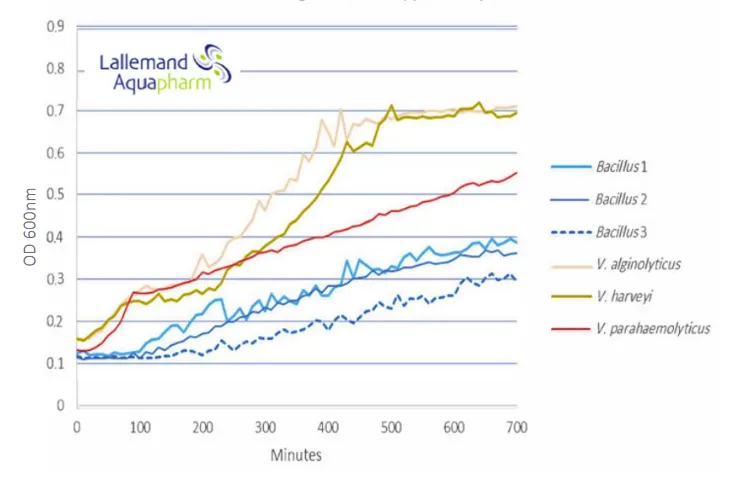
Figure 2. Bacterial growth in 35ppt salinity water. As opportunistic bacteria, Vibrio often grows faster than Bacillus in seawater environments
How can you help in controlling IMNV?
Stephane Ralite: Beyond bringing knowledge from outside Indonesia, we have long worked on sustainable immune solutions by applying biological products. Immunity is a complex topic, and to mitigate the impact of Infectious Myonecrosis Virus (IMNV), a comprehensive approach is needed, but we have observed some positive results from our solutions.
Brazil has extensive experience in IMNV management. Initially, they mitigated the impact of IMNV by developing genetic shrimp lines with higher IMNV tolerance. However, they then faced a resurgence of White Spot Syndrome Virus (WSSV). Genetic selection or the introduction of new lines are powerful tools, but can also carry risks if not well managed.
For EHP or bacterial diseases, control must start from broodstock management, post-larval quality, and biosecurity management on the farm. Once again, there is no 'magic bullet,' but rather a need for strict management at every step of the production chain.
What should farmers pay attention to regarding AHPND and EHP?
Stephane Ralite: Vibrio is a very complex topic. There cannot be a 'magic product' that completely solves the 'Vibrio problem'. Vibrio management requires a holistic approach, integrated with overall microbial management on the farm, not just in shrimp but also in the water.
Vibrio is ubiquitous (ponds, shrimp, feed, etc.) and is often considered a pathogen. However, not all Vibrio species are harmful. The presence of Vibrio often reflects the quality of overall microbial management in the farming environment. Therefore, controlling Vibrio is important, but not sufficient – it is necessary to protect the shrimp's gut microbiota, and thus there is no alternative but to integrate microbial management into overall microbial management practices.
Enterocytozoon hepatopenaei (EHP) is a separate issue; I often call it the 'silent killer' because EHP can exist in shrimp without farmers realizing it. The most noticeable impacts are reduced feed conversion efficiency and slow growth. When immunity is weakened, the gut microbiota is affected, which then makes shrimp susceptible to pathogenic Vibrio infections, potentially leading to AHPND or WFS.
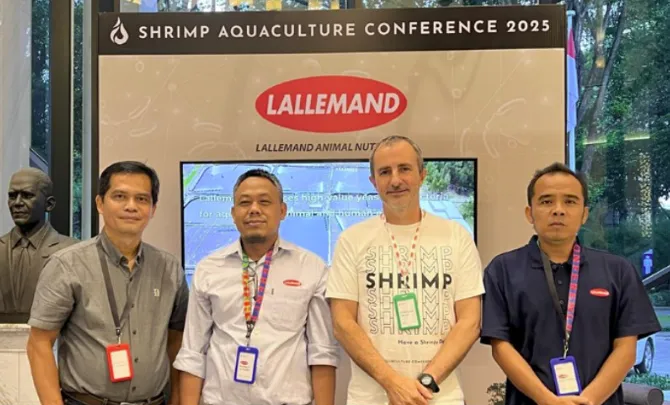
The Lallemand Animal Nutrition team at SAC 2025: Stephane Ralite, Global Aquaculture Technical Director (center right) and Rahmat Sutono, Business Development Manager – Indonesia (center left), along with distributors M. Ali Ridho and Anton, PT Cipta Sentosa Semesila
Translated by: Than Vuong Marketing Department