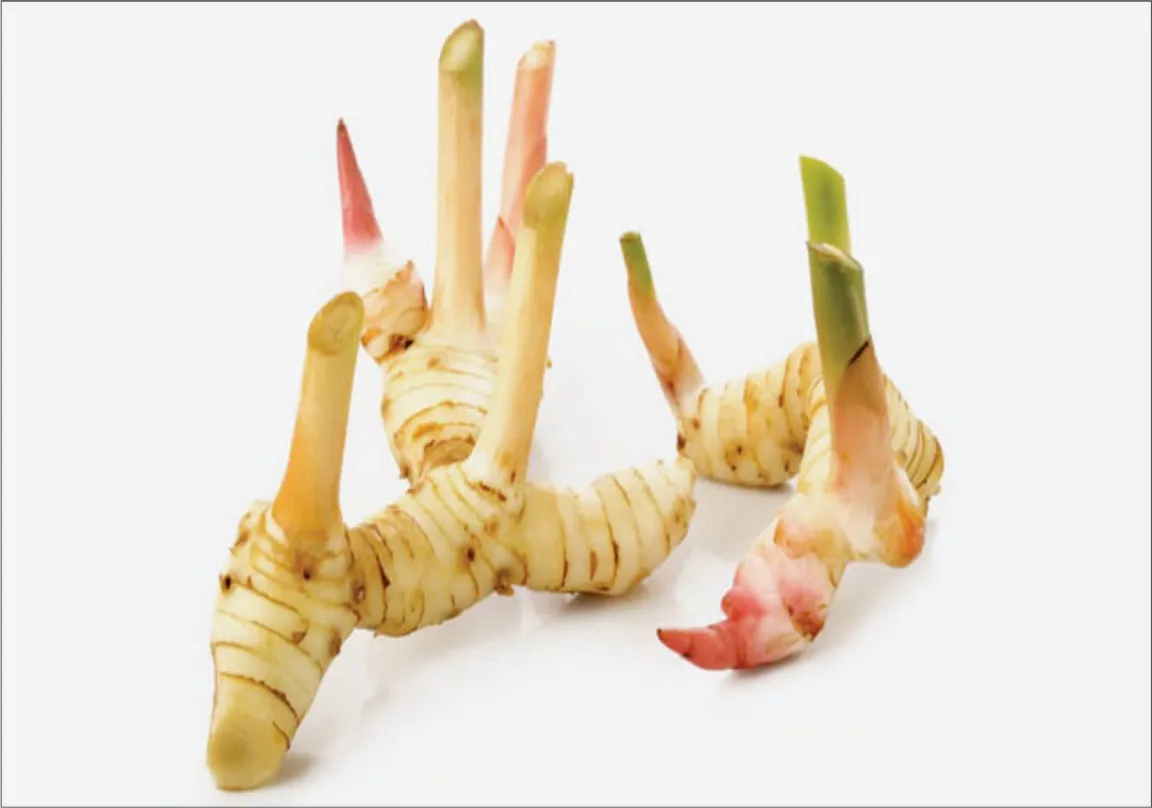
In a new study, scientists have shown that extracts from Galangal (Alpinia galanga Linn.) are capable of inhibiting the growth of 8 species of Vibrio spp., but most importantly, against Vibrio parahaemolyticus, which causes EMS/AHPND in Pacific white shrimp.
In addition to Vibrio spp. causing white feces disease, 6 types of fungi (Aspergillus flavus, A. ochraceus, A. japonicus, Penicillium sp., Fusarium spp., and Cladosporium cladosporioides) were also detected after isolating infected shrimp. For many years, many farmers have used antibiotics to treat white feces disease, but this has not yielded absolute effectiveness and has led to antibiotic residues in farmed shrimp.
A new research method was implemented to effectively replace antibiotics and control disease-causing agents in farmed shrimp using Galangal. The extract from Galangal (Alpinia galanga Linn.), an herb, helps inhibit the growth of 8 pathogenic Vibrio spp., typically V. parahaemolyticus (EMS/AHPND).
The study was conducted as follows: there were 3 treatments, a control of 0%, 2%, and 4% equivalent to the amount of Galangal extract supplemented in the feed. The Galangal extract was dissolved in ethanol at a concentration of 0.25 g/mL, then mixed with feed at control levels of 0%; 2% (5 g/kg feed) and 4% (10 g/kg feed). The feed was kept at room temperature for 30 minutes to allow the extract to permeate evenly. Next, the feed was coated with squid oil at 10 g/kg feed to prevent the dispersion of the Galangal extract into the water and to reduce the extract's odor. These experimental diets were prepared daily for shrimp at a feeding rate of 3.0% of the shrimp's body weight, fed 3 times/day during the 12-day experimental period. Shrimp were stocked with an average weight of 10.7 ± 0.8 g/individual, 10 individuals/90L tank. Water quality parameters were maintained at levels suitable for shrimp habitat. The pathogen, V. parahaemolyticus bacteria, was directly introduced into the shrimp's body at a density of 2.85 ± 0.63 x 10⁵ cfu/mL.
After 12 days of experimentation, the total amount of Vibrio spp. in the hepatopancreas and intestine of L. vannamei shrimp fed with Galangal extract supplementation was significantly lower than that of the control group (P <0.05) (Figure 1).
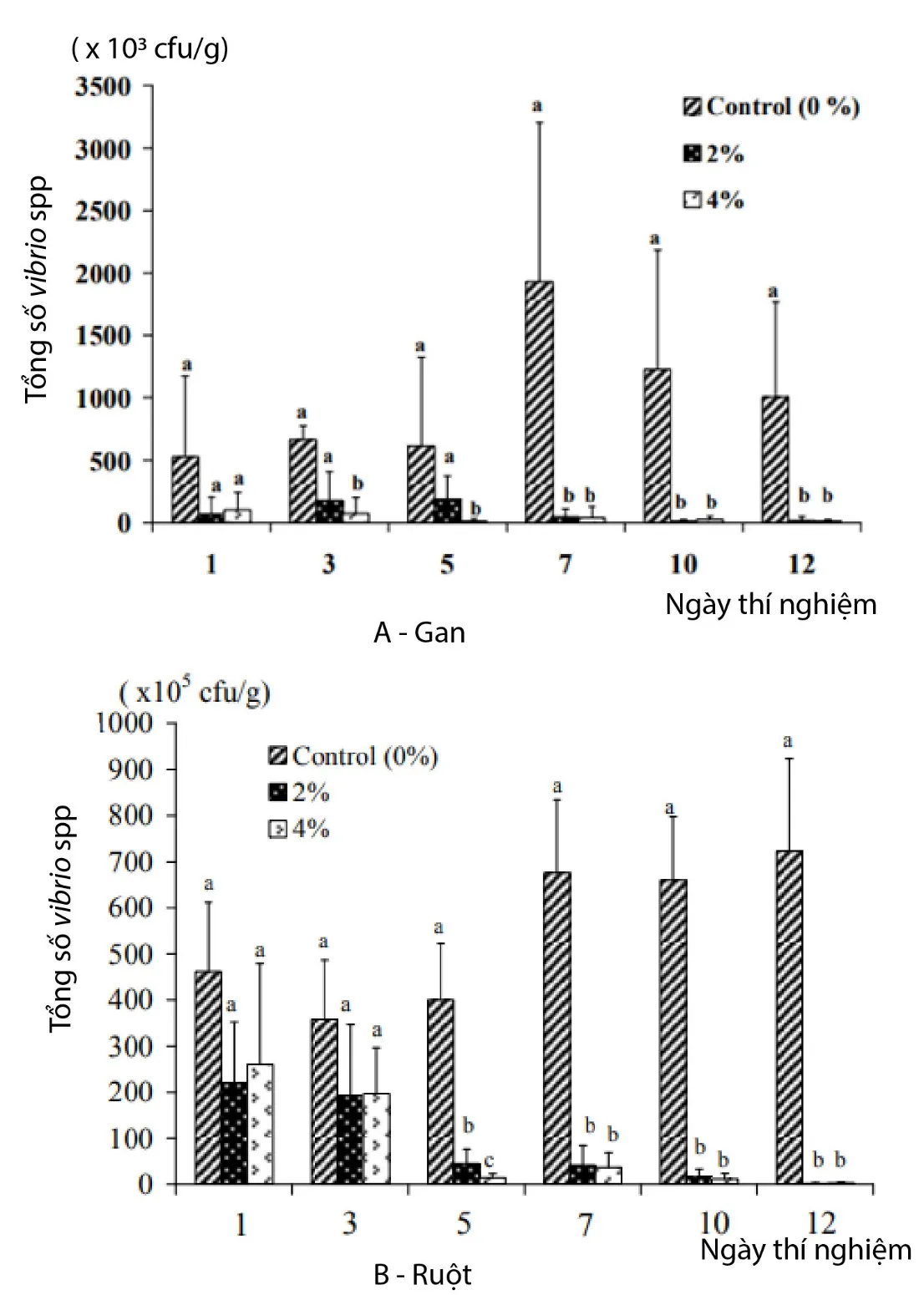
Figure 1. Total Vibrio spp. count in the hepatopancreas (A) and intestine (B) of L. vannamei shrimp in 3 treatments with 0%, 2%, and 4% Galangal extract supplementation after 12 days of culture (p < 0.05)
Fungal infection rate in the hepatopancreas and intestine of infected L. vannamei shrimp
when fed with diets supplemented with Galangal extract was significantly lower than that of the control group (P <0.05). Fungi were found in the hepatopancreas and intestine of Pacific white shrimp during the experimental culture period from 10 to 12 days (Figure 2 (A) and (B)).
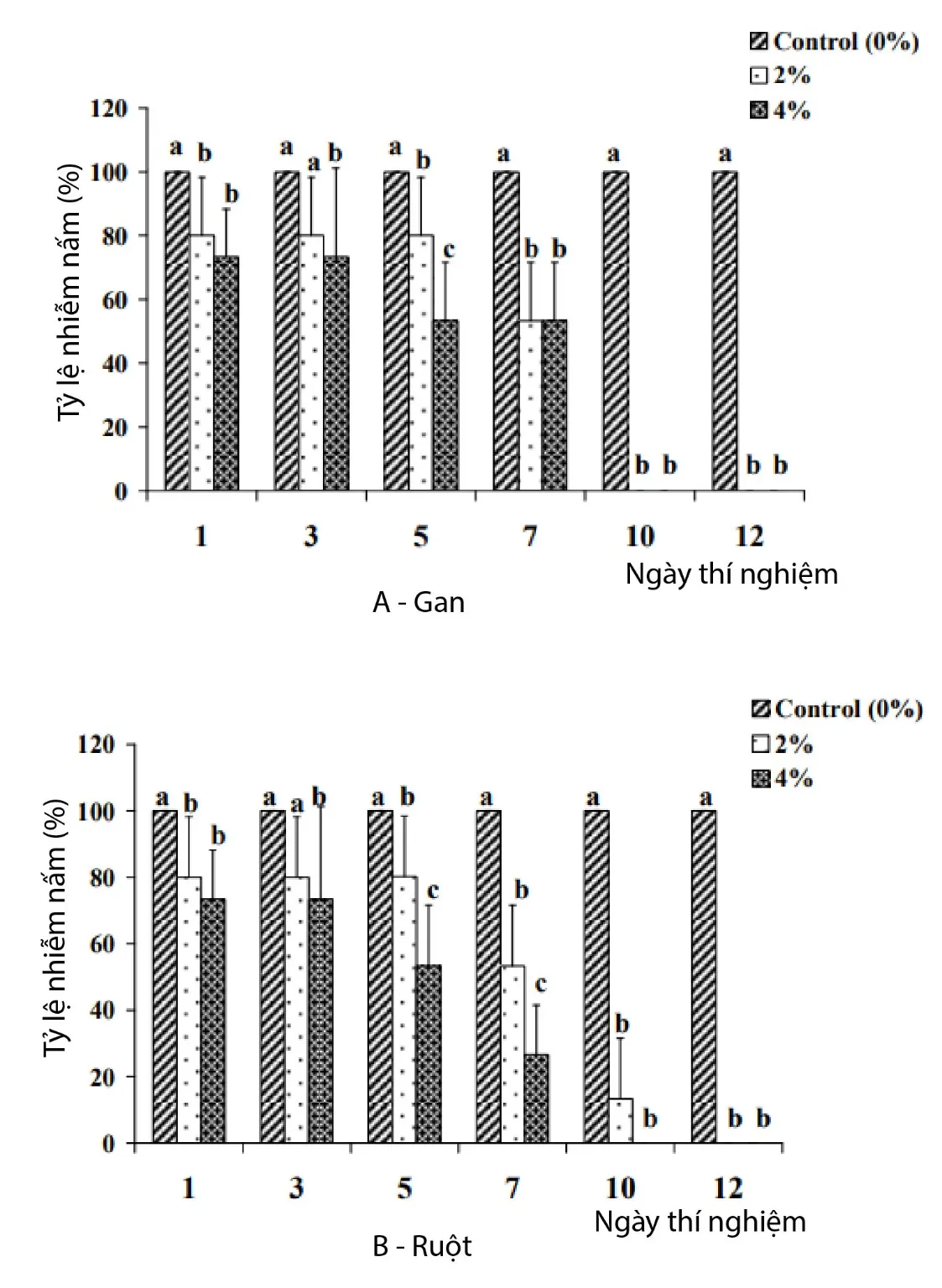
Figure 2. Fungal infection rate (%) in the hepatopancreas (A) and intestine (B) of shrimp
infected L. vannamei in 3 treatments with 0%, 2%, and 4% Galangal extract supplementation after 12 days of culture (p < 0.05)
The survival rates of shrimp in treatments fed with 2% and 4% Galangal extract were 73.3 ± 5.8% and 83.3 ± 5.8%, respectively. The lowest was in the control treatment (0% Galangal extract) at 16.7 ± 5.8%. The most significant effect on survival rate was observed in the treatment where shrimp were fed with 4% Galangal extract, yielding the highest survival rate.
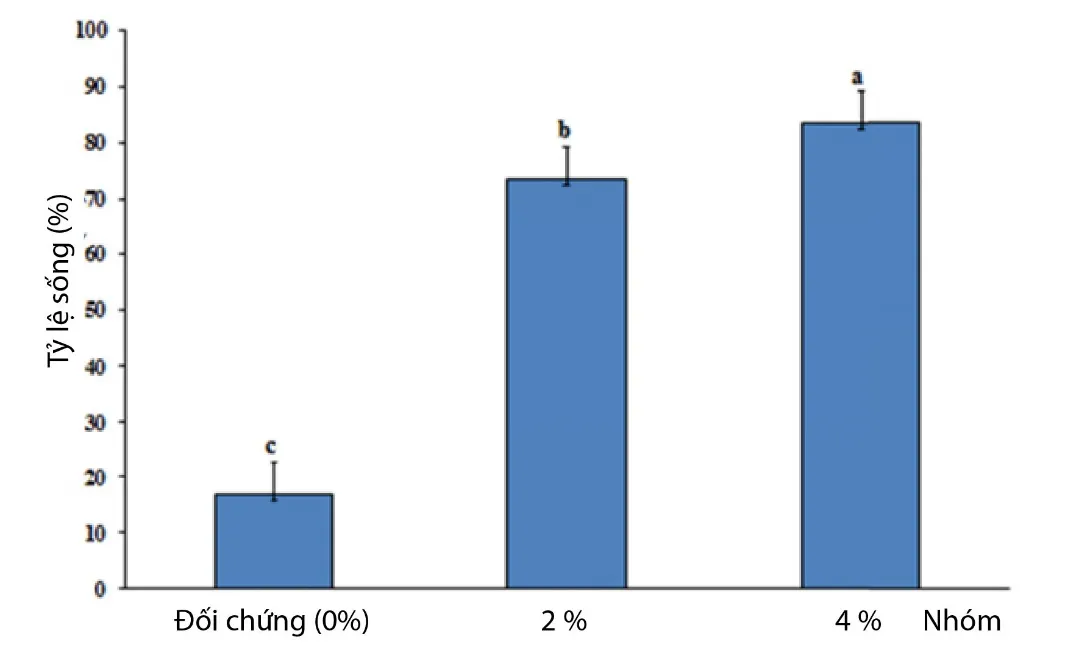
Figure 3. Shrimp survival rate after 12 days of experimental culture with different amounts of Galangal extract supplementation (p <0.05)
The research results showed that: Infected Pacific white shrimp fed with 4% (10 g/kg feed) Galangal (Alpinia Galanga Linn.) extract for 12 days showed very low total Vibrio spp. count and fungal infection rate in the shrimp's hepatopancreas and intestine, significantly lower than the control treatment (p < 0.05). Furthermore, the survival rate of shrimp fed with 4% Galangal extract-supplemented feed was significantly higher than that of the control treatment (p < 0.05) when shrimp were challenged with V. parahaemolyticus bacteria causing EMS/AHPND.
Thus, it can be concluded that Galangal extract possesses antibacterial properties and can be used as an antibiotic against the pathogens causing white feces disease and acute hepatopancreatic necrosis disease in shrimp. In the future, this herb could be used to replace chemical drugs used in industrial shrimp farming, providing a source of clean and safe products.
Reference: Tidaporn Chaweepack, Boonyee Muenthaisong, Surachart Chaweepack & Kaeko Kamei, 2015. The Potential of Galangal (Alpinia galanga Linn.) Extract against the Pathogens that Cause White Feces Syndrome and Acute Hepatopancreatic Necrosis Disease (AHPND) in Pacific White Shrimp (Litopenaeus vannamei).
http://citeseerx.ist.psu.edu/viewdoc/download?doi=10.1.1.919.7944&rep=rep1&type=pdf