Parasites are one of the disease-causing agents in fish. They appear in all farming models, especially in high-density pond farming, where the infection rate is very high. Parasitic diseases severely impact fish health, leading to slow growth, low productivity, food safety concerns, and even mortality, primarily during the fingerling stage. At the same time, they pave the way for pathogenic viruses, bacteria, and fungi. Parasites do not appear in isolation but are often found alongside other diseases such as hemorrhage, ulcers, white spots on the body…. (referred to as co-infection of parasites and bacteria).
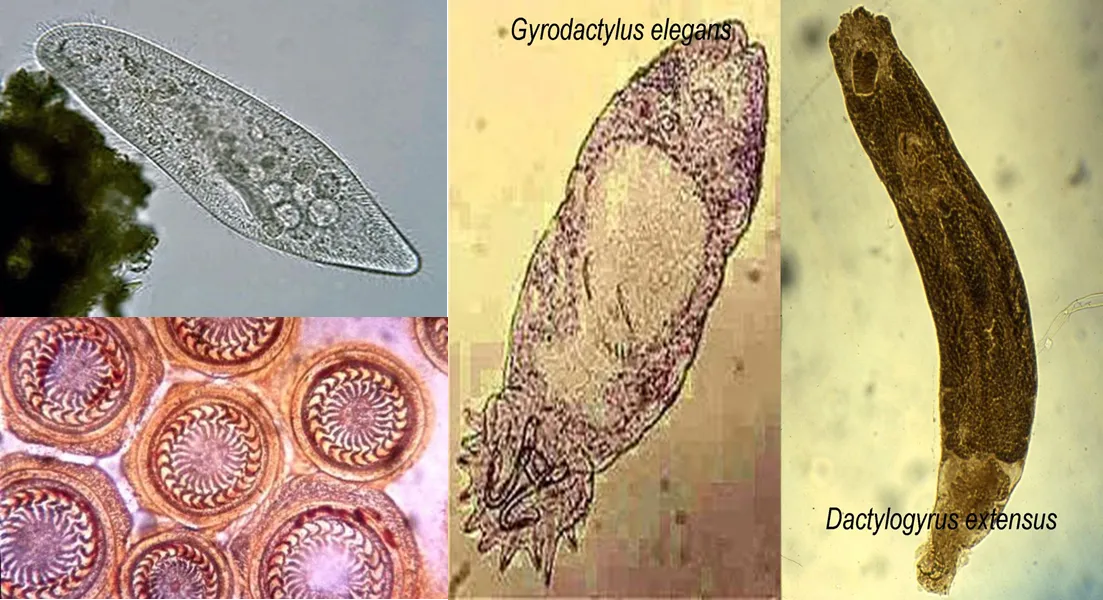 Image of *Ichthyophthirius multifiliis* (Ich); *Trichodina* (wheel worm); monogenean flukes with 16, 18 hooks
LIFE CYCLE OF FLUKES
Monogenean flukes have a direct life cycle on the fish host. *Dactylogyrus* flukes lay eggs, which can sink to the pond bottom or attach to aquatic plants in the water. On the 4th day, the eggs hatch into free-living larvae that quickly seek a host to continue their parasitic life. By the 10th day, they develop into adult flukes and participate in reproduction. Warmer weather accelerates the egg-laying rate. *Gyrodactylus* flukes are viviparous, meaning they give birth to live young. The fluke's body can contain 2-3 embryos, each containing a fluke resembling the adult, also known as "embryo within embryo" or "three generations in one". When the young fluke emerges from the mother fluke's body, it continues to parasitize the fish and causes damage similar to the adult fluke. The life cycle of *Dactylogyrus* is 19 days, and *Gyrodactylus* is 13 days.
In reality, with high-density fish farming, contaminated water sources, and unstable weather conditions, various internal and external parasites proliferate significantly, affecting fish by causing poor appetite, slow growth, reduced immunity, making them susceptible to diseases, and poor feed absorption, leading to a high FCR.
To address this issue, a safe, periodic internal and external deworming schedule is needed for each fish development stage, as follows:
- Fish < 300g stage: Use Aqua Prazi 1kg/15 tons of fish, feed for 3 consecutive days with 80% of the feed amount. Periodically every 25-30 days. At this stage, fish are still small with poor resistance and tolerance, and are in a rapid growth phase. Therefore, Aqua Prazi should be used to ensure fish safety during internal deworming, preventing a weakened fish body after deworming, which could affect nutrient absorption and fish development.
- Fish > 300g stage: Use ivermectin (raw material) 100g/80 tons of fish, feed for 2 consecutive days with 80% of the feed amount. Periodically every 30 days. At this stage, fish have higher tolerance, so they will not be significantly affected and will not suffer from gallbladder flukes leading to jaundice. In cases where fish are infected with 'gạo disease' (also known as sporozoites or cysts), use albendazole 1kg/15 tons of fish or febendazole 1kg/15 tons of fish, feeding for 3 consecutive days with 50% of the feed amount.
- After internal and external deworming, stop feeding for 1 day. At this point, the parasites are weakened and detached. Proceed with disinfecting and eliminating parasites using (Fytobloom Plus 1 liter/1,500 m3 of water, applied by broadcasting at 9-10 AM). Two days later, apply probiotics + minerals (Niazyme 1kg/5,000m3 + Aqua Block+ 2kg/1,000m3).
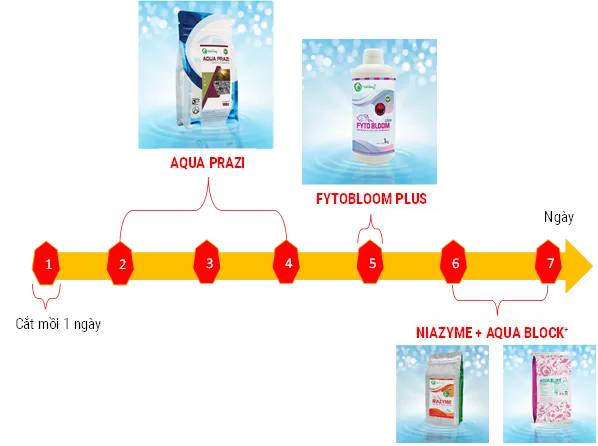
**Note: To increase the effectiveness of internal and external deworming, it is recommended to stop feeding 1 day before deworming. After deworming, it is necessary to supplement with nutrients, vitamins, and liver detoxifiers to help fish quickly recover from parasite-induced damage, as well as to boost their immunity and promote optimal development.**
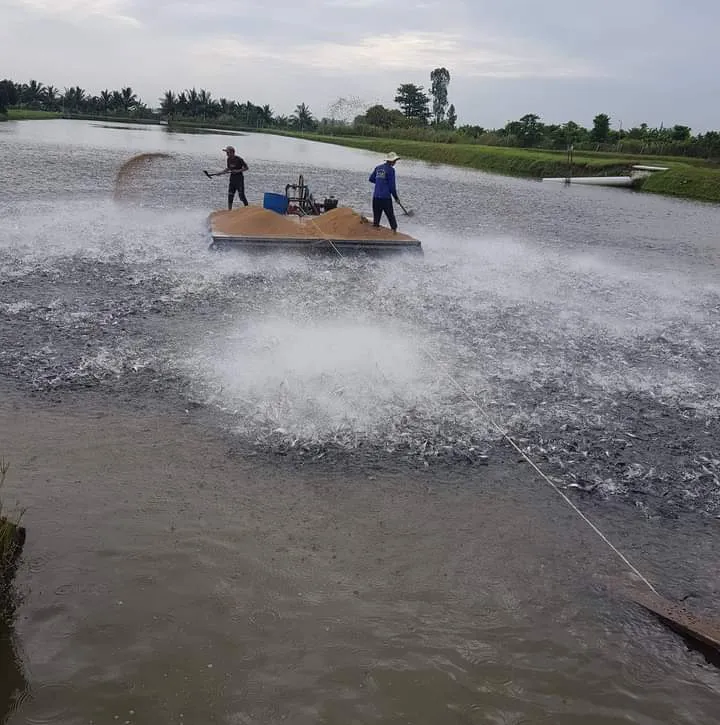
The purpose of safe, periodic internal deworming according to each fish development stage is to help fish grow well, absorb feed effectively, eliminate parasites that attach and absorb nutrients inside and outside the fish's body, enhance antibodies to improve disease resistance, promote rapid growth, and reduce FCR during the farming cycle.
Applying the products according to the above procedure will achieve the most optimal results in safe internal and external deworming for each fish development stage, helping farmers succeed in their fish farming season.
Author Fish Technical Staff – NGUYỄN MINH ĐỨC