
(QBĐT) - According to the report from the provincial Department of Animal Husbandry and Veterinary Medicine, as of the end of July 2018, shrimp diseases had occurred in 47 farming households across 6 communes and wards in 4 districts and towns, with a total affected area of nearly 24ha, accounting for over 2.1% of the total farmed area in the province; causing damage to 13.2 million shrimp postlarvae. Specifically, White Spot Syndrome Virus (WSSV) affected nearly 22.6ha/52 ponds/44 households in Ngu Thuy Trung commune (Le Thuy), Dong Trach and Ha Trach communes (Bo Trach), and Quang Tien commune, Quang Thuan ward (Ba Don Town); Infectious Hypodermal and Hematopoietic Necrosis Virus (IHHNV) affected over 1.6ha/4 ponds/3 households in Vo Ninh commune (Quang Ninh).
In the 2018 shrimp farming season, Vo Ninh commune (Quang Ninh) cultivated approximately 35ha of brackish water shrimp. From early April until now, over 13.1ha of farmed shrimp have been affected by diseases, accounting for 37.5% of the total farmed area in the commune; of which over 11.5ha were affected by WSSV, over 1.6ha by IHHNV, resulting in losses of over 7.6 million shrimp postlarvae.
Inspections revealed that some ponds were infected in the previous farming season; however, entering the 2018 farming season, farmers did not thoroughly renovate their ponds or completely eradicate pathogens, which is the main reason for the outbreak and spread of the disease.
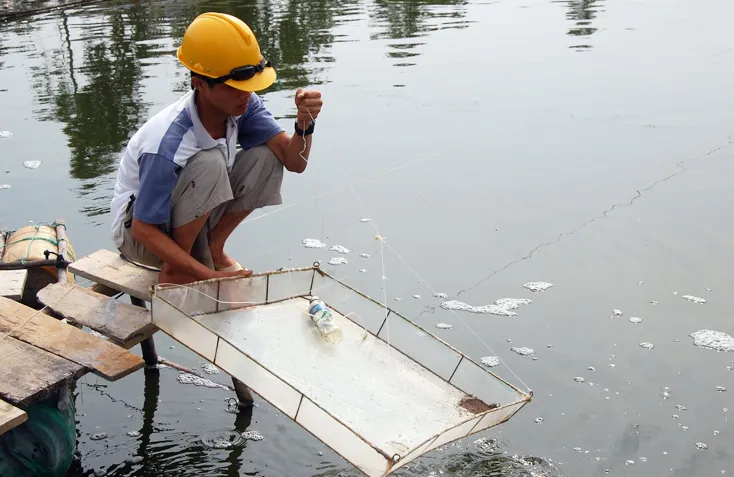
Additionally, White Spot Syndrome also emerged in several localities within the province, such as Quang Thuan ward and Quang Tien commune (Ba Don Town) with over 8.6ha affected; Dong Trach and Ha Trach communes (Bo Trach) with over 1.8ha; and Ngu Thuy Trung commune (Le Thuy) with 0.3ha.
According to Mr. Tran Cong Tam, Head of the provincial Department of Animal Husbandry and Veterinary Medicine, compared to the same period in 2017, shrimp diseases decreased in both scope and affected area. However, in 2018, shrimp diseases occurred earlier, primarily concentrated in earthen ponds, in old outbreak areas, and affected shrimp mainly between 25-65 days of age.
Besides the abnormal weather conditions that reduced shrimp's resistance and led to disease, there were also subjective factors from the farmers. Specifically, farmers did not thoroughly renovate ponds and eradicate pathogens from old outbreak areas in some ponds in Vo Ninh and Ha Trach communes; some households deliberately monitored or treated the disease for 5-7 days before reporting it to local veterinary officers and authorities... leading to the spread of the disease.
Accompanying shrimp farmers, the provincial Department of Animal Husbandry and Veterinary Medicine has recently intensified its guidance and monitoring of shrimp disease situations in localities, especially in areas experiencing outbreaks.
To control the outbreak within a limited area and minimize economic losses for farmers, the Department promptly directed the Animal Husbandry and Veterinary Stations of districts, cities, and towns to closely coordinate with local authorities and relevant agencies to implement epidemic control measures; simultaneously providing Chlorine chemicals to shrimp farming communes for disinfection, environmental treatment before the farming season, and outbreak suppression, totaling 25,650kg, including 15,950kg for canal disinfection and 9,700kg for outbreak suppression (Vo Ninh commune received the most with 5,100kg). Additionally, the Department conducted 2 rounds of proactive disease surveillance sampling in key shrimp farming areas, collecting 49 shrimp samples and 49 water samples. Results showed that 8 out of 21 samples tested positive for White Spot Syndrome virus; 30 out of 30 samples tested negative for bacteria causing Acute Hepatopancreatic Necrosis Disease.
Based on the analysis and assessment of shrimp farming areas at risk of disease outbreaks, the Department issued warnings about the risk of disease spread to guide shrimp farmers on timely treatment measures. According to Mr. Tran Cong Tam, to minimize losses, in shrimp farming areas experiencing outbreaks, farmers should temporarily stop stocking, focus on treating and renovating ponds, and prepare postlarvae for the new farming season; adjacent ponds currently in operation need to implement measures to prevent infection from affected ponds.
For ponds where shrimp show signs such as: unusually high or reduced feed intake, white spots on the shell, red body, black gills, sluggish swimming, disorientation, etc., farmers should immediately report to veterinary officers at all levels to collect samples for testing to identify the cause of the disease and implement timely treatment to avoid losses during the farming season.
Furthermore, shrimp farming facilities need to strictly adhere to technical farming procedures, have sedimentation ponds and treat water before supplying it to culture ponds, and purchase postlarvae from reputable facilities that have been tested free of disease-causing viruses; for ponds that have experienced disease outbreaks for two consecutive years, it is recommended not to continue shrimp farming but instead switch to fish farming or implement crop rotation, polyculture with multiple species, etc.
Source: Quang Binh Newspaper