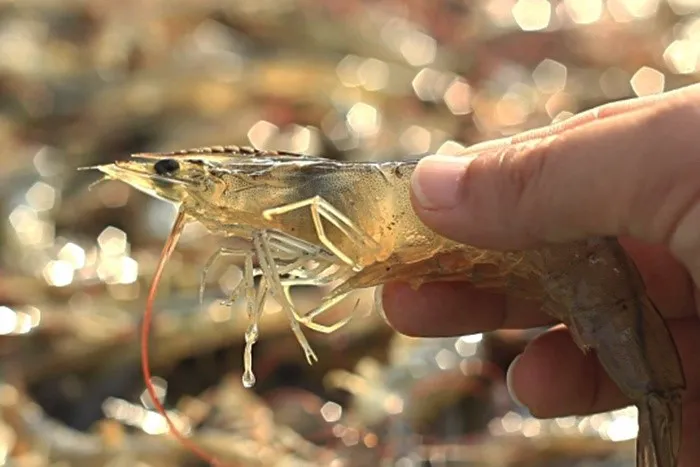
Whiteleg shrimp. Photo: istockphoto.com
The global shrimp farming industry is experiencing rapid growth; however, disease remains the primary limiting factor. This article discusses the benefits of probiotics and microbial strains that enhance shrimp immunity to prevent and treat diseases in shrimp.
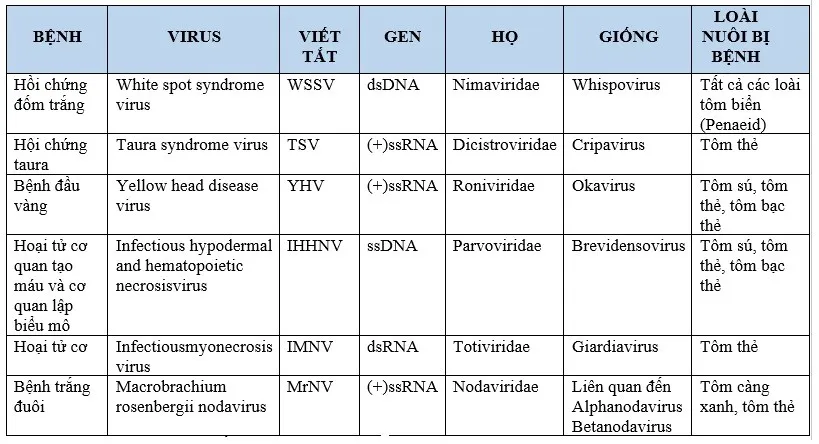
Viral diseases are a major concern in aquaculture, especially in shrimp farming, as they cause high mortality rates, leading to severe economic losses. This necessitates a shift towards biosecurity, meaning improving shrimp farming methods and ensuring cultivation systems to limit the entry and spread of pathogens. Probiotics are used to control pathogens through various mechanisms; therefore, they are considered an alternative to antibiotic treatment. In addition to being beneficial bacteria, probiotics also possess antiviral activity.
Viral diseases in shrimp
Some methods to help control shrimp diseases
1. Assured quality of shrimp postlarvae
Shrimp postlarvae must be tested for the presence of common pathogens and certified disease-free before stocking.
2. Disease management
Essential elements in disease management include inlet water treatment, wastewater treatment, sludge disposal, handling of diseased dead shrimp, post-harvest procedures, and on-farm biosecurity. Typically, farmers in Asian countries often discharge wastewater directly into the environment without treatment, which increases the risk of disease outbreaks and environmental pollution. Inadequate disposal of dead shrimp leads to disease transmission and spread. White Spot Syndrome Virus (WSSV) spreads horizontally through water, feed, and the presence of infected living organisms (crabs, fiddler crabs, etc.).
3. Wastewater management
Various measures have been applied to treat waste and wastewater. Fish species such as tilapia and milkfish are raised in sedimentation ponds to act as biofilters, and wastewater is discharged into these ponds for a period before being supplied to shrimp culture tanks. To reduce the negative impact of wastewater, the use of effective microbial products has been proposed. Typically, farmers dry out ponds for one to two months, then plow and collect sludge from the pond bottom, followed by disinfection, drying, and flushing to ensure the pond bottom is clean and suitable for shrimp farming. Water recycling and water supply through sedimentation ponds are some recommended methods to minimize wastewater from shrimp ponds.
4. Bacteriophages - Phage
Bacteriophages (phages) are entities that “eat” bacteria, or more precisely: they are viruses of bacteria, capable of causing disease and destroying bacteria.
Replacing antibiotics with phages is a very promising option in aquaculture to control the transfer of bacteria that can be harmful to fish and consumers. The use of these organisms to infect and destroy bacteria significantly reduces the environmental impact of fish farms, while increasing profitability by reducing mortality rates in the early stages of production.
5. Use of chemicals/antibiotics
To control pathogens in aquaculture, chemicals such as: BKC, Iodine, Chlorine, Formal, etc., are commonly used.
In addition to oxytetracycline, other antibiotics used in shrimp farming include tetracycline, Amoxicillin, Florfenicol, etc. See also the list of banned and restricted antibiotics in aquaculture.
However, the use of antibiotics for disease prevention and treatment in shrimp needs to be limited due to the long-term harm it causes.
6. Probiotics in shrimp farming
Lactic acid bacteria are used as probiotics to improve growth, survival rates of farmed shrimp, and reduce pathogens. Beneficial bacteria for aquaculture have been isolated from marine sediments and in the digestive tracts of aquatic animals. The importance of these beneficial microbial systems is listed in the Table below. They have been accepted as more effective than the use of antibiotics or chemicals and are considered a comprehensive method for both environmental and animal health.
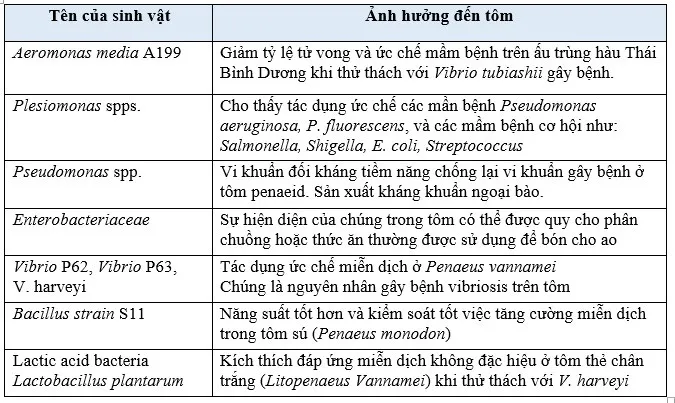
Native microorganisms (bacteria abundant in the culture environment and shrimp body) and their effects on farmed shrimp.
Probiotics play a role in activating the immune defense system of shrimp. Shrimp have a weak immune system, and probiotics are known to play an important role in enhancing immune responses in shrimp. The bacterium Lactobacillus plantarum has been reported to enhance immune responses and gene expression in whiteleg shrimp when supplemented in feed. L. plantarum is known to enhance immune activity and the killing efficiency of Vibrio alginolyticus, and increase shrimp survival rates during challenge. These effects were observed when supplemented at a dose of 1010 CFU/Kg feed for 168h.
Lactobacillus plantarum is also highly effective against Vibrio harveyi. In experimental challenges with V. harveyi, whiteleg shrimp showed increased resistance compared to the control group. This is because the beneficial bacterial strain exhibits an immunomodulatory effect on the host. Probiotic bacteria are known to produce extracellular compounds that can stimulate non-specific immune responses.
Probiotics from Pediococcus acidilactici showed protective effects against oxidation and stress in whiteleg shrimp when challenged with Vibrio nigripulchritudo. The bacterial strain was effective in maintaining antioxidant levels for a longer period compared to control and unchallenged groups. This indicates that probiotic bacteria, in addition to enhancing immune defenses, also maintain defense levels in shrimp, providing long-term protection.
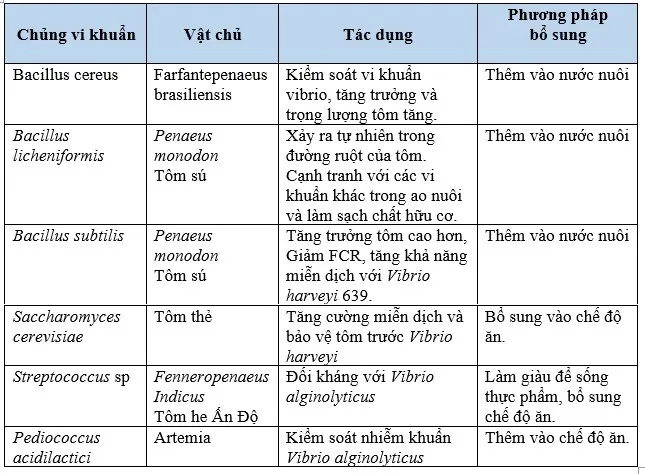
Microbial strains used as probiotics in shrimp farming
Reports indicate that probiotic supplementation yields better results when used from the beginning of the shrimp farming process compared to after a disease outbreak. Therefore, the best recommendation is to incorporate probiotics into the animals' regular diet to prevent various infections, keep the animals healthy, and increase economic value.
(Bestha Lakshmi, Buddolla Viswanath and D.V.R.Sai Gopal Journal of Pathogens/ Volume 2013, Article ID 424123, 13 pages.)
Collected by: tepbac.com