Nowadays, minimizing chemical use is an important issue not only in aquaculture but also in animal husbandry. According to a report by the World Health Organization (WHO, 2011) on the implementation of effective biosecurity measures, new vaccine development, the use of Prebiotics and Probiotics, and good management and hygiene practices are crucial for controlling many infectious diseases in both aquaculture and terrestrial animals, which can lead to a significant reduction in antibiotic use in animal husbandry and aquaculture.
As farmers become more aware of the negative impacts of various treatments used in disease control in aquaculture, alternative methods have been proposed, including the use of probiotics to enhance immune responses in fish and shellfish, the use of beneficial bacteria against pathogens, and the use of natural products such as essential oils and antimicrobial agents. Among these, seaweed has been proven as a “Potential Antimicrobial Agent”.
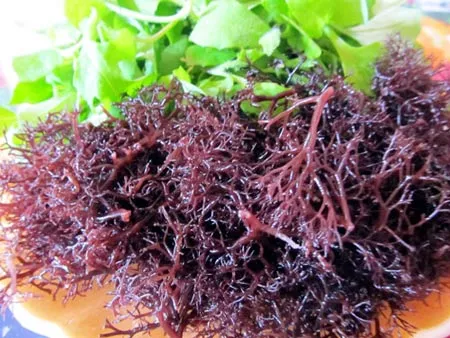
The main antimicrobial compounds found in seaweed are: fatty acids, lipophilic and phenolic compounds, lectins, acetogenins, terpenes, alkaloids, polyphenolics, isoprenoid metabolites, and hydrogen peroxide. In general, these substances can:
- Attack bacterial cell walls and cell membranes, leading to the release of intracellular substances or disrupting the absorption and transport of substances, such as phlorotannins.
- Reduce the synthesis of protein and nucleic acids in bacterial cells.
- Inhibit respiration. Phlorotannins can also form complexes with some bacterial extracellular enzymes, thereby reducing their effects. In most cases, the effects are dose-dependent.
Seaweed, and especially some of its metabolites, act on the quorum sensing mechanism where bacteria communicate with each other. This density-dependent process involves the production of certain substances, such as peptides or lactones, which are then released into the environment. When the concentration of these substances increases beyond a certain level, they are detected by specific receptors located in the bacterial cell membrane or cytoplasm. This, in turn, regulates the expression of several genes. Many Gram-positive and Gram-negative bacteria use this process to collectively regulate various processes, such as bioluminescence, biofilm formation, and the production of virulence factors. Active compounds released from seaweed, such as Furanones, can disrupt this process, thereby affecting the virulence of many pathogenic bacteria, for example, the virulence of many Vibrio species. Because of these properties, and especially their effect on biofilm formation, seaweed extracts have also been studied as antifungal agents in aquaculture. It is worth noting that a significant advantage of these inhibitors is that they do not exert selective pressure on bacteria like antibiotics do.
Thanigaivel et al. (2014) conducted a study to demonstrate the potential of using seaweed extracts as an alternative to antibiotics. The authors examined the antioxidant and antimicrobial properties of an Ethanol extract from the seaweed Chaetomorpha antennina. Regarding antimicrobial properties, the authors first infected Penaeus monodon (average weight 12 g) with V. parahaemolyticus and then treated the infected shrimp by immersing them in a medium containing 250 mg/L seaweed extract for 12 - 48 h. This treatment resulted in 98% survival of the treated shrimp. This was the first report demonstrating the therapeutic efficacy of using seaweed extracts in the short term.
Aquaculture is a growing industry, and disease outbreaks are one of the main limiting factors, affecting production volume and costs. Assessing the precise impact of microbial diseases on aquaculture production is very difficult, as there are both direct and indirect effects. Stressful conditions can also impair the immune systems of fish and shellfish, subsequently reducing their response to infectious agents. The use of seaweed extracts is gaining increasing interest for their role in disease prevention and supportive treatment in aquaculture. To date, most studies on the antimicrobial effects of seaweed have taken place in various parts of Asia, particularly India. Currently, increasing extraction costs inhibit the widespread use of these extracts. Other methods, such as the production of synthetic compounds with similar properties, could reduce production costs. Based on published studies, seaweed extracts exhibit "promising" antimicrobial properties, but further research is needed before drawing complete conclusions about their function in aquaculture.
Trần Thị Thúy Quyên