Streptococcus agalactiae and S. iniae are two of the most devastating bacteria affecting the global freshwater fish farming industry – causing diseases that can lead to 80% fish mortality. Here we describe the bacteria, their impact, and how to ensure their presence and effects are minimized.
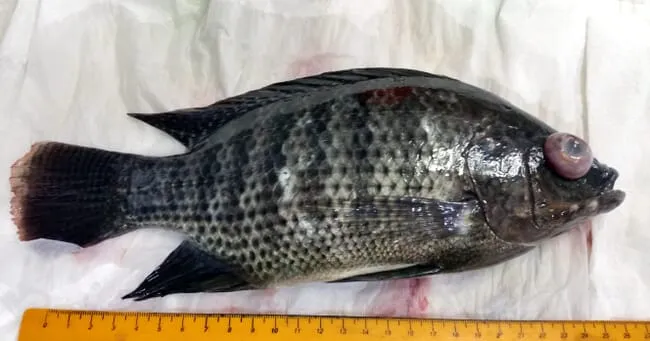
Hybrid tilapia infected with Streptococcus agalactiae
Streptococcus iniae and S. agalactiae are Gram-positive bacteria that cause disease in farmed and wild fish. They are spherical or ovoid in shape, with a diameter of 0.5-2.0 μm. They appear in pairs or chains when grown in liquid media, are non-motile, and do not form spores.
They are facultative anaerobes, requiring nutrient-rich media for growth, and typically attack red blood cells to produce green discoloration (α-hemolysis) or complete clearing (β-hemolysis) on blood agar. Both bacteria can cause zoonotic concerns.
S. iniae infects immunocompromised patients when handling live fish. Comparative genomic analysis of piscine S. agalactiae isolates indicates that human S. agalactiae strains are present in fish, frogs, and aquatic animals, thus posing a potential risk to humans. S. iniae was one of the main pathogens affecting warmwater fish species in the late 1990s and 2000s. Currently, S. agalactiae has emerged as the primary pathogen in farmed tilapia ( Oreochromis spp.) in Asia, Latin, and South America. Annual worldwide monetary losses due to these pathogens were initially underestimated at US$100 million. China alone accounts for approximately 40% of global tilapia production (~US$3 billion), and Chinese producers have reported losses of 30–80% due to S. agalactiae. Assuming an average annual loss of 40%, that equates to approximately US$1 billion in lost revenue in China alone.
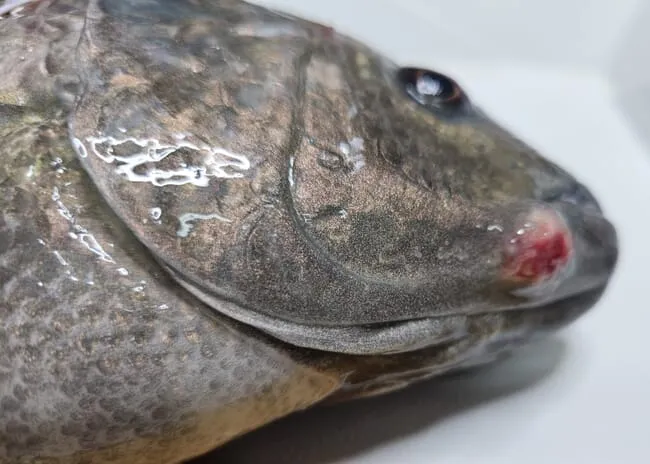
Hybrid tilapia infected with S. agalactiae showing hemorrhagic skin pustules at the base of the mouth
Transmission
Streptococcus spp. are transmitted horizontally via water, with newly introduced carrier fish species serving as a source of infection. Pathogens can survive in water and sediment near fish farms for over a year. Fecal-oral transmission can occur when infected dead fish are fed to fish. It has been demonstrated that S. agalactiae orally enters red tilapia ( Oreochromis sp.) through the gastrointestinal epithelium, causing septicemia. However, an alternative route – through the nostrils, skin, and gills – cannot be ruled out. Regardless, the removal of dead and moribund fish must be a top priority for farmers as these fish shed pathogens.
Vertical transmission of both S. iniae and S. agalactiae has been suggested in tilapia as the bacteria have been detected in both fertilized eggs and larval offspring. The potential for vertical transmission makes the control of S. iniae and S. agalactiae problematic.
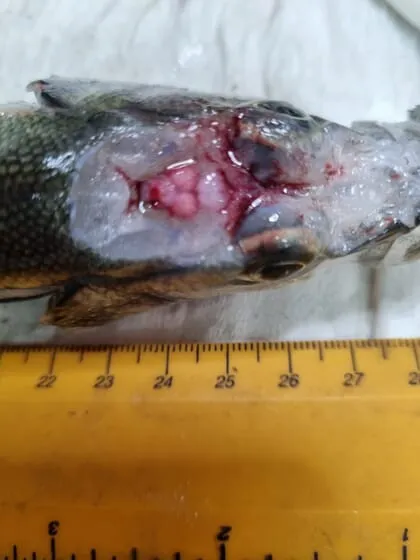
Hybrid tilapia infected with S. agalactiae showing brain congestion
Geographical Distribution
S. iniae and S. agalactiae are distributed worldwide and infect more than 27 fish species, including tilapia. Both pathogens affect wild and farmed species in freshwater, brackish, and marine environments.
Causes of Disease
Stress is often the main predisposing factor for this disease. Several stressors have been implicated in Streptococcosis outbreaks, including water temperatures outside the optimal range (24–30°C), high salinity and alkalinity, low dissolved oxygen (DO) levels, high stocking densities, and high feeding rates, as well as the effects of harvesting (netting and handling).
Co-infection with external parasites (e.g., Trichodina, Gyrodactylus, and Ichthyophthirius infestations) is also common.
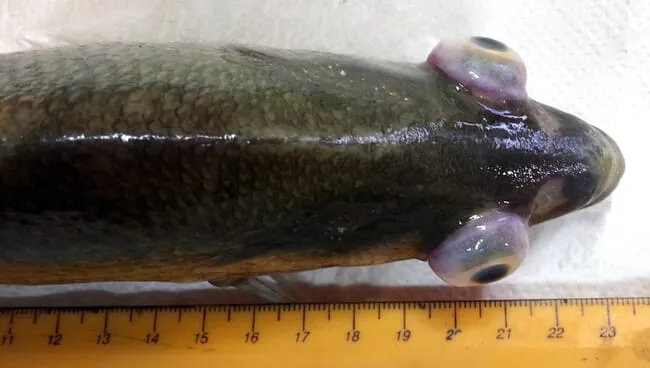
Hybrid striped bass infected with S. iniae showing exophthalmia – known as “pop-eye” – and eye opacity
Clinical Signs of Disease
Clinical signs vary depending on the Streptococcus species, and the species and size of the affected host.
- Generally, fish become lethargic and swim erratically or in a spiral pattern as a result of apparent meningoencephalitis.
- Unilateral or bilateral exophthalmia (“pop-eye”), with hemorrhage and corneal opacity in the eyes.
- Petechial hemorrhages,
- Edema due to serous fluid accumulation in the peritoneal cavity and intestines.
- Pale liver and dark red spleen are the most common clinical signs.
- Pustules on the jaw and tail in dead and live Nile tilapia infected with S. iniae. Similar lesions are also associated with S. agalactiae infections, along with mouth paralysis.
- In some cases, infected fish show no obvious clinical signs before death, and mortalities are attributed to septicemia, and brain and nervous system infections.
- As the infection progresses, a significant portion of the fish population may become anorexic and refuse to feed.
- Internal examination of the abdominal cavity reveals a large amount of bloody fluid, an enlarged and dark red spleen, a pale liver, and fibrin deposits in the heart.
- Histopathology shows widespread necrosis and granulomatous inflammation in multiple organ systems, including the head and trunk kidneys.
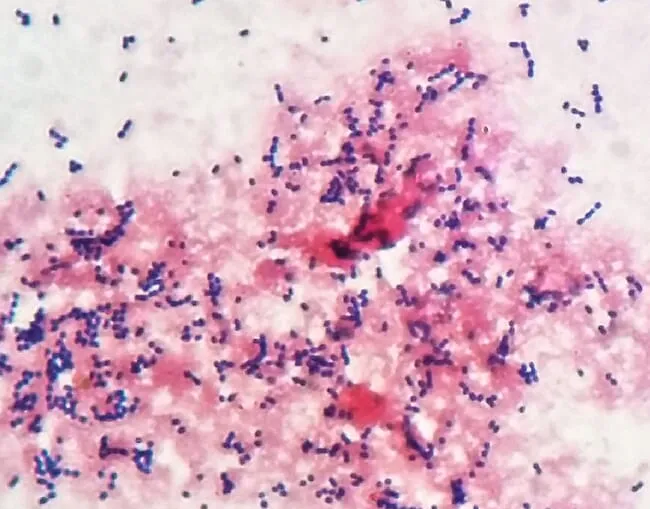
Gram stain of Streptococcus spp showing Gram-positive cocci arranged in chains
Diagnosis of Infection
Diagnosis relies on bacterial culture on 5% sheep blood agar plates. Kidneys and brains from fresh fish are usually the best sources for bacterial culture. Miniaturized rapid test systems are useful, and S. agalactiae can be easily identified using API 20 Strep and API rapid ID 32 Strep test kits. Commercial kits can be used to obtain biochemical profiles, but positive identification results cannot always be achieved with these systems alone. Confirmation should be sought using molecular methods.
A presumptive diagnosis of Strep can be made based on case history and clinical signs, post-mortem findings, and the identification of Gram-positive bacteria from imprints (made by blotting fresh tissue sections onto a glass slide) from the brain, spleen, kidney, or liver.
Prevention and Control Strategies
Prevention is always preferred and more beneficial than treating disease outbreaks.
The control and prevention of S. iniae or S. agalactiae should ideally be integrated into fish health management plans based on sound husbandry, including biosecurity, water quality maintenance, and proper nutrition.
High productivity in tilapia farming is achieved by balancing stocking density with survival and performance. When mortality rates increase, reducing stocking density can alleviate stress on fish and pathogen load, and farmers must balance stocking rates to maximize production while mitigating the risk of disease outbreaks due to poor water quality and increased disease transmission.
Maximum precautions should be taken when introducing new broodstock or eggs to new or existing farming facilities. Disinfecting fish eggs infected with S. iniae or S. agalactiae is challenging. Chemicals permitted for use on fish eggs are surface disinfectants, which can reduce the presence of pathogens on the eggshell but have limited efficacy against bacteria within the fish eggs. Therefore, fish eggs and fry must be sourced from pathogen-free sources.
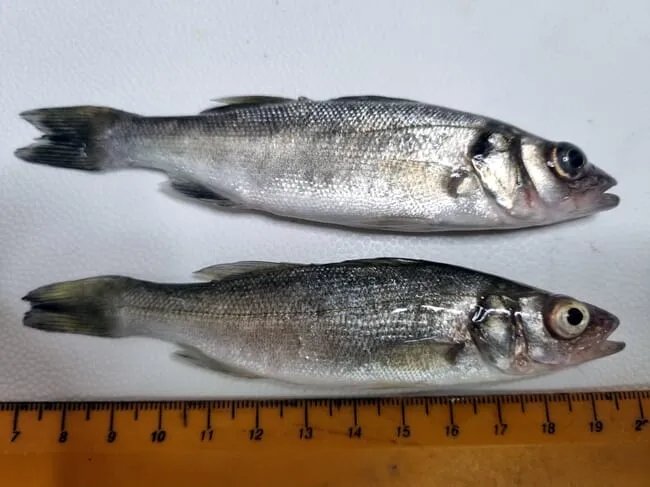
European sea bass infected with S. iniae showing exophthalmia and eye opacity
1) Chemotherapy
Prudent antimicrobial therapy is an essential tool for aquaculture farmers when other strategies fail to maintain fish health.
Ideally, after identifying the bacteria from diseased fish, sensitivity testing should be performed to select the most effective antibiotic for use.
The ability of Streptococcus to survive within macrophages reduces the effectiveness of antibiotic treatment, as macrophages will actually protect the bacteria from antibiotics; infected macrophages then lyse to release bacteria back into the bloodstream.
The prophylactic use of antibiotics is prohibited in many countries, and prudent antibiotic use is encouraged worldwide.
2) Vaccines and Vaccination
The application of vaccines for disease prevention in aquaculture is one of the most widely accepted prophylactic measures. Vaccination strategies for S. iniae and S. agalactiae primarily rely on inactivated vaccines.
In recent years, vaccines have received significant attention for preventing streptococcosis in tilapia, as they can induce and develop resistance to infection in fish hosts; this continues to be a common practice in fish disease prevention. Furthermore, several serotypes causing S. agalactiae infection in Nile tilapia have been reported, such as types Ia, Ib, and III.
Injection is the least labor- and time-efficient. Meanwhile, inactivated vaccines are considered safer than modified live vaccines, which can revert to virulence. Therefore, future trends may include oral vaccine delivery, inactivated vaccine injection, further development of modified live and multivalent vaccines, as well as improved vaccine adjuvants and immunostimulants. Vaccines prevent disease and mortality, but they may not completely eliminate streptococci in live fish.
Currently, there are two most common types of vaccines:
- Commercial vaccines: are licensed vaccines that allow aquatic species to build host immune responses.
- Autogenous vaccines: are produced from pathogens causing disease in a specific fish population. These vaccines are created by sampling pathogens from infected fish and then culturing them in the laboratory. The vaccine is then produced by inactivating the pathogens and using them to stimulate an immune response in fish.
3) Probiotics, Prebiotics, and Synbiotics
The use of probiotics, prebiotics, synbiotics, and synthetic compounds to improve immune responses and enhance fish resistance to disease has attracted significant attention in recent years.
Probiotics are defined as products containing live microorganisms that positively impact the host's gut microbiota by inhibiting the proliferation of pathogenic bacteria, thereby promoting the growth and development of beneficial bacteria. Generally, the prophylactic effect of probiotics can occur through direct introduction into the culture water or via dietary administration. The use of probiotics in culture water is considered the best method as it can be applied to fish of all ages.
Prebiotics are defined as non-digestible food ingredients that selectively stimulate the growth or metabolic activity of health-promoting bacteria in the gut, thereby improving the gut balance of the organism.
Tóm tắt nội dung chính: Sự nóng lên toàn cầu làm thay đổi hệ vi sinh vật đường ruột của tôm thẻ chân trắng Thái Bình Dương bằng cách[...] Tổng hợp thị trường tôm thế giới 2025: Ecuador dẫn đầu xuất khẩu (1.39M tấn, +15%), EU tăng nhập khẩu mạnh nhất (+21%), Mỹ biến động[...] As the aquaculture industry increasingly develops strategies for animal health protection, functional nutrition has become a key fac[...]Products linked to this topic
Related technical articles

CHANGES IN GUT MICROBIOTA DUE TO GLOBAL WARMING. REGULATING HOST HEALTH AND DISEASE STATUS IN POIKILOTHERMIC ANIMALS
Global Shrimp Market 2025 Overview — Shrimp Insights Bulletin February 2026

SALMON UNDER STRESS CONDITIONS: REINFORCING THE FIRST LINE OF DEFENSE