Technical Article

VIRUS CAUSING GLASSY BODY DISEASE IN SHRIMP POSTLARVAE

Chinese scientists have identified "a new virus" suspected as the culprit causing mass mortality in shrimp in hatcheries recently. Glass Post-Larvae is a new, small RNA virus temporarily named Hepatopancreatic and Intestinal Necrosis Virus (HINV).

ProtocolShrimpJune 1, 2020👁 40 views
Click to listen to AI-narrated summary (1.2×)
AI Summary

Generate an English summary for VIRUS CAUSING GLASSY BODY DISEASE IN SHRIMP POSTLARVAE

AI-generated summary based on the full article content below.

Editorial Framing

Why this article matters

    Full Article

    Chinese scientists have identified “a new virus” suspected of being the culprit behind recent mass mortalities of shrimp in hatcheries. Glass post-larvae is a new, small RNA virus temporarily named hepatopancreatic and gastrointestinal destruction virus (HINV).

    According to Ha Jian Guo of China's National Shrimp and Crab Technology Station, analysis of samples taken from hatcheries in Guangdong province revealed the presence of a newly discovered viral genome, a new type of virus. “Analysis indicates that glass post-larvae is a new, small RNA virus, temporarily named hepatopancreatic and gastrointestinal destruction virus (HINV),” Mr. Ha said in the journal Aquaculture Frontier, an internal industry publication.
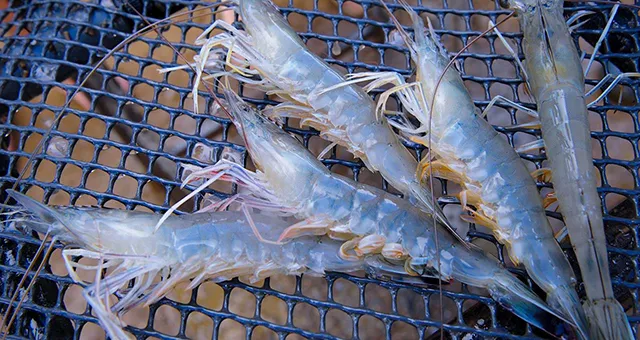
    glass_post_larvae

    Illustration. Source IE

    This discovery comes after mass mortalities of shrimp post-larvae in Chinese hatcheries. The most obvious symptom of infected post-larvae is that they become almost completely translucent, resembling glass.

    HINV primarily affects the hepatopancreas, digestive tract, and shell of shrimp. Typically, in diseased shrimp, the body loses color and becomes translucent. The mortality rate (for post-larvae) on the 4th day (after symptom onset) is 100%.” However, healthy post-larvae do not always develop symptoms.

    The research team confirmed that the virus caused symptoms after infecting shrimp in a laboratory setting.

    “Through research, we found that HINV infection and pathogenicity are very strong in post-larvae. However, it is weak in adult shrimp. HINV does not cause rapid mortality, but it can still lead to gradual death in adult shrimp,” Mr. Ha stated. The research team has not yet determined whether HINV is transmitted through broodstock or water sources.

    Although HINV has been considered “a new virus,” it may be similar to other viruses present in the environment, said Huang Jie, Director General of the Network of Aquaculture Centres in Asia-Pacific (NACA) in Bangkok, Thailand.

    A representative from the hatchery production department at Zhanjiang Guilian Aquaculture Company stated that outbreaks of glass post-larvae disease also occurred in hatcheries with high biosecurity standards. This year, the phenomenon of glass post-larvae has appeared nationwide; in northern China, Guangdong, and Guangxi. This is a fairly serious problem.

    Not only haunted by outbreaks of Acute Hepatopancreatic Necrosis Syndrome, or AHPNS, also known as Early Mortality Syndrome, EMS, a disease that devastated many Asian shrimp industries from 2012 to 2014, shrimp farmers now continuously face new disease outbreaks.

    Source: http://contom.vn/

    Related Products

    Products linked to this topic

    Product reference for SOILMAX New
    shrimpThần Vương Blue

    SOILMAX New

    Giải pháp điều chỉnh môi trường nuôi siêu thâm canh bằng sinh học

    Product reference for FLASH
    shrimpThần Vương Blue

    FLASH

    Giảm bùng phát EHP, tôm phục hồi nhanh, bệnh phân trắng được kiểm soát

    Product reference for CLEVER
    shrimpThần Vương Blue

    CLEVER

    Tinh chất men kháng khống chế bệnh chết sớm và phân trắng

    More Reading

    Related technical articles

    SỰ THAY ĐỔI CỦA HỆ VI SINH ĐƯỜNG RUỘT DO SỰ NÓNG LÊN TOÀN CẦU. ĐIỀU HÒA SỨC KHỎE VẬT CHỦ VÀ TÌNH TRẠNG BỆNH Ở ĐỘNG VẬT BIẾN NHIỆT
    Research InsightShrimpFebruary 28, 2026

    CHANGES IN GUT MICROBIOTA DUE TO GLOBAL WARMING. REGULATING HOST HEALTH AND DISEASE STATUS IN POIKILOTHERMIC ANIMALS

    Tóm tắt nội dung chính: Sự nóng lên toàn cầu làm thay đổi hệ vi sinh vật đường ruột của tôm thẻ chân trắng Thái Bình Dương bằng cách[...]

    Toàn cảnh thị trường tôm thế giới 2025 — Dữ liệu từ Shrimp Insights (Tháng 2/2026)
    Technical articleShrimpApril 9, 2026

    Global Shrimp Market 2025 Overview — Shrimp Insights Bulletin February 2026

    Tổng hợp thị trường tôm thế giới 2025: Ecuador dẫn đầu xuất khẩu (1.39M tấn, +15%), EU tăng nhập khẩu mạnh nhất (+21%), Mỹ biến động[...]

    CÁ HỒI TRONG ĐIỀU KIỆN STRESS: CỦNG CỐ TUYẾN PHÒNG THỦ ĐẦU TIÊN
    Solution TrackShrimpFebruary 27, 2026

    SALMON UNDER STRESS CONDITIONS: REINFORCING THE FIRST LINE OF DEFENSE

    As the aquaculture industry increasingly develops strategies for animal health protection, functional nutrition has become a key fac[...]

    Technical Advisor

    Aquaculture Q&A

    🦐

    Help us serve you better

    Share your name + phone so we remember your pond next time — no repeating yourself.

    • 🔒 Tech team only — never shared with third parties
    • 📨 No spam, no promotional SMS
    • 💾 History saved on your device — clear anytime