A research team led by Professor Li Fuhua from the Institute of Oceanology, Chinese Academy of Sciences (IOCAS) has provided new insights into the genetic mechanisms of differential heat tolerance in penaeid shrimp.
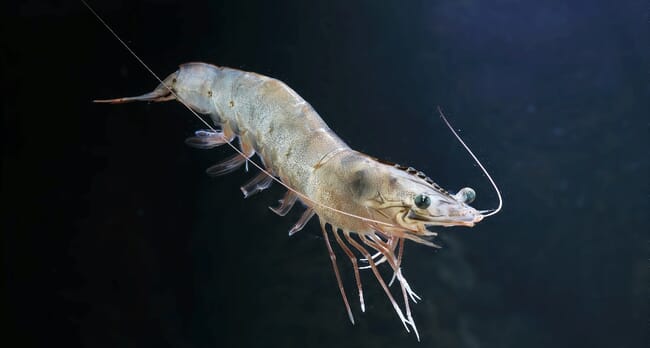
The study, published in Science of the Total Environment on April 5, found that the gene family containing the α-crystallin domain (ACD-containing) exhibited significant thermal expansion in penaeid shrimp compared to other crustaceans. These genes are primarily expressed in shrimp muscle.
Professor Li stated: “Our work provides important insights into the mechanisms by which penaeid shrimp survive in adverse environments and will be useful for the aquaculture industry as well as for breeding genetically adaptable shrimp.”
The researchers discovered their response to high temperatures through RNA sequencing and quantitative reverse transcription polymerase chain reaction (qRT-PCR). Heterologous expression in Escherichia coli (E. coli) and citrate synthase assays of three representative ACD-containing genes confirmed that their chaperone activity can enhance heat tolerance.
Notably, the researchers found that compared to penaeid shrimp species with relatively low heat tolerance (Fenneropenaeus chinensis and Marsupenaeus japonicus), heat-tolerant shrimp species (Litopenaeus vannamei and Fenneropenaeus indicus) contained more ACD-containing genes, which was a result of the duplication of ACD-containing genes in their genomes.
“We conclude that these ACD-containing genes of penaeid shrimp act as assistants in expanding heat tolerance. Furthermore, they undergo genetic and breeding processes, ultimately contributing to different heat-tolerant phenotypes and adaptation to ecological environments,” said Dr. Zhang Xiaoxi, the lead author of the study.
Professor Zhang Xiaojun stated: “Combined with integrated data analysis and robust experimental validation, the features and functions of ACD-containing genes have been comprehensively elucidated.”
According to Thefishsite