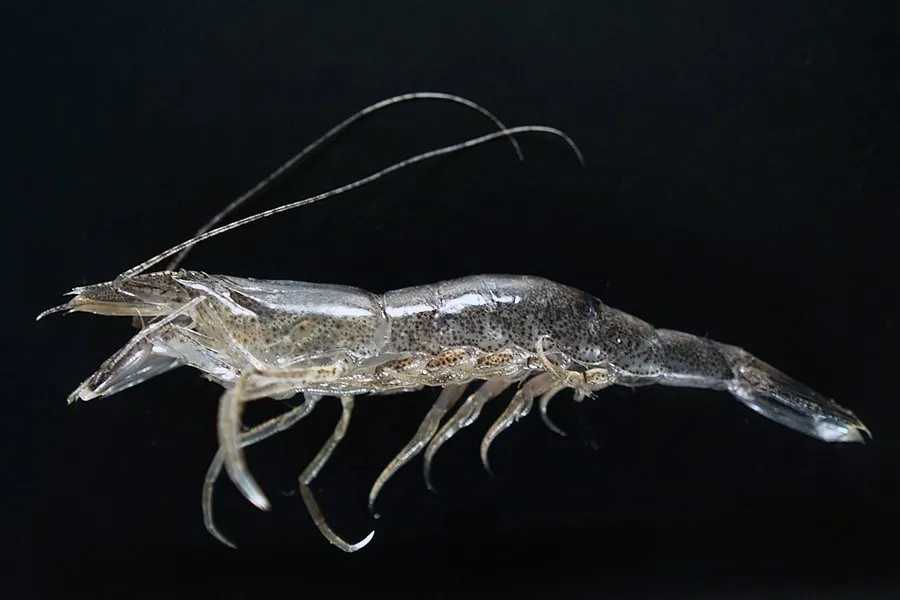
European brown shrimp (Crangon Crangon)
The successful establishment of a European brown shrimp larval rearing system can be used to develop large-scale rearing systems for C. crangon larvae in both flow-through and recirculating systems.
The European brown shrimp (Crangon crangon) is a highly valuable commercial species in Europe – with 26,000 tons of shrimp, worth approximately 100 million euros, harvested in the Netherlands, Germany, Belgium, France, Denmark, and the United Kingdom in 2016.
However, a shift in the market presents a new opportunity for the aquaculture of this species, once certain challenges are overcome.
In recent years, the demand for large live shrimp (>70 mm) has increased, with selling prices 20-30% higher than for cooked brown shrimp. This increased demand and high commercial value could make this species an attractive candidate for aquaculture.
Researchers suggest that the failure of previous research projects on rearing European brown shrimp (Crangon Crangon), dating back to the mid-1960s, was due to several factors (feed, density, pond) that still needed optimization before this species could be effectively cultured. Therefore, to help overcome these challenges, they investigated a method for rearing brown shrimp larvae, and in the process, optimized the design and operational procedures of a small-scale static larval rearing system. The project focused on optimizing larval survival rates through water temperature, feed selection, feeding regimes, and density.
The researchers achieved several breakthroughs, concluding that: Experiments showed larvae could be reared at a high density of 300 individuals/L with a high survival rate of 73.5 (± 5.4)% under laboratory conditions.
In these systems, larvae could be fed solely Artemia nauplii following a feeding regime adjusted based on molting. Supplementing with microalgae could further increase survival by 10%. The information gathered during this research can be applied to further optimize the development of brown shrimp larvae in flow-through or recirculating systems.
This work presents a complete larval culture system from hatching to post-larval rearing and represents a new step forward for the commercial aquaculture of this species.
Source: Tép Bạc