pH in shrimp ponds, a parameter that seemed to be recognizable based on empirical coefficients and sensory perception in different farming regions. However, with the remarkable developments in the shrimp industry today, water quality parameters are increasingly being paid attention to and measured more carefully. We all know that the appropriate pH range in ponds for shrimp is 7.5 – 8.5, with daily fluctuations not exceeding 0.5 units.
Has this view become outdated??? Because currently, successful intensive farming models often have pH parameters within the range of 7.6 – 8.1 and strictly control daily fluctuations not exceeding 0.3 units.
Concept of pH
pH is a parameter that measures the activity of hydrogen ions in water (H+) or indicates the acidity or alkalinity of water.
Formula: pH = -log10[H+]
Impact of pH on pond ecosystem and shrimp health
For the ecosystem:
- When pH is too high, it often clarifies the water, makes it difficult to create color, promotes the growth of benthic organisms, and causes significant daily pH fluctuations. This water source is not suitable for shrimp farming and requires comprehensive treatment measures.
- In lined ponds, high water pH also causes other compounds to precipitate, leading to scaling and floating sludge, which weakens shrimp health.
- Too low pH also affects algae and microorganisms in the water. Additionally, low pH can be caused by acid sulfate soil contamination, algal collapse, and the decomposition of organic matter in the water.
- Strong photosynthesis and growth of algae cause pH fluctuations, indicating eutrophication and an unfavorable shift in algal species composition (e.g., ponds with blue-green algae often have very high pH).
For shrimp health:
- When pH exceeds the threshold, it has adverse effects on shrimp such as delayed molting, immune suppression, and stress.
- Osmotic imbalance.
- Reduced gill gas exchange capacity.
- Slowed or intermittent metabolic processes.
- Alters the toxicity of other substances in the water, especially toxic gases like NH3, NO2, H2S,...
- Significant economic losses due to slow growth, prolonged production cycles, increased FCR, and increased incidence of specific bacterial diseases and Vibrio spp.
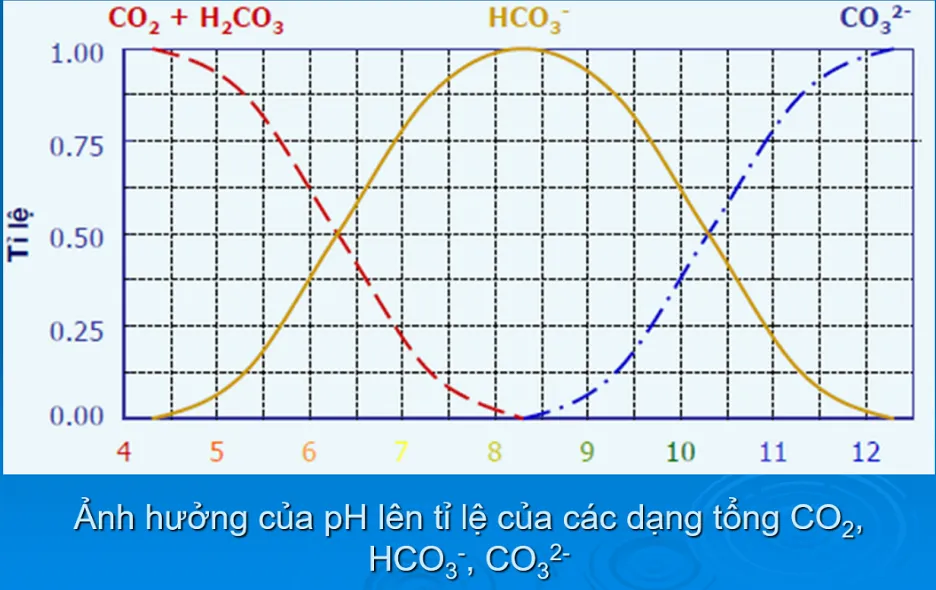
Causes of pH increase or decrease in water
- CO2 reacting with the aquatic environment is the main cause of pH fluctuations in water.
- The nitrification reaction of NH4+/NH3 by bacteria and oxygen reduces alkalinity in the water, affecting pH.
- Phytoplankton photosynthesis, which takes in CO2 during the day and releases CO2 at night, causes large daily pH fluctuations.
- Acid sulfate soil areas => low pH, easily fluctuating, due to the oxidation of pyrite into jarosite, which produces a large amount of H+ that lowers the water's pH. The same applies to groundwater, which also has very high levels of CO2 and other heavy metals, often leading to low pH.
- Algal collapse, heavy rain, and acid sulfate runoff into the pond also lower pH.
- Depends on the pond's alkalinity; high alkalinity in pond water reduces the interaction of CO2 formation from bicarbonate (HCO3-), helping the water maintain a better pH, and vice versa.
Some practical methods to remedy low and high pH
When pH is low:
- In practice, various types of lime are commonly used to improve low pH, and sometimes phosphorus fertilizer is applied in areas with potential acid sulfate soil.
- It should be noted that Calcium lime and Dolomite help stabilize pH and provide a good buffering system for water, but their solubility is often poor and limited when pH > 8.3.
- Quicklime and slaked lime generally increase pH more effectively due to their better ability to remove CO2 from the water. However, excessively high dosages should be avoided as they can cause a sudden pH increase, negatively affecting shrimp.
When pH is high:
- One quick way to reduce pH in water is to supply H+ (e.g., citric acid).
- Reducing pH by applying molasses, rice flour combined with microbial aeration is also an effective solution.
- And part of the pH fluctuation is also due to low alkalinity in the water. Therefore, when algal density is too high, priority should be given to water exchange and maintaining alkalinity always above 120 mg/liter.
Stabilizing pH in pond water through the following criteria
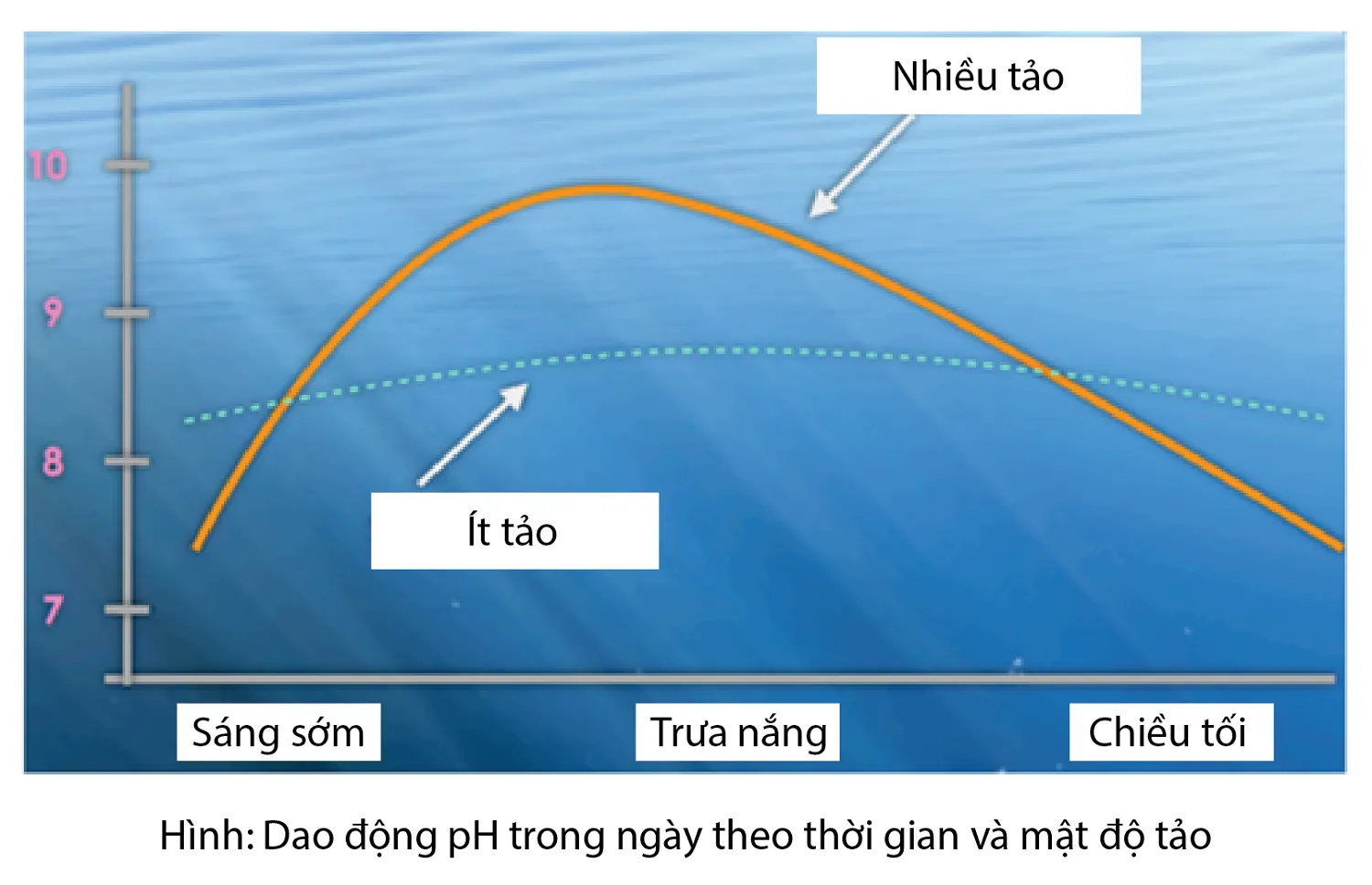
Creating color, maintaining color, and controlling algae:
- Creating color is a task that needs to be done immediately after cleaning the pond bottom and eliminating unwanted organisms in the water. During this stage, pH will often be high because some of the lime has not been fully activated, and the amount of CO2 produced from the respiration of existing algae and microorganisms is not yet sufficient to balance the pH in the water. If color creation is not done early, the water often becomes clear, higher plants dominate, causing large pH fluctuations and a gradual loss of the alkalinity necessary for shrimp (bicarbonate alkalinity: HCO3-).
- Maintaining color means consistently providing nutrients to the aquatic environment in a reasonable manner and balancing the N:P ratio.
- Algae control, providing feed during the farming process is the main source that causes algae to grow strongly, and very strongly when the treatment process is slower than the nutrient supply from feed. This leads to unfavorable consequences for the pond and shrimp health (blue-green algae, dinoflagellates, euglenoids, water pollution, and shrimp diseases). In practice, there are many methods to reduce algae (using nighttime probiotics, CaO lime, chemicals, water exchange, or a combination of several methods at once depending on each person's experience). It should be noted that algae control is a process of reasonable operation, care, and environmental management.
Stabilizing alkalinity from 120 – 160 mg/l:
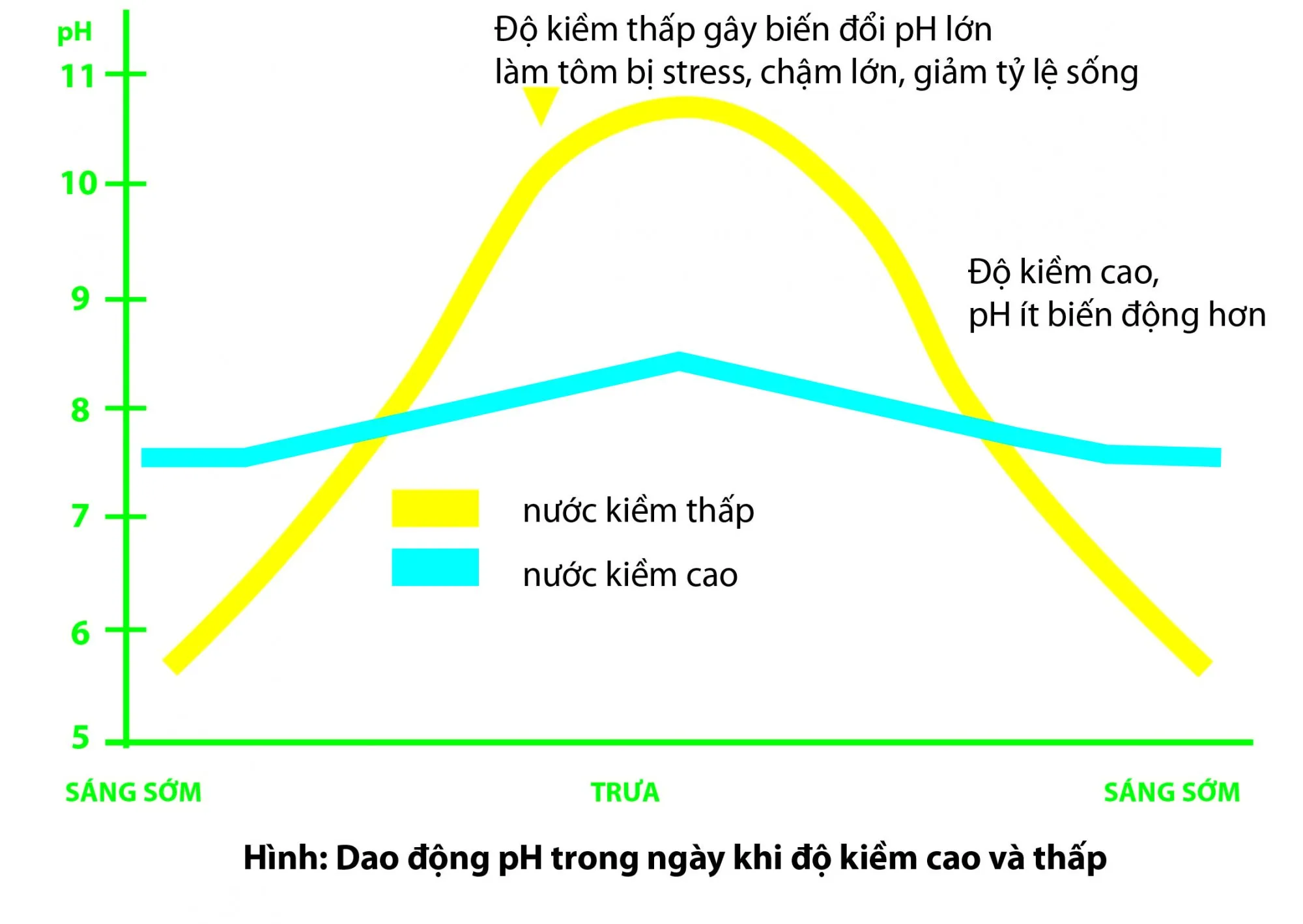
- During the farming process, alkalinity often falls within a low range, so stabilizing pond alkalinity primarily involves methods to increase water alkalinity. Many active ingredients are used to increase alkalinity: various types of lime, soda, alkaline, minerals, etc.
- During the alkalinity increase process, it is important to note that the pH threshold should not be high >8.3 (the solubility limit of lime), create a sufficiently large respiratory system to provide a source of CO2 for the alkalinity-increasing reaction (the initial respiratory system in the pond usually comes from microorganisms and algae in the pond), and the best time to apply alkalinity enhancers is late at night when pH is at its lowest.
Technical Department Thần Vương