
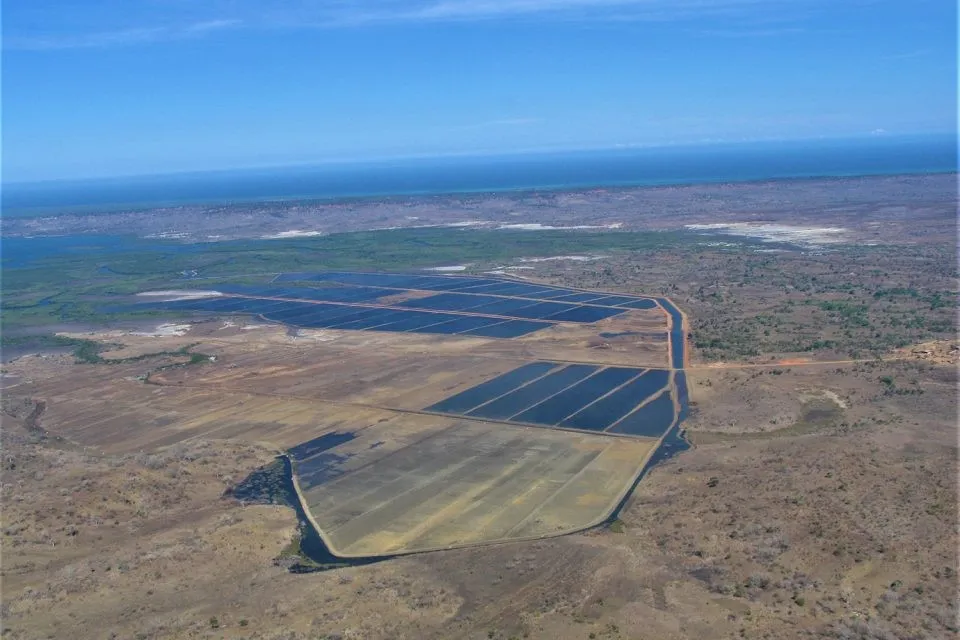
 In these first three parts, Professor Boyd discusses land use in shrimp farming in five major farmed shrimp exporting countries - Ecuador, India, Indonesia, Thailand, and Vietnam - and suggests that shrimp productivity can be greatly increased without expanding land area for shrimp farms. Photo by Darryl Jory.
Land use is one of the most important issues in natural resource conservation. There is a two-way concern between conserving natural habitats and having enough arable land to meet current and future food production needs.
The amount of food produced globally has more than tripled since 1950, but the world population has also tripled. Per capita food availability today is actually slightly higher than in the 1950s. However, agricultural land use is only about 10% greater than in 1950. About 38% of the world's land area is used for food production; therefore, if agriculture does not become more intensive, there will not be enough land to supply food for humans and their livestock.
Land Use in Shrimp Farming
The data presented here on land use in shrimp farming were collected from surveys of Pacific white shrimp (Litopenaeus vannamei) farms in five major farmed shrimp exporting countries. The number of farms included: 101 farms in Ecuador; 89 in India; 1,341 in Indonesia; 34 in Thailand; and 30 in Vietnam.
Shrimp farming requires land to construct and operate farms. The land required for farms is typically 1.2 to 2.2 times the water surface area of the production ponds. In the survey, the average land-to-water ratio (LWR) ranged from 1.22 in Ecuador to 2.04 in Thailand (Table 1). The average LWR for the five leading shrimp exporting countries was 1.67.