Aquaculture expert Robins McIntosh discusses farm management in the presence of Enterocytozoon hepatopenaei (EHP)

Shrimp farming expert Robins McIntosh details insights into EHP and how to mitigate its impact, researched over the past decade
Dr. Robins McIntosh, Executive Vice President of Thailand-based Charoen Pokphand Foods PCL and a long-standing prominent figure in the global shrimp farming industry, recently shared with Advocate the complex history of Enterocytozoon hepatopenaei (EHP), one of the major shrimp diseases in Asia and globally.
Originating from black tiger shrimp (Penaeus monodon) in the late 1980s, EHP was officially detected in Pacific white shrimp (Litopenaeus vannamei) in 2004 in Thailand, but it rapidly spread globally, propagating in an elusive manner, often undetected due to diagnostic limitations.
In this section, Dr. McIntosh discusses the impact aspects of EHP on shrimp farms and provides recommendations for sampling and monitoring, as well as how to clean infected ponds and other water reservoirs on the farm to mitigate its effects. He once again emphasizes the importance of stress reduction as a critical management strategy to prevent EHP outbreaks, even in the presence of low-level infections.
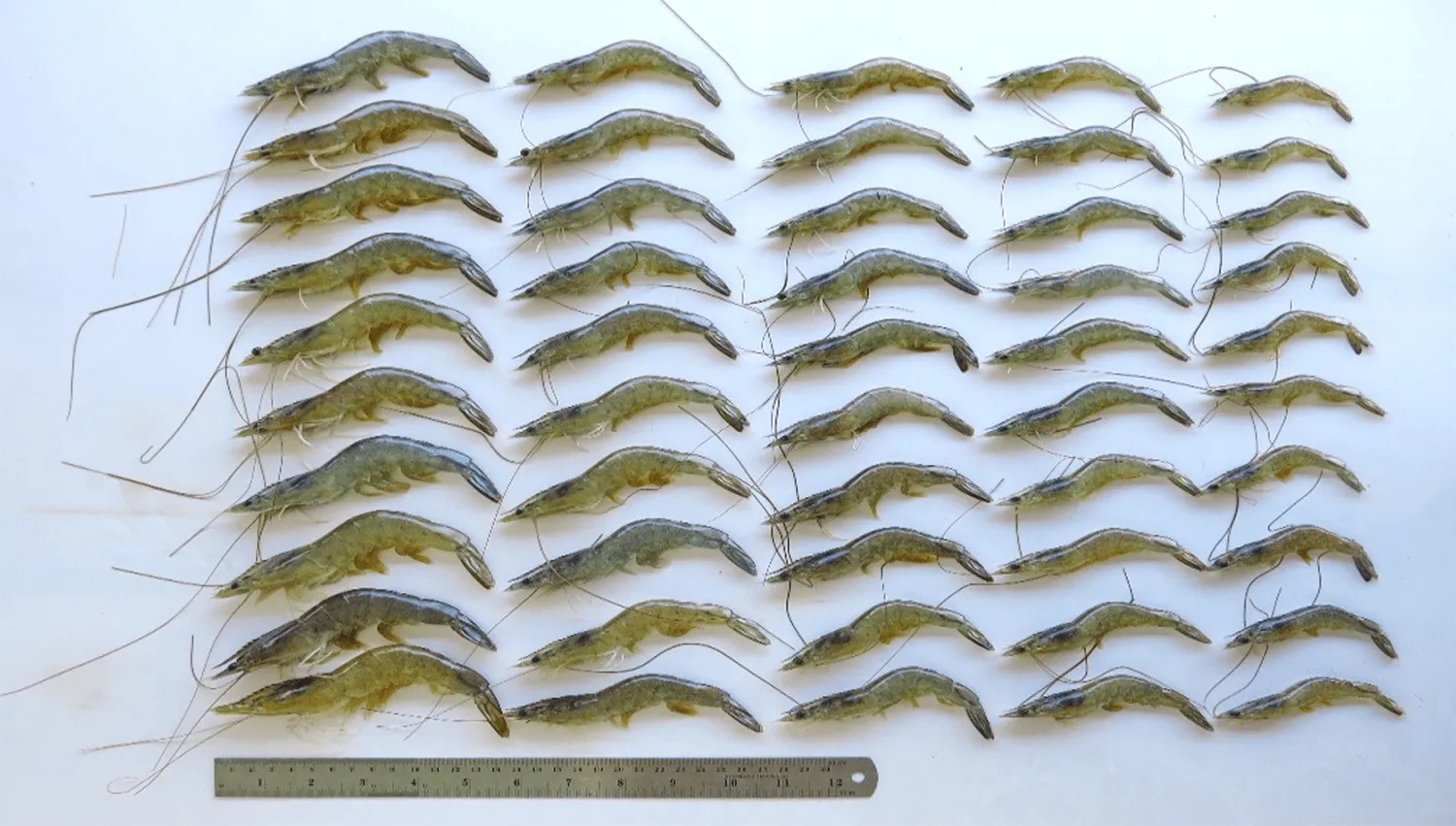
EHP causes slow growth and a high coefficient of variation (CV) in the size distribution of farmed shrimp in many regions worldwide
Farm Management
I had a farm that was severely affected by EHP in 2014. We lost a lot of money on that farm. Since 2016, when the farm reopened, no EHP has occurred, even though other farms in the area had EHP. What did we do? First, you must eliminate EHP from the ponds and reservoirs/canals. As I said, once EHP appears, it will be in the system. So how do we eliminate it? We must disinfect EHP in every exposed area on the farm, and that is very costly. The reality is that you have to shut down the farm, and in this case, for 6 months. And during those 6 months, we will disinfect everything: the pond bottoms and all canals and reservoirs on the farm.
How to disinfect? You can physically remove the pond bottom, or you can mix calcium hydroxide and raise the pH above 12. I think typically about 6 tons of calcium hydroxide per hectare must be applied to the pond bottom. You need to moisten the topsoil layer for the calcium hydroxide to react, to achieve a pH level of 12 in the upper layers where EHP spores are present. Destroying the spores in ponds, canals, and reservoirs allows us to effectively eliminate all EHP spores on the farm.
After EHP is eliminated, pond water is treated with potassium permanganate, which helps destroy spores and reduce the level of viable spores in the water. When production restarts, only a moderate amount of specific pathogen-free (SPF) shrimp postlarvae are stocked. Ponds are aerated to provide dissolved oxygen. And no disinfectants and probiotics are used. Disinfectants destroy beneficial microorganisms, and probiotics are needed for re-establishment. In today's aquaculture, cost control has become very important.
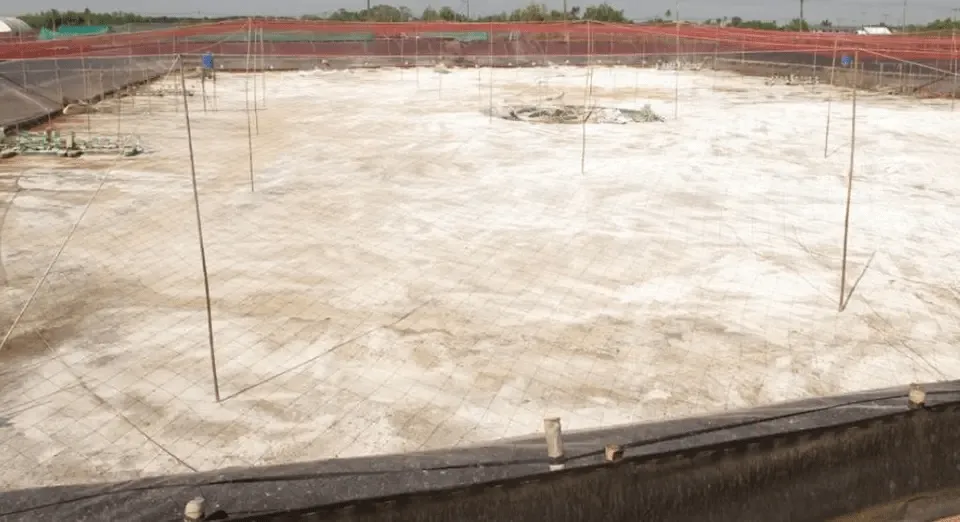
Calcium hydroxide is used to raise the pH value of the pond bottom to pH 12 to destroy EHP spores
Since this farm was cleaned up in 2016, it has been the most profitable farm, free of EHP and with low costs. From a farm that was completely losing money due to EHP, it has become very profitable. But it took 6-7 months to disinfect everything. The problem for many farms is that they cannot disinfect their water reservoirs. But if you have a water reservoir on your farm, you potentially have EHP reservoirs, and that reservoir will re-infect the rest of the farm. So, you must be able to break everything down.
Other farms have adopted ultrafiltration, where they try to remove spores at the pump before they enter the farm. Many of these farms have been very successful in managing EHP and preventing it. But when you implement this method, you almost have to stock shrimp at higher densities because you need to produce a larger biomass to pay for that type of filtration. We are talking about ultrafiltration; it must be able to block 2-micron spores. It's not perfect, but if you can reduce the spore load to a low level, perhaps you can produce many good shrimp crops.