The European project has recognized the value of brewing by-products such as spent grains and yeast as aquaculture feed ingredients, with no sensory differences compared to fish fed with commercial feed.
Potential Feed Source
The beverage industry holds a strategic economic position with an annual beer production of approximately 396 million liters across 28 European countries. Consequently, this industry requires a large amount of raw materials for processing to produce the final beer product; while simultaneously generating a massive amount of waste, approximately over 7 million tons of spent grains (SG) and spent yeast (SY) annually (Beer statistics, 2018). This waste represents enormous potential for use as feed ingredients.
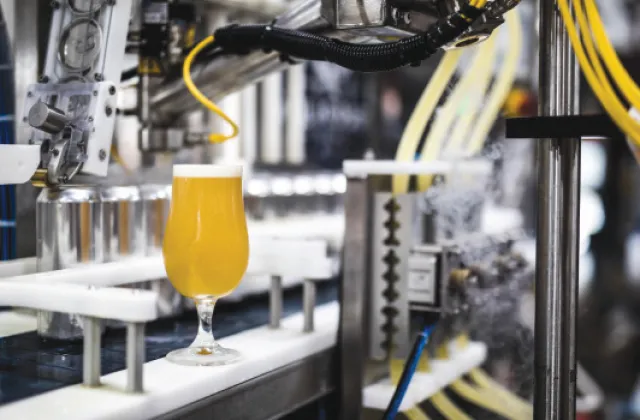
Brewery Project
The first challenge of this project is to develop new ingredients from the annual amount of spent grains and yeast from the beverage industry through advanced processes. The first step in this process is mechanical dewatering to reduce moisture as much as possible (approximately 55%) for low energy consumption. This reduces the energy demand for the thermal drying process in the second step. Phase 2 applies flash drying to reduce moisture content to below 10%. Flash drying dries instantly and therefore uses thermal energy highly efficiently. Furthermore, to increase the digestibility of the new feed ingredients, a hydrolysis process is being investigated for pre-treatment before dewatering.
Aquaculture Feeding Trials
Once the new ingredients were produced, the second challenge was to evaluate their digestibility and feed efficiency for three experimental aquaculture species: gilthead seabream (Sparus aurata); Senegal sole (Sole senegalensis); and freshwater rainbow trout (Oncorhynchus mykiss).
Four types of feed ingredients were obtained by combining hydrolysis and drying processes: spent brewer's yeast, hydrolyzed spent brewer's yeast, spent brewer's grains, and hydrolyzed spent brewer's grains. These four ingredients were tested in digestibility trials (isoprotic, isolipidic, and isoenergetic with a 30% inclusion rate for each test ingredient) for two RAS systems with seabass and rainbow trout. These results showed digestibility rates of 71% and 90% – an acceptable level. Hydrolyzed ingredients showed better digestibility than non-hydrolyzed ingredients.
Brewing by-products are a potential alternative to fishmeal in aquaculture, due to their abundant supply in Europe, nutritional characteristics, and good digestibility results in trials. Therefore, their inclusion in aquaculture feed can increase the sustainability of the aquaculture industry as they represent a new, sustainable, and cheaper nutrient source than fishmeal. At the same time, these additives also reduce environmental impact.
The digestibility trials have demonstrated the potential of these ingredients, so the next step for Europe will be to conduct growth trials to evaluate feed efficiency on the weight and size growth of the farmed animals.