I. Main Causes
Microfungi: Fungi adhere to the shrimp's mouthparts and gills, obstructing respiration.
Low salinity: Causes shrimp to weaken, have thin shells, and be susceptible to external parasite attacks.
Organic pollution: Towards the end of the culture cycle, there is a large accumulation of shrimp waste and excess feed, but the microbial system cannot process it in time.
II. Detailed Treatment Procedure
Step 1: Inspection
Measure toxic gas: Check NO2 concentration. If NO2 is low, proceed with treatment.
Health check: Observe for "meat drop" (scattered dead shrimp at the bottom).
If shrimp are healthy: Proceed with disinfection immediately.
If shrimp are weak/dropping to the bottom: treatment is not possible.
Step 2: Chemical and Environmental Intervention
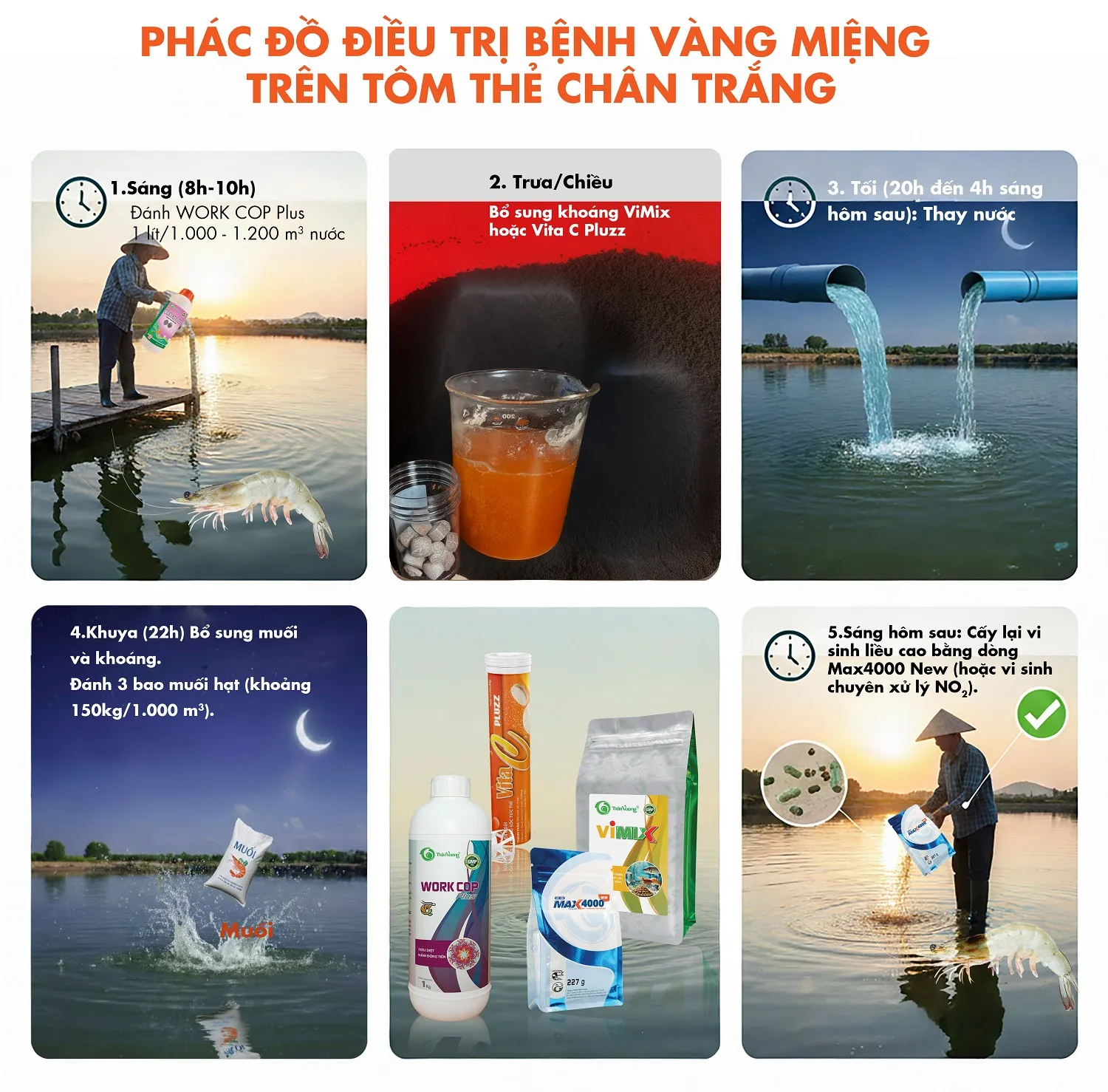
Morning (8 - 10 AM): Apply fungicide using Work Cop Plus.
Dosage: 1 liter per 1,000 - 1,200 m3 of water.
Note: Run oxygen aerators at maximum capacity to support shrimp.
Evening (8 PM to 4 AM the next day): Gradually change water.
Slowly drain old water and replenish with clean new water, approximately 50% of the pond's volume. This helps dilute toxins and stimulates shrimp molting.
Late night (10 PM): Supplement with salt and minerals.
Apply 3 bags of granular salt (approximately 150 kg/1,000 m3). Salt helps reduce the toxicity of NO2 and supports rapid shell hardening after molting.
Combine with additional broadcast minerals to support synchronized molting.
Step 3: Restore Microbial System
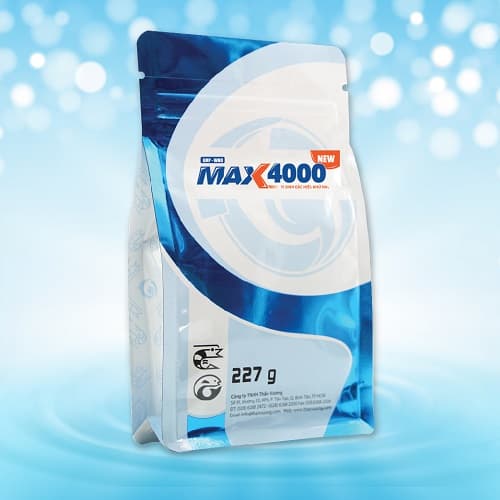
The next morning: Re-inoculate with high-dose probiotics using Max 4000 (or specialized probiotics for environmental balance and NO2 treatment). Purpose: Decompose organic matter, clean the pond bottom, and regain control of toxic gases.
Check: Observe if the shrimp have completely shed the yellow layer around their mouthparts. If the incidence of yellow mouthparts is still high, above 30%, repeat the procedure after 24-48 hours.