
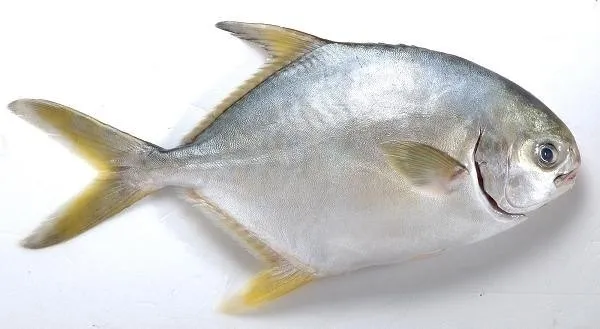
Golden pompano
Recent research by Tran Thi Mai Huong et al. at the National Center for Marine Seed Production, Cat Ba, Hai Phong, suggests that to reduce the malformation rate during larval rearing, an appropriate temperature should be maintained during the embryonic and larval stages.
Golden pompano (Trachinotus blochii) has been successfully farmed in Asian countries such as India, China (Gopakumar, 2012; Pinlan et al. 2007). In Vietnam, this is a new aquaculture species, being encouraged to become a main farmed species due to its high economic value, large body size, fast growth rate, beautiful morphology, delicious and low-bone flesh, and very high domestic and international market demand. Golden pompano is a euryhaline fish species that can live in salinities from 3 - 33 ppt, temperatures from 22 – 30oC, and dissolved oxygen above 2.5 ppm.
Golden pompano was first artificially propagated in Vietnam in 2006 through a technology transfer project from China. However, the rearing process for golden pompano fry faces many difficulties related to feed, stocking density, diseases, erratic weather changes, and sudden temperature fluctuations, leading to a high malformation rate in the fry stage, which significantly affects seed quality. In marine fish seed production, the egg incubation stage is one of the crucial steps determining the quantity and quality of larvae. This is the first important raw material supply stage in the fish seed production process. The incubation environment affects egg development (Kawahara et al., 1997), especially temperature (Petereit et al., 2008).
Fish are poikilothermic animals, so temperature greatly affects their growth, development, survival rate, and malformation rate during embryonic development. Low temperatures will slow down embryonic development (Small and Bates, 2001; Lin et al., 2006). In addition to affecting the hatching rate of eggs, temperatures outside the optimal range can increase the malformation rate of larvae (Laurence and Roger, 1976; Linden et al., 1979; Das et al., 2006).
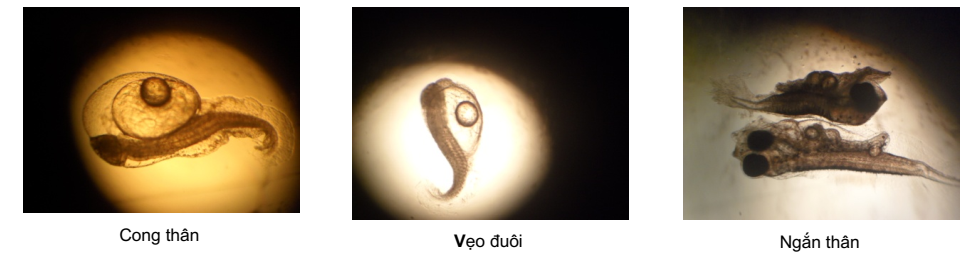
Some images of malformed larvae
Therefore, research evaluating the effect of temperature on the development of golden pompano larvae is necessary to determine the optimal temperature during golden pompano egg incubation. This research will help complete the artificial propagation process for golden pompano seed.
Experimental setup
The experiment was set up at temperatures of: 24, 26, 28, 30, and 32oC. Eggs were incubated under a salinity of 30‰, in plastic buckets with an incubation volume of 50 L at a density of 50 eggs/L. The plastic buckets were continuously aerated to ensure eggs were evenly circulated without clumping, and a heater was used to maintain the required temperature.
Some monitored parameters: embryonic development time, incubation time, hatching time, egg hatching rate, larval survival rate after 5 and 40 days of age, and malformation rate of larvae in each experimental batch.
Results
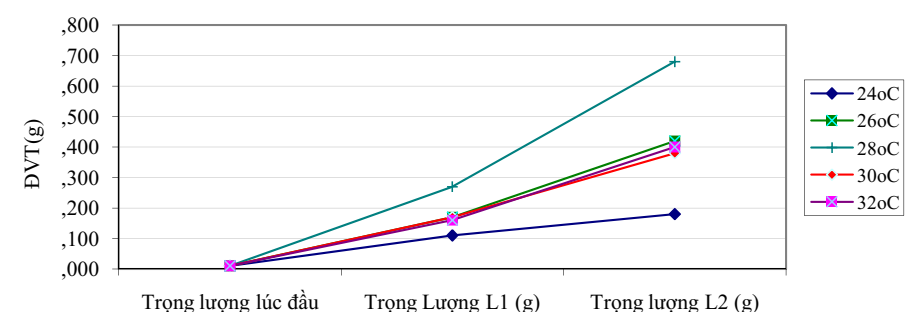
Effect of temperature on the weight growth rate of golden pompano larvae during the 2 - 40 days rearing period
The results showed that incubating eggs at 32oC resulted in the highest malformation rate of 31.1%, and at 30oC it was 16.7%. Whereas incubating eggs at temperatures from 24 – 28oC yielded a low malformation rate (3.3 - 7.8%), a high hatching rate (43.8 - 47.7%), and a high larval survival rate after 5 days of incubation (56.8 - 58.6%). At 32oC, no individuals survived, while at 30oC, the survival rate was 35.9%.
Temperatures of 26 - 28oC resulted in the lowest malformation rate for golden pompano larvae during the 2 - 40 days of age stage (3.98 - 4.02%) and the highest survival rate (10.48 - 10.69%). At 28oC, the weight and length (0.68 g and 2.87 cm/individual) were superior compared to other temperature levels.
Pompano is a fish species distributed in warm seas, hence the temperature range of 26 - 28 oC. Therefore, to achieve the best results and minimize the malformation rate, farmers should incubate eggs and rear golden pompano larvae up to 40 days of age within a temperature range of 26 – 28 oC to achieve high productivity and good seed quality. This is also the temperature range where pompano are commonly found in nature.
Source: Tep Bac