
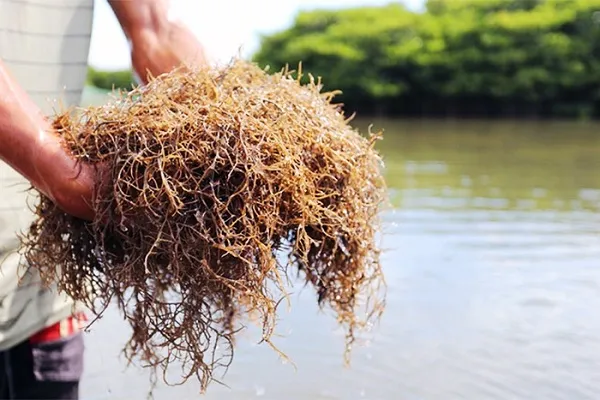
Cultivating golden thread seaweed in Quang Nam. Photo: Internet
Using seaweed as Phytoremediation, also known as plant-based environmental treatment technology in shrimp farming systems, and the benefits of co-cultivating red seaweed with shrimp.
Data shows that damage from environmental pollution and the spread of diseases have led to crop failures and reduced shrimp farming production in several countries, including Indonesia. To address these issues, we need an integrated shrimp farming technology that utilizes plant-based technology for wastewater treatment, in other words, environmentally friendly shrimp farming with the most optimal waste utilization possible.
Besides functioning as biofilters, seaweed can also increase the production value of aquaculture. The added value of using shrimp farming waste to provide nutrients for seaweed will have a positive impact on the environment and simultaneously prevent resource waste. Research data shows that *Gracilaria* sp. has a better ability to utilize organic waste from farmed Pacific whiteleg shrimp than *Eucheuma* sp. and *Caulerpa* sp.
Gracilaria sp. is economically important and is used as food for humans and various types of jellyfish. It is cultivated in many countries worldwide, including Asia, South America, Africa, and Oceania. The thallus of *Gracilaria* sp. is brittle, red or slightly yellow. It is used as food due to its high iodine content.
Previous reports also showed that the supplemental use of *Gracilaria* sp. seaweed improved immune response and antioxidant activity in barramundi, while for black tiger shrimp, Galactans sulfate extracts from red seaweed (*Gracilaria fisheri* and *Asparagopsis* spp) also contributed to immune stimulation and protected shrimp against pathogenic *Vibrio* bacteria and WSSV virus.
Application of biofiltration from *Gracilaria* in shrimp farming
A study by Sinung Rahardjo et al. demonstrated the operation and development of Pacific whiteleg shrimp production using seaweed biofiltration technology.
In biology, wastewater treatment using certain seaweed species like *G. verrucosa* is considered more promising, with a very simple application method, high adaptability, easy care, and economic value. Cultivating *G. verrucosa*, and other seaweed species, can be done in monoculture or integrated culture with shrimp/fish in ponds.
Results show that integrating *Gracilaria verucosa* as a biofiltration agent in aquaculture ponds can increase Pacific whiteleg shrimp production.
Practical results yielded 5 tons of seaweed/ha from an initial seaweed density of 1 ton/ha after 3 months of cultivation, with a daily growth rate of 4.18% per day. Pacific whiteleg shrimp grew from 0.5 grams to 16.7 grams per individual, with shrimp production increasing from 1 ton/ha to 3.5 tons/ha. Based on economic analyses, profitability showed an R/C ratio of 1.83 and a profit margin of 80.08%.
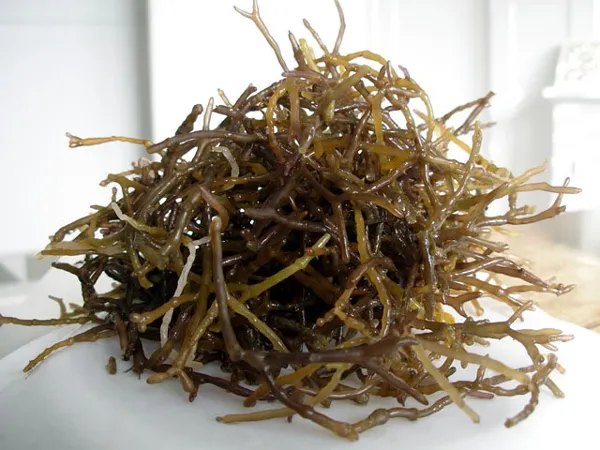
The application of an environmentally friendly biofiltration system using *G. verucosa* seaweed should be implemented in shrimp ponds due to the following benefits:
- Increased shrimp growth, thereby increasing shrimp production.
- Increased aquaculture value from seaweed production.
- Improved water quality in shrimp ponds due to the seaweed's ability to utilize shrimp waste.
Results from practical large-scale model trials show that the use of seaweed can also enhance shrimp growth and water quality. Therefore, this technology can reduce water pollution levels and maintain the sustainability of aquaculture production.
In Vietnam, many places cultivate golden thread seaweed, especially Tam Hoa (Nui Thanh district), Quang Ngai province. Farmers utilize inefficient shrimp farming areas to cultivate golden thread seaweed by planting seedlings in saltwater ponds for self-growth. If growth conditions are favorable, it can be harvested in just over 2.5 months. The profitability from golden thread seaweed is not as high compared to saltwater shrimp farming, but conversely, cultivating golden thread seaweed does not require significant investment, carries low risk, and has a stable market.
Source: Tep Bac
Compiled by: Tran Thi Thuy Quyen