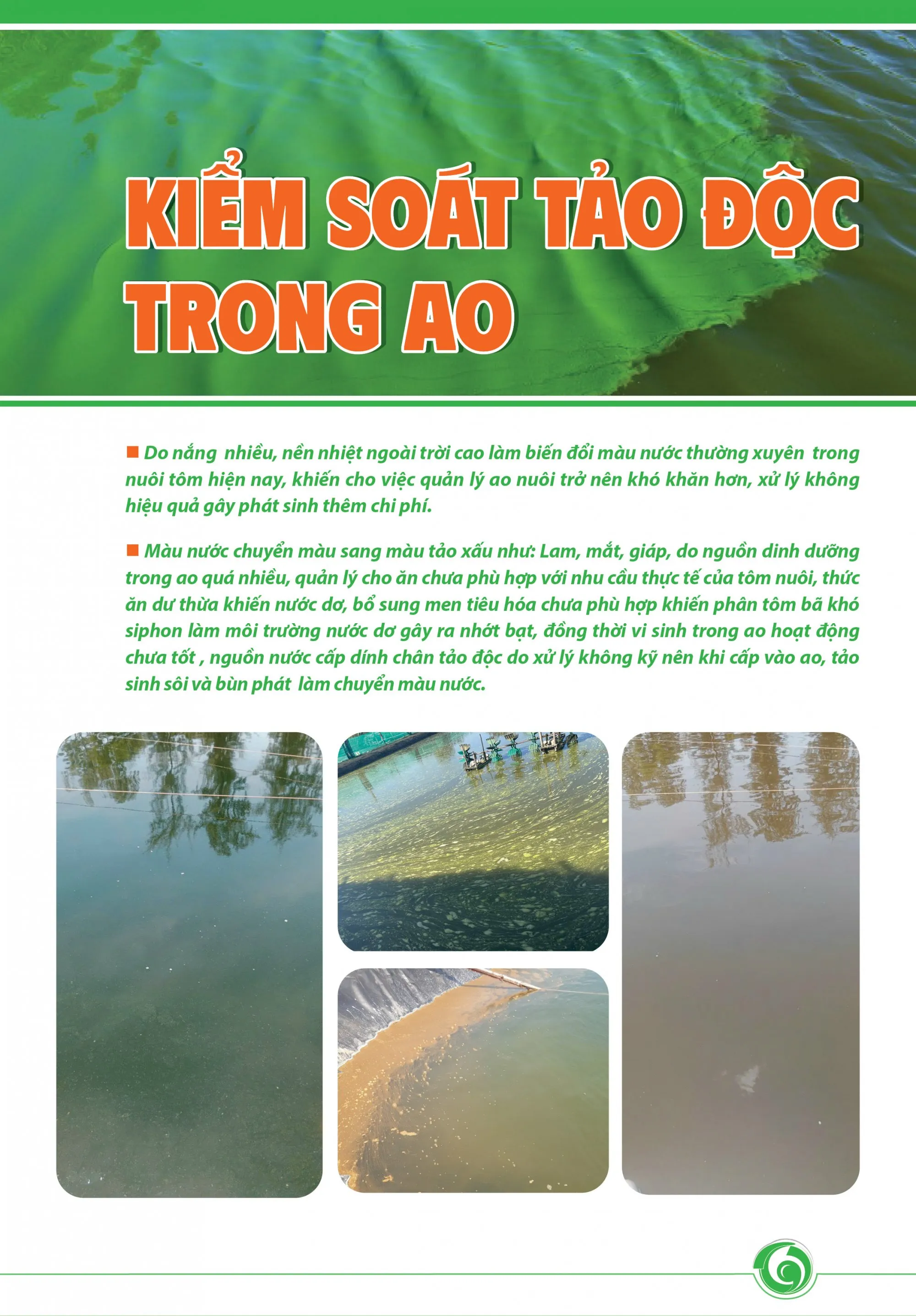

The water color changes to undesirable algal blooms, such as blue-green algae, Euglena, and dinoflagellates. This is attributed to excessive nutrients in the pond, stemming from inappropriate feeding management that doesn't meet the shrimp's actual needs, leading to uneaten feed and dirty water. Inadequate probiotic supplementation also results in shrimp fecal waste that is difficult to siphon, contributing to a dirty water environment and the formation of biofilm on the pond liner. Simultaneously, microbial activity in the pond is suboptimal. Moreover, the incoming water source is contaminated with toxic algal cells due to insufficient treatment; when introduced into the pond, these algae proliferate and sludge accumulates, causing the water color to shift.
AI-generated summary based on the full article content below.

Tóm tắt nội dung chính: Sự nóng lên toàn cầu làm thay đổi hệ vi sinh vật đường ruột của tôm thẻ chân trắng Thái Bình Dương bằng cách[...]

Tổng hợp thị trường tôm thế giới 2025: Ecuador dẫn đầu xuất khẩu (1.39M tấn, +15%), EU tăng nhập khẩu mạnh nhất (+21%), Mỹ biến động[...]

As the aquaculture industry increasingly develops strategies for animal health protection, functional nutrition has become a key fac[...]
Aquaculture Q&A
Share your name + phone so we remember your pond next time — no repeating yourself.