
Welfare concerns surrounding the common reproductive technique underpinning global shrimp production are leading to the testing of new approaches
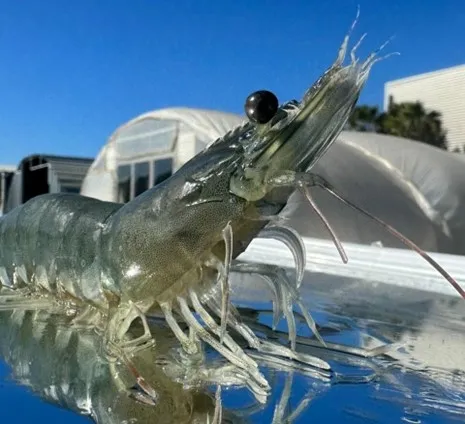
Welfare concerns surrounding the common breeding technique underpinning global shrimp farming are leading to the testing of new approaches. Photo by Darryl Jory
Eyestalk ablation dates back to the early days of the shrimp farming industry, and despite calls for alternatives, the reproductive technique seems likely to remain prevalent for the foreseeable future. A recent survey by the Global Seafood Alliance of global shrimp farmers concluded that producers are responding to animal welfare concerns and growing pressure to end this practice but acknowledge that achieving this is an incredibly complex process that could take several years.
Dr. Belinda Yaxley, an aquaculture expert in Tasmania, Australia, and coordinator for GSA’s Best Aquaculture Practices (BAP) certification program, said, “There are some real challenges around trying to economically produce shrimp using non-ablated methods.” Yaxley is also the lead author of “Shrimp Eyestalk Ablation: An Analysis of Current Status and Future,” a global survey of shrimp producers and their associations conducted in 2023.
Since it was discovered a decade ago that removing one of a shrimp’s eyestalks results in faster growth – releasing 10 to 20 times more eggs – eyestalk ablation has become a common technique in hatcheries worldwide, offering the efficiency and predictability it provides.
Efforts to produce without ablation are not new: The industry has been developing more humane methods for successful non-ablated shrimp farming for at least a decade. But, as Yaxley warned, these methods have so far required additional production costs.
Dr. Yaxley said, “It depends on the region, but ending ablation could make shrimp production costs prohibitive.”
Knowing there was no quick fix, the survey engaged over 100 individuals to understand how different producers approached the challenges and what possible solutions were being considered. Yaxley said that workshops conducted via Zoom and in-person interviews were crucial for gathering detailed feedback.
The report showed that challenges to ending ablation include cost, educational barriers, market acceptance, regulatory and policy considerations, and reduced productivity. It strongly advocates for research and development to help discover and optimize alternative methods that are both humane and effective.
The survey documents reviewed research on how to minimize pain during ablation. It was found that ligation methods resulted in the most severe consequential reactions in shrimp, and the least negative reaction was when topical anesthetic Xylocaine was applied before cutting or crushing the eyestalk, then bandaging the wound to allow it to clot.
Depending on the region, ending eyestalk ablation could make shrimp production costs prohibitive
Yaxley said, “There are many different ablation techniques, and due to production challenges, it won’t stop anytime soon.” “It’s important for BAP to work with producers to help improve shrimp welfare through the program’s standards.”
However, Yaxley does not believe in a regulatory approach. “Saying, ‘In five years, you’re not allowed to use ablation’ will never work. Within reason, you have to let the industry do things at its own pace. We are asking producers to make a plan and take into account their specific situation. As long as they have a plan that considers non-ablation strategies and a potential timeline, then we know they are trying to address the issue.”
When the survey connected with producers, she found they were always hungry for ideas. Yaxley told Advocate: “Everyone I spoke to said: ‘Have you found a solution yet?’ knowing that I was talking to people from all over the world.” The survey included Thailand, Vietnam, India, Australia, China, Japan, South America, and the United States and focused on two shrimp species: Black tiger shrimp (Penaeus monodon) and Pacific white shrimp (Litopenaeus vannamei), also known as whiteleg shrimp.
Yaxley said, “They’ve been trying to find a solution for non-ablated black tiger shrimp for 20 years, but haven’t reached the goal yet.” “Many producers are switching to black tiger shrimp, so it’s important to find a viable non-ablation solution for that species – you really can’t compare black tiger shrimp and whiteleg shrimp. Whiteleg shrimp producers will be quite comfortable with non-ablated broodstock because it’s been domesticated for so long that they have better genetics and ways to make them reproduce when they want.”
In 2020, University of Stirling researcher Simão Zacarias, while studying whiteleg shrimp, won the Global Aquaculture Innovation Award for his work to better understand actions shrimp farmers can take to manage non-ablated broodstock for results comparable to ablated broodstock.
Yaxley said, “Ablation gives producers predictability around reproduction, which allows for better production planning.” As shrimp farmers try to move away from the technique, they encounter obstacles that help explain why it has persisted for so long.
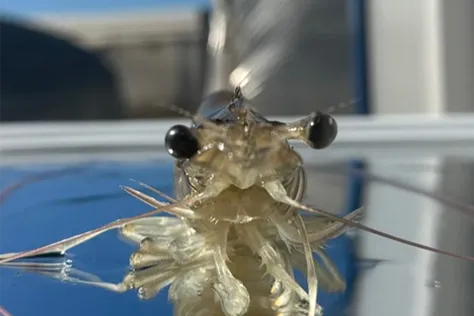
A Global Seafood Alliance survey showed that challenges to ending ablation include cost, educational barriers, market acceptance, regulatory and policy considerations, and the risk of reduced productivity. Photo by Darryl Jory
Yaxley said, “We found some producers experimenting with non-ablation by stocking twice the number of broodstock.” “They can do that for a long time, but obviously the amount of electricity, water, handling, husbandry, etc., will double.” She added that some producers tried it to meet supermarket chain requirements, but after a while gave up, “because it didn’t work.”
There is growing belief that providing shrimp with an environment closest to nature can benefit non-ablated broodstock: “If you mimic what they experience in nature by making




Related technical articles

CHANGES IN GUT MICROBIOTA DUE TO GLOBAL WARMING. REGULATING HOST HEALTH AND DISEASE STATUS IN POIKILOTHERMIC ANIMALS
Tóm tắt nội dung chính: Sự nóng lên toàn cầu làm thay đổi hệ vi sinh vật đường ruột của tôm thẻ chân trắng Thái Bình Dương bằng cách[...]

Global Shrimp Market 2025 Overview — Shrimp Insights Bulletin February 2026
Tổng hợp thị trường tôm thế giới 2025: Ecuador dẫn đầu xuất khẩu (1.39M tấn, +15%), EU tăng nhập khẩu mạnh nhất (+21%), Mỹ biến động[...]

SALMON UNDER STRESS CONDITIONS: REINFORCING THE FIRST LINE OF DEFENSE
As the aquaculture industry increasingly develops strategies for animal health protection, functional nutrition has become a key fac[...]