Technical Article

Flavonoid affects the health and performance of whiteleg shrimp

Disease outbreaks are a major threat in the shrimp farming industry. In addition to pond sanitation measures, shrimp farmers are seeking solutions to mitigate these issues. Factors related to disease incidence include: high stocking density, environmental stressors, stress during transportation, improper feed management, etc. Antioxidants are chemical compounds that prevent other substances from unwanted oxidation. An excess of free radicals leading to oxidative stress has affected farmed animals. This causes inflammation, such as inducing melanization in shrimp, leading to cell necrosis, black spots, and darkening of the gills. It reduces egg production and larval quality in reproduction. Or, oxidation leads to changes in flavor and color, resulting in reduced meat quality.

ProtocolShrimpNovember 16, 2019👁 37 views
Click to listen to AI-narrated summary (1.2×)
AI Summary

Generate an English summary for Flavonoid affects the health and performance of whiteleg shrimp

AI-generated summary based on the full article content below.

Editorial Framing

Why this article matters

    Full Article

          Diseases are a major threat in the shrimp farming industry. In addition to pond sanitation measures, farmers are seeking solutions to mitigate them. Factors related to disease incidence include: high stocking density, environmental stressors, stress during transportation, improper feed management…

         Antioxidants are chemical compounds that prevent other substances from unwanted oxidation. An excess of free radicals leading to oxidative stress has affected farmed animals. It causes inflammation, such as the formation of melanization in shrimp, leading to cell necrosis, black spots, and darkening of the gills. It reduces egg production and broodstock quality in reproduction. Or, oxidation leads to changes in taste and color, resulting in reduced meat quality.

          Reactive free radicals can be inactivated by antioxidants. Some commonly used antioxidants include Enzymes (SOD…), Vitamin C&E; Carotenoids; Glutathione; Flavonoids. Flavonoid-rich feed additives can act as natural anti-inflammatory agents by down-regulating the NF-kB gene factor.

    Experiment Procedure:

          Whiteleg shrimp postlarvae PL12 were cultured for 60 days. They were divided into 2 groups: a control group and a group supplemented with 800 ppm of flavonoid-rich phytogenic feed additive.

          The flavonoid-rich feed additive used in the treatment group contained polyphenolic secondary plant compounds from hops, grapes, and green tea. The purpose was to inhibit the formation of pro-inflammatory cytokines, leading to fewer inflammatory responses in the body. This results in less energy expenditure for other purposes and more energy focused on growth. It also leads to less pathological damage and better health protection.

          After the experiment concluded, 60 individuals from each group were taken for examination. The hepatopancreas was dissected, bacterial counts were checked on TCBS plates, combined with histological observation of the shrimp.

    Bacterial Research Results
    H1_1

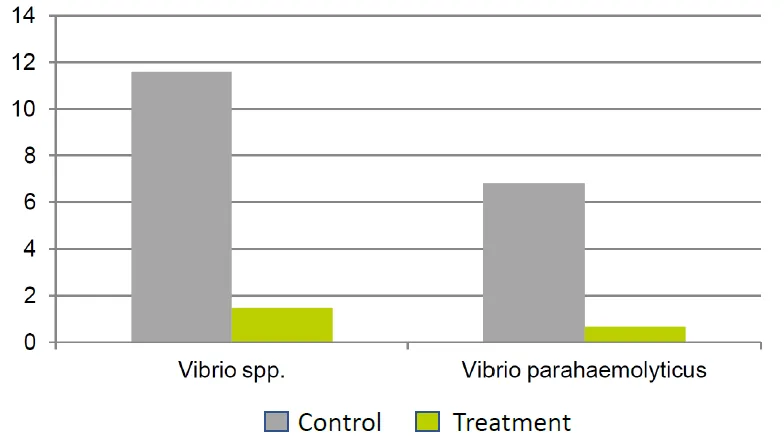
          Bacterial count in the hepatopancreas of whiteleg shrimp after 60 days of experiment

          The total number of Vibrio spp and Vibrio parahaemolyticus bacteria in the Flavonoid-supplemented group was significantly lower than in the unsupplemented control group.

    Histological Research Results
    H2_1

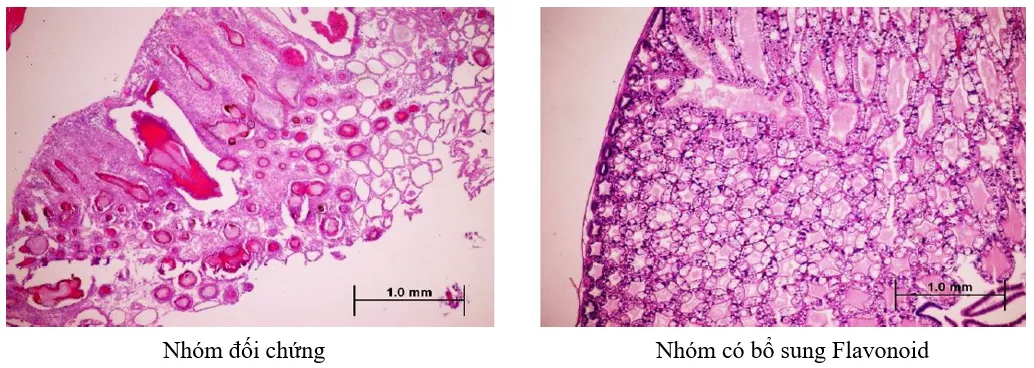
    Histological results of shrimp hepatopancreas

          The hepatopancreas of shrimp in the control group showed signs of atrophy and bacterial infection causing damage to 20-80% of cells. The hepatopancreas of shrimp supplemented with Flavonoid was normal, with infected cells only within the range of 0-10%.

    Results of Survival Rate and Feed Conversion Ratio
    H3_1
     

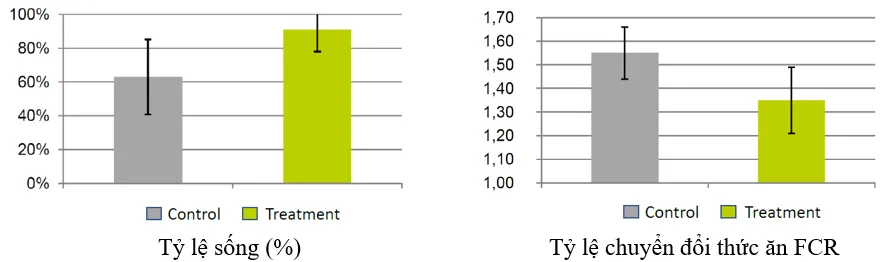
          There was a difference in survival rate and feed conversion ratio (FCR) between the two experimental groups. The group supplemented with Flavonoid had a higher survival rate and a lower FCR compared to the control group.

          The above results show that the treatment group, supplemented with Flavonoid in the feed during culture, helped reduce bacterial load in shrimp, improved pond performance, and enhanced immune status, leading to improved survival rate and FCR.

          Natural feed additives rich in Flavonoids have high antibacterial activity and good bacteriostatic effects against Vibrio spp. They act as natural anti-inflammatory agents, reducing the negative impacts of inflammation and saving significant energy for growth. This improves survival rate and FCR in shrimp ponds.

    Source: Alex Diana – Dr.Eckel Animal Nutrition (ThaiLand) Co., Ltd
    Related Products

    Products linked to this topic

    Product reference for MAX 4000
    shrimpThần Vương Blue

    MAX 4000

    Vi sinh đặc hiệu khử NO2

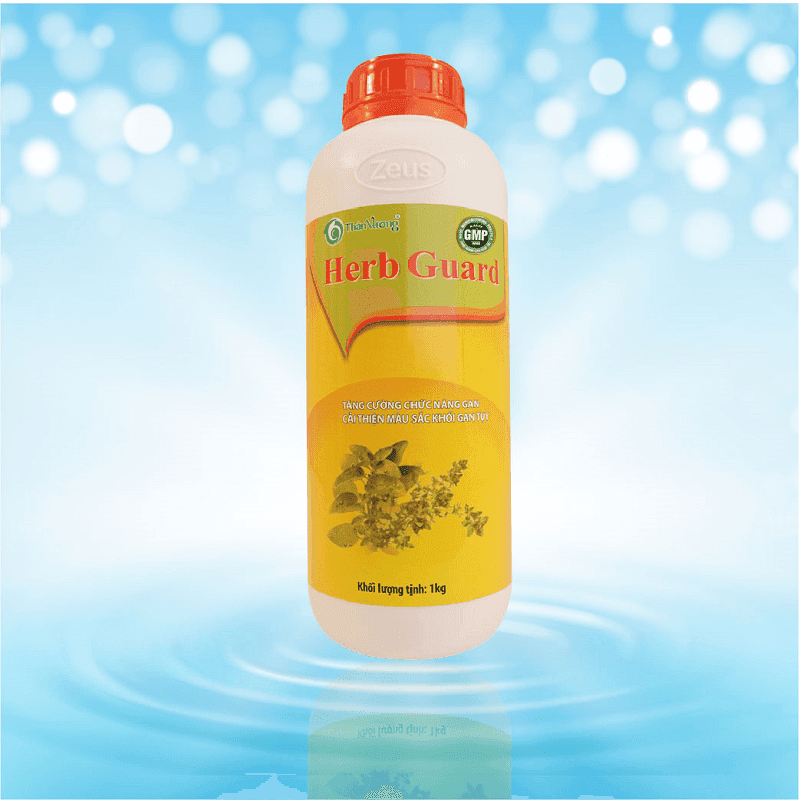
    Product reference for HERB GUARD
    shrimpThần Vương Blue

    HERB GUARD

    Tăng cường chức năng gan, cải thiện màu sắc khối gan tụy

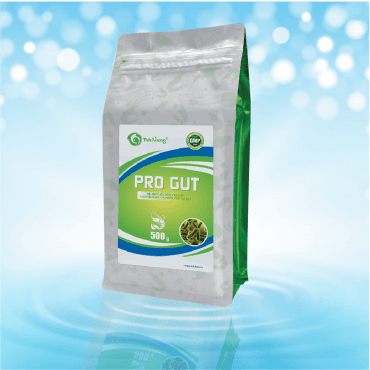
    Product reference for PRO GUT
    shrimpThần Vương Blue

    PRO GUT

    Hệ men tiêu hóa cao cấp chuyên dùng cho nuôi tôm ao bạt

    Product reference for LALSEA BIOREM
    allNguyên liệu

    LALSEA BIOREM

    Khử NH3, xử lý hữu cơ sinh học, hiệu quả ở độ mặn cao

    More Reading

    Related technical articles

    SỰ THAY ĐỔI CỦA HỆ VI SINH ĐƯỜNG RUỘT DO SỰ NÓNG LÊN TOÀN CẦU. ĐIỀU HÒA SỨC KHỎE VẬT CHỦ VÀ TÌNH TRẠNG BỆNH Ở ĐỘNG VẬT BIẾN NHIỆT
    Research InsightShrimpFebruary 28, 2026

    CHANGES IN GUT MICROBIOTA DUE TO GLOBAL WARMING. REGULATING HOST HEALTH AND DISEASE STATUS IN POIKILOTHERMIC ANIMALS

    Tóm tắt nội dung chính: Sự nóng lên toàn cầu làm thay đổi hệ vi sinh vật đường ruột của tôm thẻ chân trắng Thái Bình Dương bằng cách[...]

    Toàn cảnh thị trường tôm thế giới 2025 — Dữ liệu từ Shrimp Insights (Tháng 2/2026)
    Technical articleShrimpApril 9, 2026

    Global Shrimp Market 2025 Overview — Shrimp Insights Bulletin February 2026

    Tổng hợp thị trường tôm thế giới 2025: Ecuador dẫn đầu xuất khẩu (1.39M tấn, +15%), EU tăng nhập khẩu mạnh nhất (+21%), Mỹ biến động[...]

    CÁ HỒI TRONG ĐIỀU KIỆN STRESS: CỦNG CỐ TUYẾN PHÒNG THỦ ĐẦU TIÊN
    Solution TrackShrimpFebruary 27, 2026

    SALMON UNDER STRESS CONDITIONS: REINFORCING THE FIRST LINE OF DEFENSE

    As the aquaculture industry increasingly develops strategies for animal health protection, functional nutrition has become a key fac[...]

    Technical Advisor

    Aquaculture Q&A

    🦐

    Help us serve you better

    Share your name + phone so we remember your pond next time — no repeating yourself.

    • 🔒 Tech team only — never shared with third parties
    • 📨 No spam, no promotional SMS
    • 💾 History saved on your device — clear anytime