Formation of organic matter and pond bottom sludge in aquaculture ponds
The main source of organic matter in aquaculture ponds is feed, because feed often contains very high protein content (mainly Nitrogen and Phosphorus) and the shrimp's absorption capacity is limited. This leads to an increasing accumulation of organic matter through uneaten feed and shrimp feces, along with its decomposition, creating very negative impacts on pond water quality.
When Nitrogen and Phosphorus accumulate increasingly, the N:P ratio changes (N≈P). This ratio is favorable for the growth of harmful algae (blue-green algae, dinoflagellates, and euglenoids).
Additionally, other sources of organic matter accumulated in the pond include: shrimp molts, suspended silt from soil, dead algae and plankton, undissolved mineral lime during use.
Organic decomposition processes in the pond also make the water viscous (heavy water), creating a lot of suspended organic matter (a cause of oxygen depletion, dense algae blooms, and algal crashes).
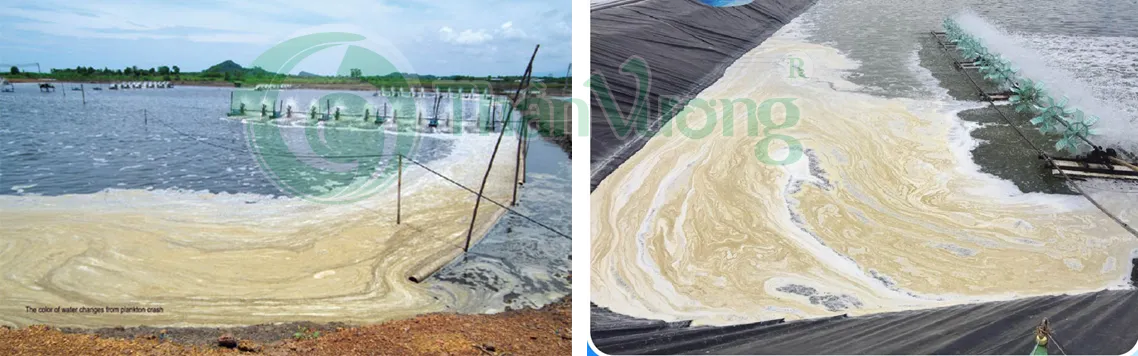
Pond with decaying algae
Another point of concern is the concentration of dissolved organic matter in the source water. In practice, some long-standing aquaculture areas using groundwater show high levels of dissolved organic matter (algae often grow very rapidly during water exchange).
Negative impacts on the environment and farmed shrimp
- Harmful algae thrive when the N:P ratio changes
Increasing accumulation of N and P leads to eutrophication and nutrient imbalance, creating a favorable environment for the growth of blue-green algae, dinoflagellates, and euglenoids, negatively impacting the pond.
It is important to note the appearance of euglenoids, an indicator algae species for a very poor pond ecosystem.
When these algae species proliferate and then crash, it becomes a major problem because the decomposition of algal biomass produces many toxins, often causing shrimp to suffer from gut-related diseases and changes in hepatopancreas color.
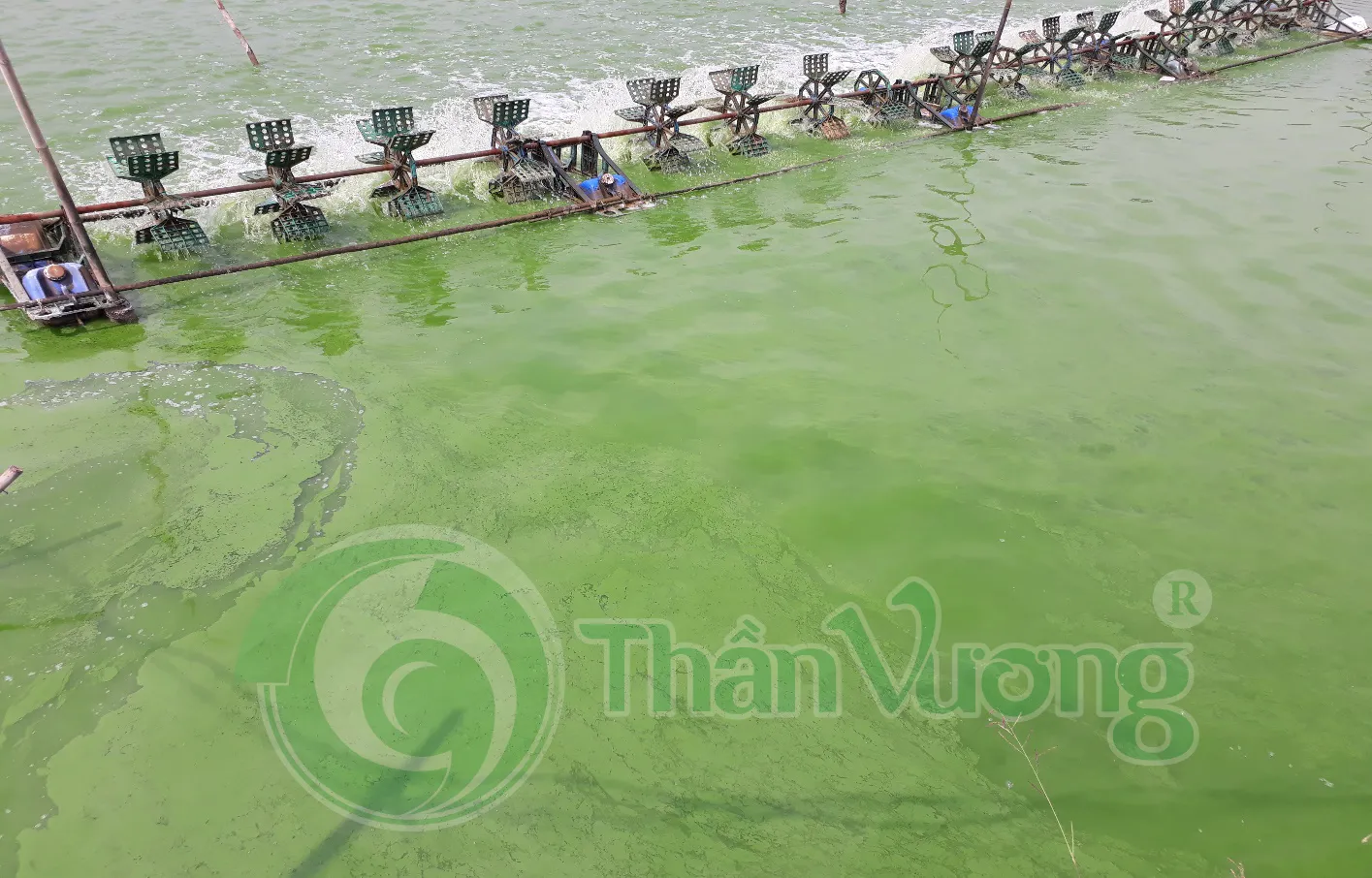
Pond heavily overgrown with blue-green algae
- Toxic gases NH3, NO2, H2S
NH3 (Ammonia) The first product in the nitrogen conversion process (NH4+/NH3). When water quality deteriorates and pH levels are high >8.3, the conversion equilibrium shifts more towards Ammonia (increasing NH3 concentration), which is toxic to farmed shrimp.
NO2 (Nitrite) is produced when the nitrification process cannot occur due to low dissolved oxygen (<2mg/L).
Nitrosomonas and Nitro bacter, two types of bacteria representing the nitrification process, but they are often unstable in terms of population density and biomass production (very slow biomass growth over a long period) due to their environmental sensitivity and immobility.
The toxicity of NO2 increases in low salinity water and vice versa.
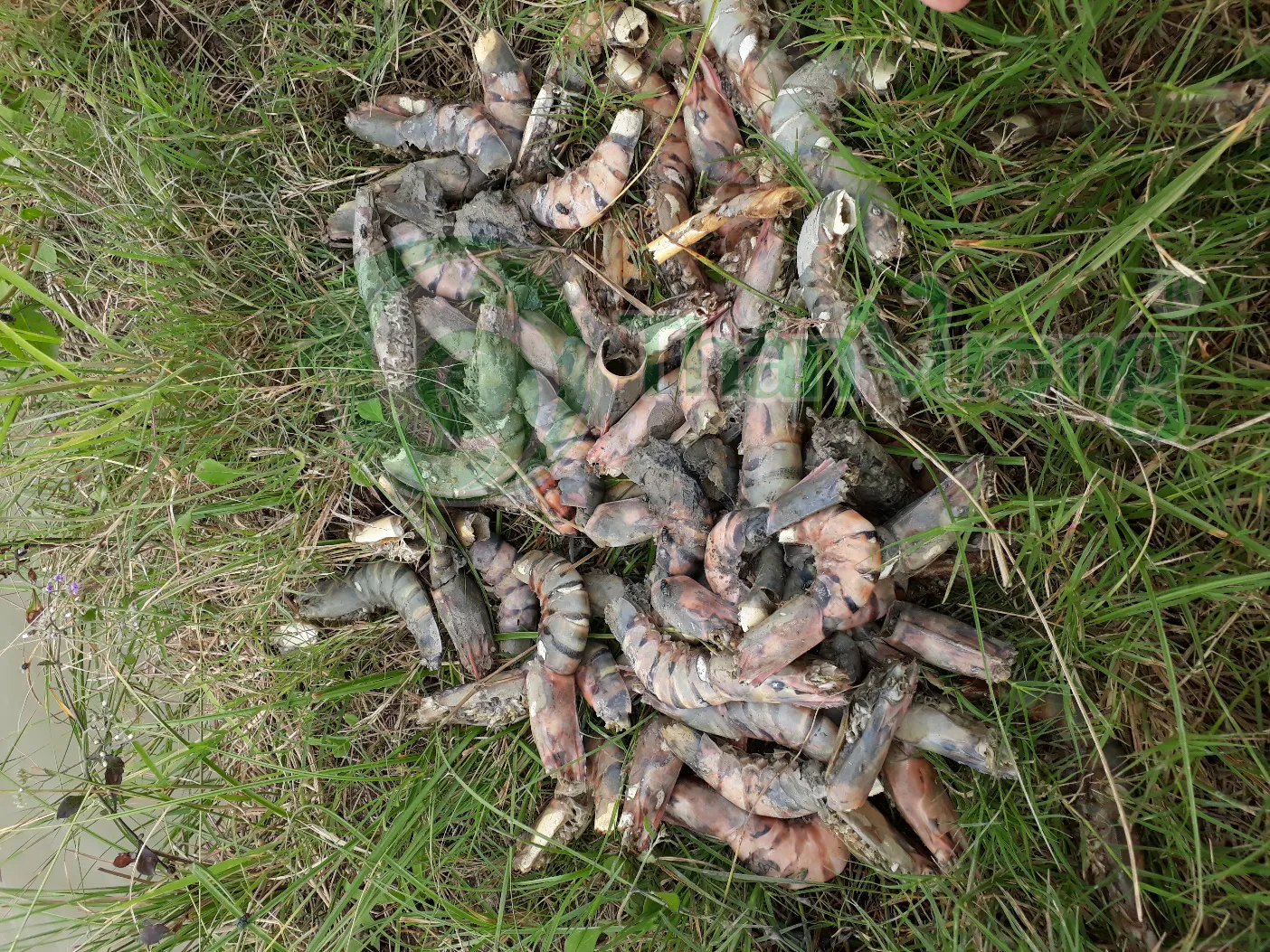
Black tiger shrimp mortality due to high toxic gases NH3, NO2
H2S (Hydrogen sulfide) The bottom sludge layer will increase during cultivation (especially in earthen ponds), creating anaerobic zones. H2S is produced through anaerobic decomposition. Conversely to NH3, H2S exhibits high toxicity at low pH when HS- => H2S.
H2S is highly toxic to farmed shrimp even at very low concentrations.
High accumulation of pond bottom sludge provides a favorable environment for harmful bacteria to proliferate rapidly, causing diseases in shrimp.
- Dissolved Oxygen: The decomposition of organic matter and suspended organic particles in the pond consumes a lot of oxygen, reducing dissolved oxygen levels.
- Poorly fluctuating water environment affects health, causes disease, and increases shrimp susceptibility to disease.
When the pond environment changes and water quality parameters fluctuate (high temperature, low temperature, dense algal blooms, algal crashes, heavy metals, organic matter pollution, etc.), all these factors affect the health of farmed shrimp.
The hepatopancreas and gut are two extremely important organs and are highly sensitive to the pond environment. Therefore, managing shrimp health based on these two criteria is a priority.
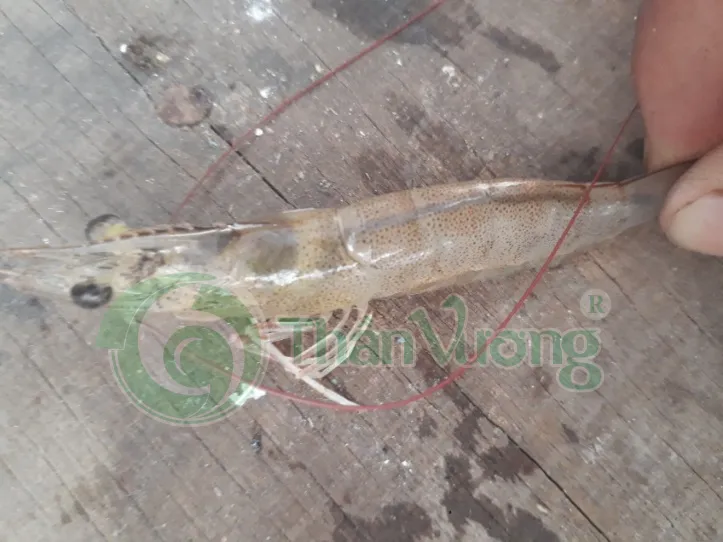
Shrimp suffering from gut disease, affecting hepatopancreas and poor coloration.
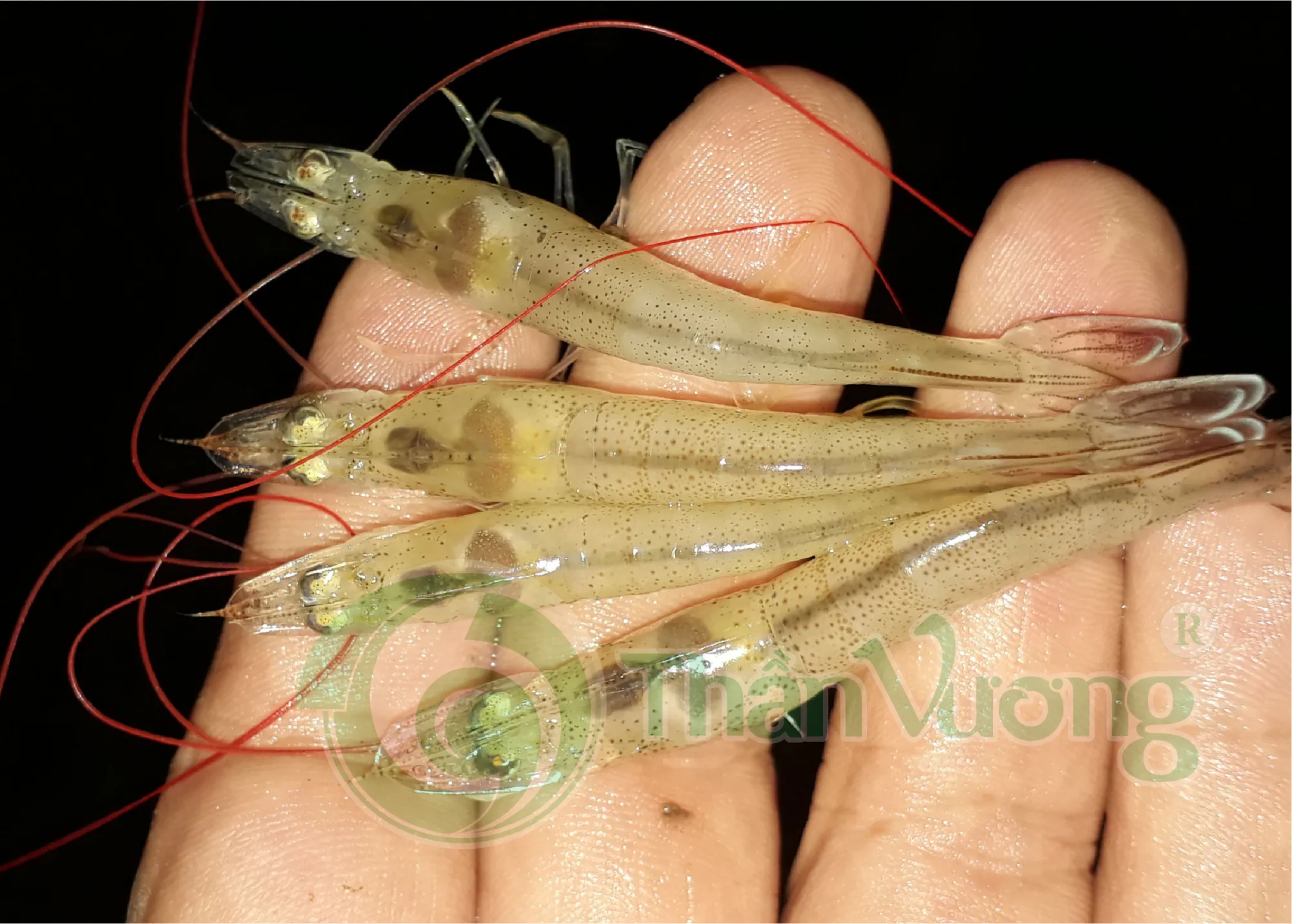
Weather effects (heavy rain) lead to poor shrimp hepatopancreas, even with full guts.
A significant environmental degradation will lead to shrimp diseases. This inevitably reduces productivity, increases treatment costs, and results in economic losses.
Eng. Tran Cong Viet