
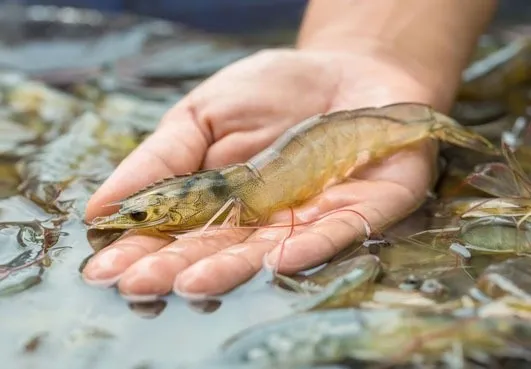
High Carbon Dioxide levels will adversely affect whiteleg shrimp
A report from the research group at the Faculty of Fisheries, Can Tho University, indicates that high Carbon Dioxide levels will adversely affect the growth, survival rate, reduce the activity of some digestive enzymes, and increase blood glucose levels in whiteleg shrimp.
In recent years, the impact of climate change along with the greenhouse effect has led to a continuous increase in atmospheric CO2 levels. High atmospheric CO2 levels will diffuse into seawater, causing the surface seawater pH to decrease by 0.3-0.5 by 2100 and by 0.8-1.4 by 2300 (Caldeira and Wickett, 2005). Aquaculture is one of the industries directly affected by climate change, especially farmed fish and shrimp species which are highly susceptible to environmental changes. Kaniewska et al. (2012) suggested that increased CO2 levels in seawater would cause long-term negative impacts on the growth, reproduction, and survival rate of some aquatic species. Furthermore, elevated CO2 levels in water can affect the development of aquatic species by altering enzyme activity or inhibiting protein synthesis, leading to slow growth and reduced metabolic activity (Kurihara et al., 2004).
When CO2 pressure in water is greater than CO2 pressure in the blood, it inhibits the excretion of CO2 through the gills, leading to increased CO2 levels in the blood and a decrease in blood pH (Brauner et al., 2004). According to Wyk and Scarpa (1999), the optimal CO2 level for shrimp development is below 5 mg/L; CO2 levels exceeding 20 mg/L hinder CO2 excretion at the shrimp's gills, reducing blood pH, adversely affecting oxygen transport in the blood, decreasing tissue oxygen, and increasing respiration; levels above 60 mg/L can cause shrimp mortality.
Marine shrimp farming in general, and whiteleg shrimp farming in particular, is currently developing rapidly and is a key economic sector nationwide. However, in recent years, marine shrimp farming has faced numerous obstacles related to diseases and environmental pollution. In 2011, the total area of diseased and damaged shrimp farms in the Mekong Delta reached 80,000 ha, with losses exceeding 13 billion postlarvae (MARD, 2011). Many causes have been identified, notably poor quality shrimp postlarvae, environmental pollution, disease outbreaks, and the impact of climate change and the greenhouse effect leading to CO2 emissions, which are also among the causes of difficulties, diseases, and losses during farming. Therefore, conducting research to find solutions to mitigate these risks is a very necessary and urgent matter.
Experimental Design
The experiment was designed based on the ocean acidification scenario, where CO2 diffused into seawater reduces water pH, predicting a decrease in seawater pH to 7.6 by 2100 and further to 7.2-6.8 by 2300.
The study included 4 CO2 treatment levels: 2.32, 7.81, 19.02, and 45.6 mg/L, corresponding to pH levels of 8.1, 7.6, 7.2, and 6.8, respectively; and was replicated 3 times. Shrimp with an initial size of 0.019 g/individual and 1.20 cm/individual were reared in 200 L tanks at a density of 100 individuals/tank and a salinity of 15‰.
Shrimp were fed commercial pelleted feed of Grobest brand at a daily ration of 10-15% body weight; feeding occurred 4 times/day. After 45 days of the experiment, shrimp were analyzed for digestive enzymes (trypsin, chymotrypsin, and amylase) and blood glucose.
Results
After 45 days, the highest survival rate was 70.0% in the control treatment, and the lowest was in the 45.6 mg/L CO2 treatment (28.3%). The survival rate of whiteleg shrimp decreased when living in water environments with high CO2 levels (low pH).
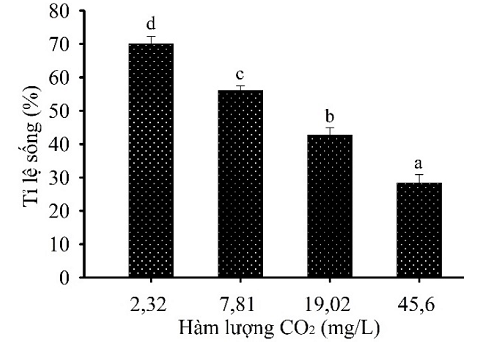
The survival rate of whiteleg shrimp decreases when living in water environments with high CO2 levels
Higher CO2 levels led to slower shrimp growth compared to water with low CO2 levels. The lowest shrimp growth was observed in the 45.6 mg/L CO2 treatment, with values of 1.09 g/individual and 4.69 cm/individual, respectively.
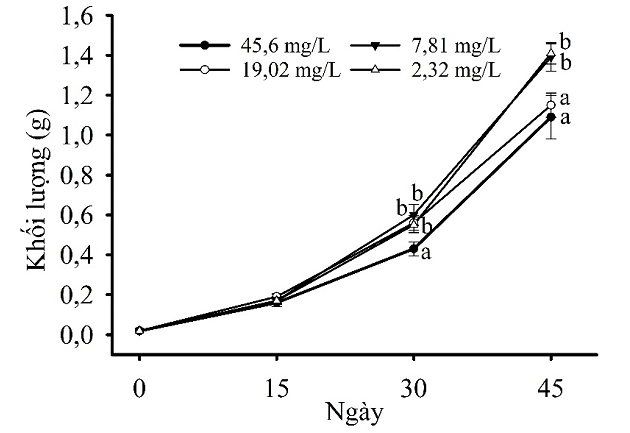
Higher CO2 levels led to slower shrimp growth compared to water with low CO2 levels
Blood glucose levels in shrimp increased when shrimp lived in water environments with high CO2 levels. The highest glucose level was 37.5±1.91 mg/100 mL in the 45.6 mgCO2/L treatment (pH=6.8).

Blood glucose levels in shrimp increased when shrimp lived in water environments with high CO2 levels
Digestive enzyme activity was lowest in the 45.6 mg/L CO2 treatment. The activity of digestive enzymes (trypsin, chymotrypsin, intestinal amylase, and gastric amylase) decreased as CO2 levels in the water increased.
Results from the study show that shrimp living in a CO2 environment will frequently experience stress, reduced digestive enzymes, thereby affecting growth and survival rate. Therefore, it is advisable to maintain CO2 levels at an appropriate level below 7.8 mg/L to ensure the successful rearing of whiteleg shrimp.
Source: Can Tho University Journal of Science