
A newly discovered virus causing a dangerous disease and high mortality in whiteleg shrimp Litopenaeus vannamei in Zhejiang, China, has been verified and tentatively identified as Shrimp Hemocyte Iridescent Virus (SHIV). It belongs to the family Iridoviridae.
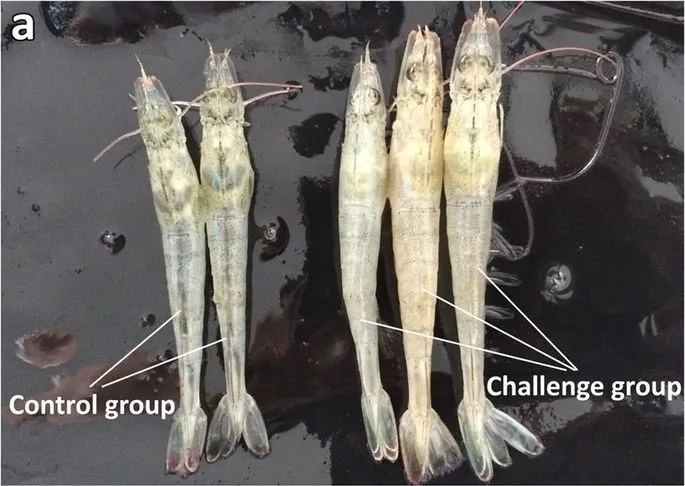
Clinical symptoms of control *L. vannamei* shrimp and shrimp experimentally infected with SHIV compared to the control group. (a) External disease manifestations of shrimp.
To clarify this agent, a group of Chinese scientists conducted diagnostics and identification of the pathogen.
- . Symptoms of infected shrimp
· Pathological signs of SHIV-infected shrimp
Whiteleg shrimp L. vannamei experimentally infected with SHIV from sample 20141215 showed symptoms including: empty stomach and intestine, slight discoloration on the surface of the hepatopancreas, and soft shells. One-third of the shrimp had a slightly reddish body (a, b). Shrimp lost their swimming ability and sank to the pond bottom. Typical symptoms and mortality were also observed in infected giant freshwater prawns from larval to adult stages in the laboratory.
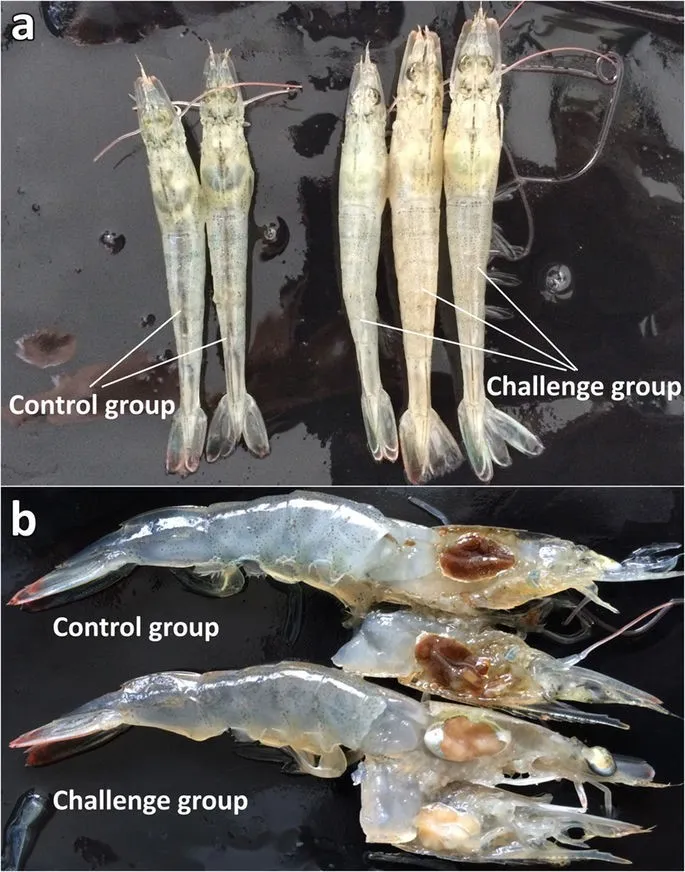
Clinical symptoms of *L. vannamei* shrimp experimentally infected with SHIV (right side) compared to the control group (left side). (a) External disease manifestations of shrimp. (b) Hepatopancreas.
· Microscopic lesions
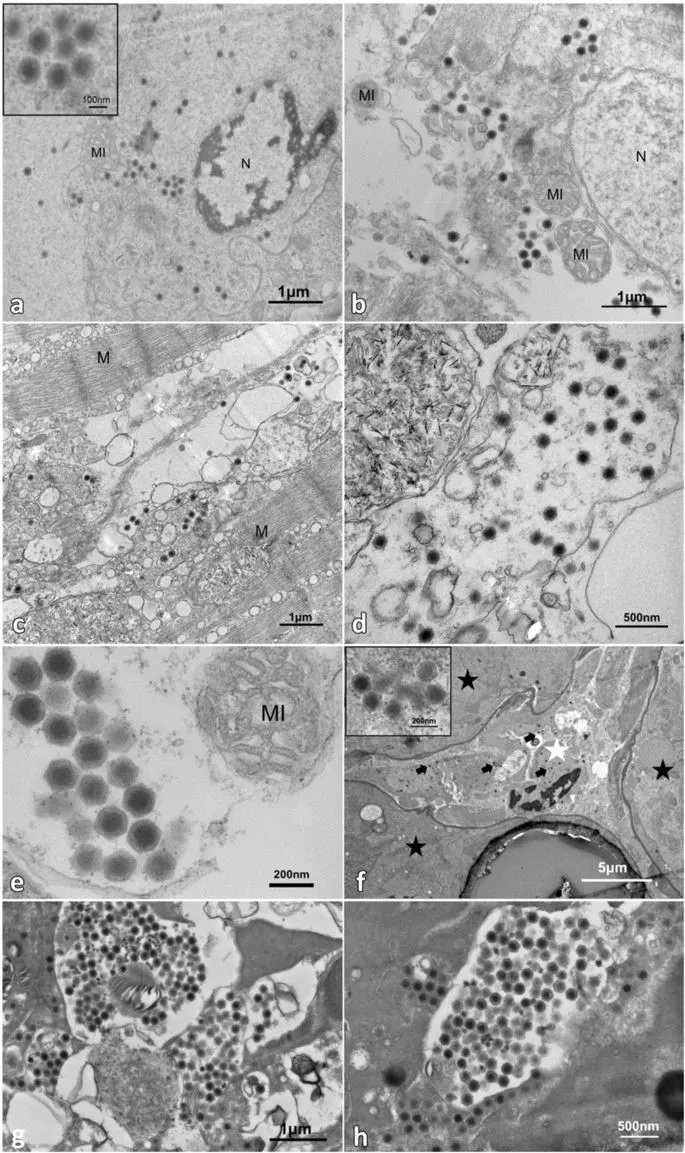
Electron microscopic observation revealed a large number of virions in the hepatopancreatic tubules of shrimp (a and b) and muscle tissue (c and d). A large number of virions were found in the cytoplasm of hemocytes (a-d). MI: mitochondria; N: nucleus; and M: muscle; Black star: hepatopancreatic tissue; and white star: hepatopancreatic tubule.
Tissue lesions (a) - (d) hepatopancreatic tissue in SHIV-positive samples; (e) - (h) hepatopancreatic tissue in SHIV-negative samples. Blue colors were observed in the cytoplasm of hemocytes.
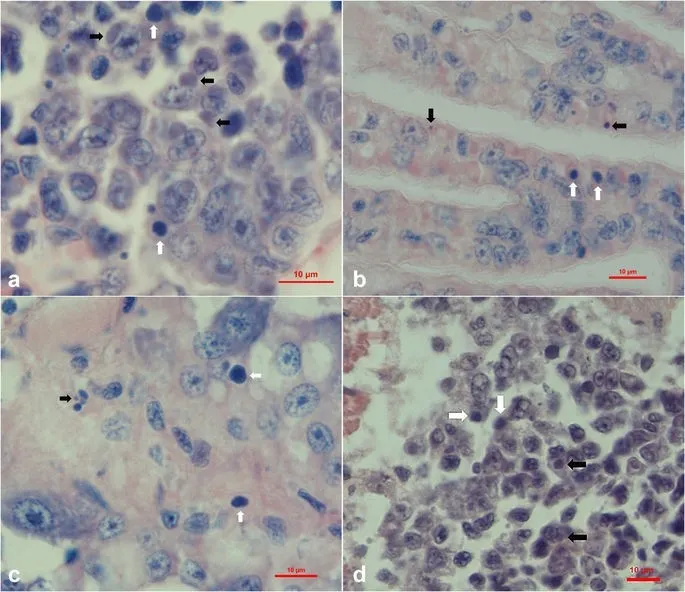
Histopathological features of *L. vannamei* shrimp fixed with Davidson's solution (a, c, e, and d). Black arrows indicate basic stains, white arrows show atrophied nuclei (staining of hepatopancreatic tissue); (b) gill lesions.
- Phylogenetic analysis
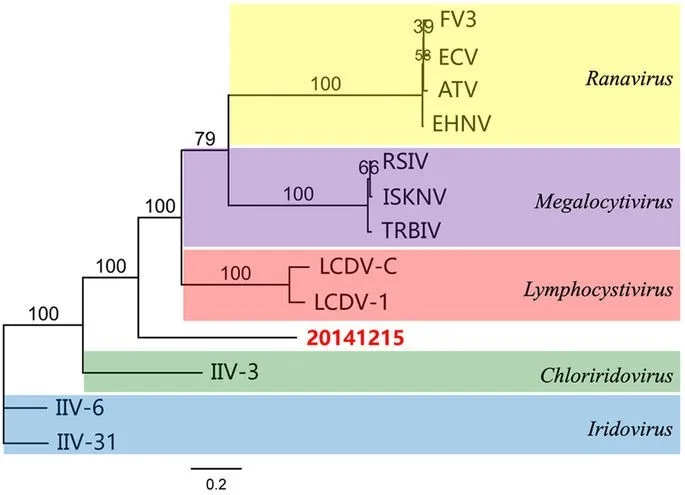
Phylogenetic tree based on the amino acid sequence of SHIV in shrimp with MCP and ATPase sequences from other members of the Iridoviridae family
The above analysis results by the group of Chinese scientists indicate that the harmful viral agent is a new member of the Iridoviridae family. A new threat to whiteleg shrimp L. vannamei in China and worldwide.
Translated by Tri Thuy - Source: Tep Bac