A new disease, named “translucent post-larvae disease” (TPD) or “glassy post-larvae disease” (GPD) in Pacific white shrimp Penaeus vannamei, characterized by a pale or colorless hepatopancreas and digestive tract, has become an urgent threat to the shrimp farming industry.
Causative Agent
It is a new strain of Vibrio parahaemolyticus, but different from the V. parahaemolyticus that causes Acute Hepatopancreatic Necrosis Disease (AHPND).
Clinical Signs
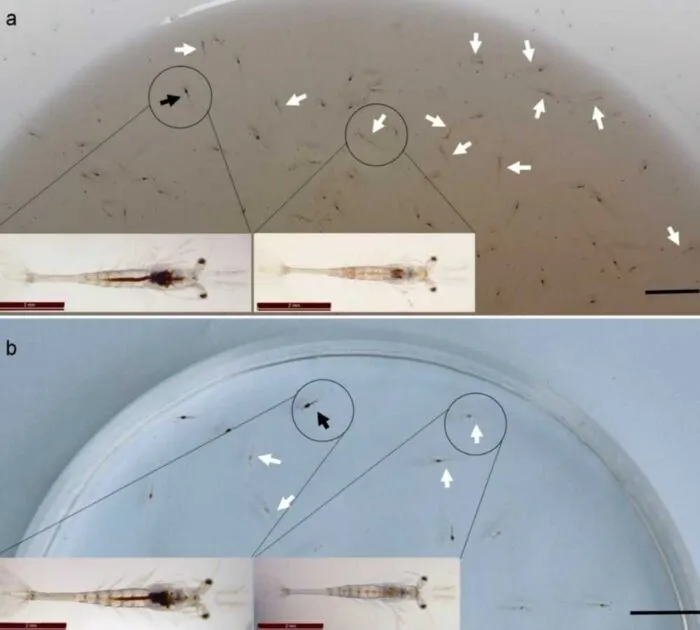
The hepatopancreas and digestive tract of diseased post-larvae become pale and colorless. A large proportion of affected post-larvae sink to the bottom of the rearing tank and die.
Diseased individuals (indicated by white arrows) show abnormal hepatopancreatic and digestive tract necrosis syndrome. The hepatopancreas and digestive tract of diseased post-larvae are pale and colorless.
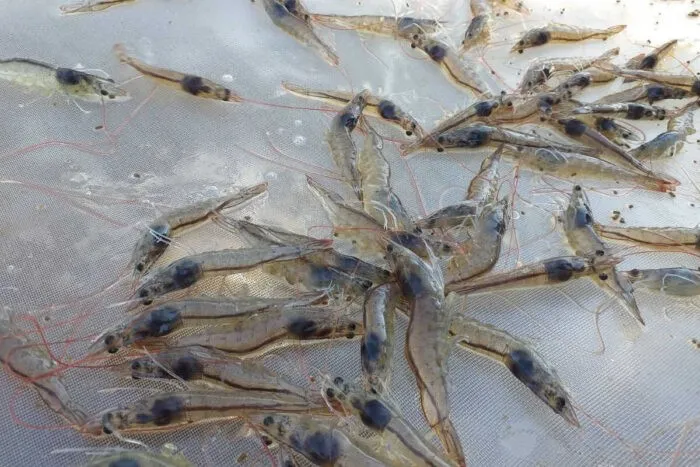
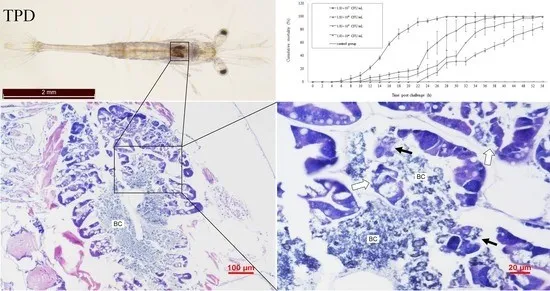
Translucent post-larvae disease primarily affects post-larvae at 4 to 7 days old (PL4~PL7) with a very high infection rate. Typically, the morbidity rate of the affected population can reach up to 60% on the second day after the first observation of abnormal individuals, and even up to 90–100% in severe cases by the third day.
There are currently no specific preventive measures, but treating water with antibacterial agents can limit the pathogen.
Currently, the disease appears in most hatcheries and during the early stages of commercial grow-out ponds.