Results show undesirable effects on growth, immunity, and gut microbiota function
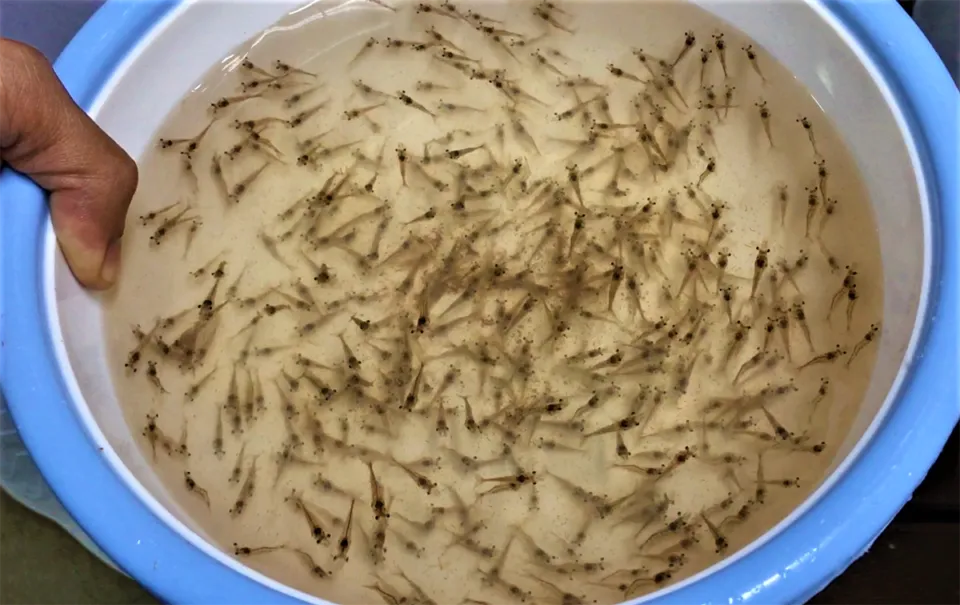
pH value (a measure of the acidity of a liquid) is one of the most sensitive environmental stressors for aquatic animals and can fluctuate between 6.6 and 10.2 due to photosynthesis and respiration in the water. As a euryhaline (an organism that can adapt to a wide range of salinity), the proper physiological functions of whiteleg shrimp (Litopenaeus vannamei) are affected by pH stress, which can cause oxidative stress, reduce antioxidant capacity and immune parameters, damage intestinal tissues, and alter the gut microbiota.
An aquatic animal's response to pH stress is a complex process involving adjustments in the immune system, antioxidant system, and gut health. The shrimp gut is a vital organ for digestion, absorption, and immune protection, and its structure plays a crucial role closely related to host health. Environmental stress can affect the function of the intestinal barrier, weaken immune responses, and increase susceptibility to disease.
Study Setup
Whiteleg shrimp were obtained from a farm in Hainan, China, and acclimated to the experimental environment – seawater with pH 8.0 - 8.2, salinity 28 - 30‰, and temperature 28 ± 2°C for 2 weeks, fed (41% crude protein, 4% crude lipid) at 6% body weight daily.
After acclimation, whiteleg shrimp (average weight 2.6 ± 0.4 grams) were randomly divided into 3 groups for different pH treatments: Control group (pH 8.0), pH 6.5 group, and pH 9.5 group stocked in tanks at a density of 167 individuals/m2. Shrimp were fed according to the same protocol as during acclimation, and water pH was monitored 3 times/day for 28 days of the experiment.
Survival rate was assessed daily, and we also collected samples for laboratory analyses to determine and evaluate shrimp growth, hepatosomatic index, antioxidant capacity, immune-related gene expression, intestinal histology, and gut microbiota.
Results and Discussion
Immunity in crustaceans is one of the most important functions to prevent pathogen invasion, and previous research has reported that environmental stress can affect the immunity of L. vannamei. Our results showed that immune expression in both pH 6.5 and pH 9.5 groups was reduced (a decrease in the quantity of cellular components, such as RNA or protein, in response to external stimuli), and the Casp-3 gene (a protein-coding gene) was significantly reduced in the pH 9.5 group.
Our data also indicated that pH stress at 6.5 and 9.5 affected the disease resistance of whiteleg shrimp, and even higher pH levels inhibited the ability to clear damaged cells. Additionally, the antioxidant capacity of shrimp at pH 9.5 or pH 6.5 was significantly reduced compared to shrimp at pH 8.0.
Results showed a significant reduction in weight gain rate in shrimp at pH 9.5 compared to the control group at pH 8.0. The hepatopancreas and intestine play crucial roles in digestion, absorption, and antioxidant functions in shrimp. Our data showed that the weight gain rate (WGR) in the pH 9.5 group was significantly lower than in the other two groups, while the hepatosomatic index (HSI) increased. The pH 9.5 group indicated that high pH stress can affect shrimp digestion and absorption processes, simultaneously limiting nutrient intake for growth and stress resistance.
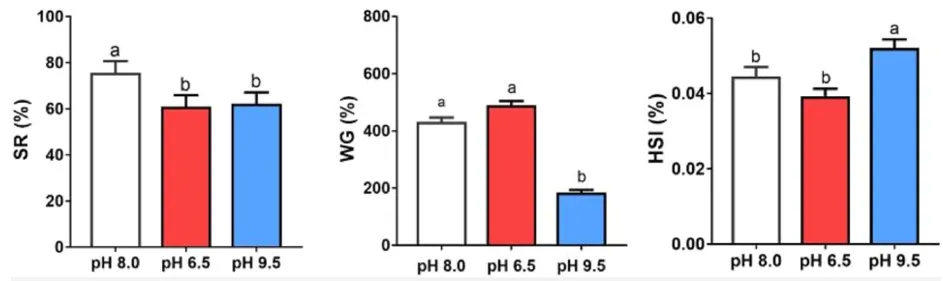
Chart 1. Survival rate (SR) (A), weight gain rate (WGR) (B), and hepatosomatic index (HSI) (C) of whiteleg shrimp at pH 6.5 and pH 9.5 for 28 days. Letters (a, b) indicate significant differences (p < 0.05) between groups
The structure and diversity of the gut microbiota are important factors for shrimp health, and environmental stress can alter the balance of the gut microbiota and increase the risk of disease. In our study, the intestinal epithelium was atrophied in the pH 6.5 group and damaged in the pH 9.5 group. Histological analysis showed that intestinal epithelial cells of shrimp at pH 6.5 detached from the membrane, while the pH 9.5 group exhibited epithelial cell necrosis.
We observed that under prolonged pH stress, the balance of the gut microbiota in whiteleg shrimp was disrupted, and the gut's ability to filter bacteria from the water was weakened, creating opportunities for pathogenic bacteria to invade. This imbalance in the gut microbiota can directly affect the immune system in shrimp, and changes in the gut microbiota are closely related to the environment.
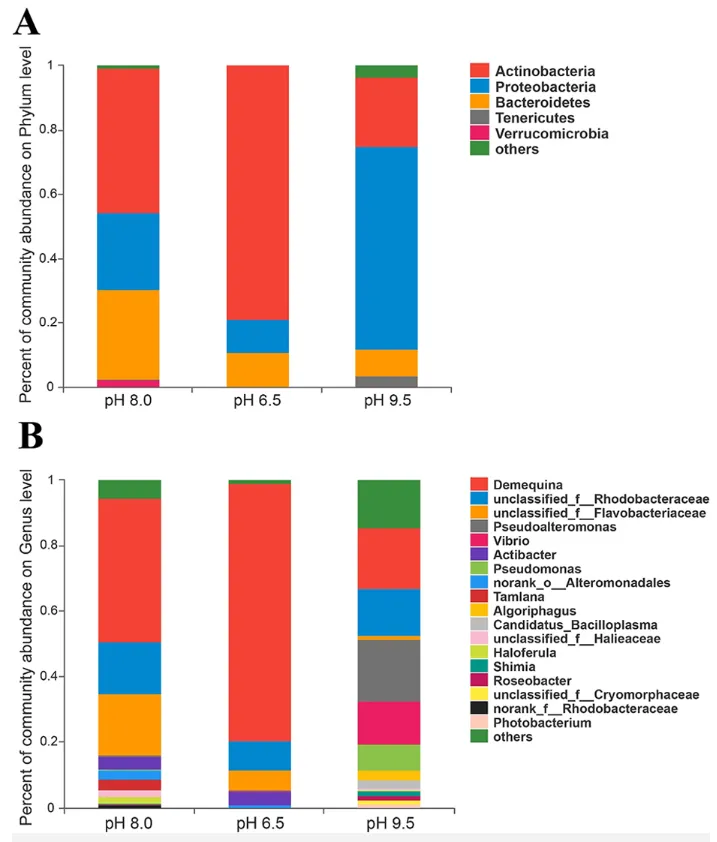
Chart 2. Gut microbiota composition of whiteleg shrimp under pH stress for 28 days. (A) Composition at phylum level; (B) Composition at genus level
The gut cannot perform normal functions when shrimp are under pH stress, and the composition of the gut microbiota may exhibit abnormal morphologies. Microbiota composition can be affected by both seawater and feed intake, and other studies have reported Proteobacteria as the most important microbiota in the gut, but in our study, both Actinobacteria and Proteobacteria were observed as major phyla.
At pH 6.5, the functions of the intestinal barrier were weakened for protein and carbohydrate digestion and absorption. At pH 9.5, the antibiotic biosynthesis pathway for some compounds was significantly reduced. This was associated with a decrease in the proportion of Actinobacteria in the pH 9.5 group and potentially promoted the growth of various bacteria in the shrimp gut, disrupting the gut microbiota composition.
Perspective
Our results indicate that prolonged stress with excessively low or high pH can adversely affect the functions of the shrimp gut microbiota, thereby leading to reduced growth, immunity, and antioxidant capacity, and even intestinal histological damage.
Source: www.aquaculturealliance.org
Translated by: Trần Thị Thúy Quyên