According to Bui Thi Bich Hang et al. (2022), vaccines for aquatic animals are currently produced using the following technologies: inactivated vaccines (killed vaccines), live attenuated vaccines, and recombinant DNA vaccines.
Inactivated Vaccines (Killed Vaccines)
Inactivated vaccines are produced by culturing and proliferating pathogens isolated from diseased fish, which are then inactivated by formalin, heat shock, or UV radiation. These factors only kill the pathogen but do not denature the proteins, thus retaining the antigenicity of the pathogen.
In aquaculture, most currently licensed and used vaccines are inactivated vaccines derived from bacterial strains cultured and isolated directly from diseased fish (Toranzo et al., 2009; Ma et al., 2019). A characteristic of this type of vaccine is that it induces a slow antibody response when introduced into the body; however, its efficacy can be enhanced if used in combination with adjuvants (Pretto-Giordano et al., 2010; Brudeseth et al., 2013; Ismail et al., 2016).
For intracellular bacteria and viruses causing diseases in fish, inactivated vaccines are often less effective in combating these pathogens (Nishimura et al., 1985; Seder & Hill, 2000). Inactivated E. ictaluri vaccine has been shown to have certain limitations in protecting fish from infection (Nusbaum & Morrison, 1996). Many studies have also applied inactivated vaccines using heat shock (Mamun et al., 2020; Olga et al., 2020) or formalin (Khoi et al., 2021) against A. hydrophila bacteria isolated from pangasius (P. hypophthalmus).
Live Attenuated Vaccines (Live Vaccines)
Live vaccines are created from bacteria or viruses whose virulence has been attenuated through molecular biology techniques (removal and denaturation of virulence genes) or chemical methods that reduce pathogen virulence (Adams et al., 2008; Lee et al., 2012; Dadar et al., 2017). These attenuated pathogens act like a normal pathogen exposure to the host, stimulating protective immunity in the host without causing disease (Adams et al., 2008; Ma et al., 2010; Liu et al., 2015). This type of vaccine has great potential for application in aquaculture (Shoemaker et al., 2009; Sun et al., 2010). However, live vaccines need to be carefully monitored because sometimes pathogens can revert to virulence and affect the host and the pond environment, which is also a limitation of this type of vaccine (Marsden et al., 1998).
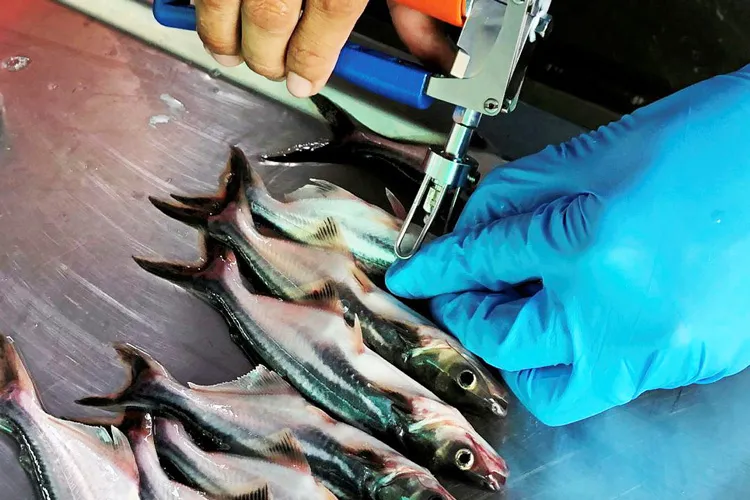
Currently, the US has produced and licensed 4 types of live attenuated vaccines, including vaccines for Enteric Septicemia of Catfish (ESC) in channel catfish (I. puncantus), Bacterial Kidney Disease (BKD) in salmon, and disease caused by F. columnaris bacteria (Adams et al., 2008; Shoemaker et al., 2009). Live vaccines can be administered by two methods: injection and immersion, but the immersion method is predominantly used (Dhar et al., 2014). In Vietnam, the live attenuated E. ictaluri vaccine is still at the research stage; Triet et al. (2019) demonstrated the efficacy of a WzzE gene-mutated E. ictaluri vaccine in pangasius fingerlings (P. hypophthalmus) with a protection coefficient of up to 90% in field trials. Additionally, Huong et al. (2021) have also developed an immersion and oral attenuated vaccine for MAS disease in pangasius (P. hypophthalmus) but this research has only been published at the laboratory trial scale.
Recombinant Technology Vaccines
Recombinant vaccines are vaccines that use only a gene segment that synthesizes a characteristic protein of the pathogenic microorganism. This gene is then inserted into bacteria or cultured cells to produce a specific pathogen protein, which is then used for vaccination to create specific immunity. Recombinant vaccines are often administered by injection, mimicking the natural infection process of the pathogen. During infection of the host, recombinant proteins are presented by cells such as macrophages and dendritic cells as pathogen antigens via MHC-II molecules to lymphocytes in lymph nodes to produce specific antibodies (Adams et al., 2008). Research has shown that recombinant DNA vaccines induce strong and long-lasting cell-mediated and humoral immunity, similar to live attenuated vaccines but without the ability to infect the host (Davis & McCluskie, 1999). DNA vaccines are considered one of the potential effective measures against pathogens in aquaculture (Kurath, 2008). Currently, Indonesia has licensed a recombinant injection vaccine against betanodavirus pathogens in giant grouper (Epinephelus lanceolatus) (Barnes et al., 2022). Recombinant DNA vaccines have also been studied and developed for the Aeromonas hydrophila bacterial pathogen (Poobalane et al., 2010).
must be followed by Period DOI CALL KHII The Illar Deil can be where to read the record and ari nuong len host and the pond environment, this is also a limitation of this type of vaccine (Marsden et al., 1998). Currently, the US has produced and licensed 4 types of live attenuated vaccines, including vaccines for Enteric Septicemia of Catfish (ESC) in channel catfish (I. puncantus), Bacterial Kidney Disease (BKD) in salmon, and disease caused by F. columnaris bacteria (Adams et al., 2008; Shoemaker et al., 2009). Live vaccines can be administered by two methods: injection and immersion, but the immersion method is predominantly used (Dhar et al., 2014). In Vietnam, the live attenuated E. ictaluri vaccine is still at the research stage; Triet et al. (2019) demonstrated the efficacy of a WzzE gene-mutated E. ictaluri vaccine in pangasius fingerlings (P. hypophthalmus) with a protection coefficient of up to 90% in field trials. Additionally, Huong et al. (2021) have also developed an immersion and oral attenuated vaccine for MAS disease in pangasius (P. hypophthalmus) but this research has only been published at the laboratory trial scale.
Source: Vietnam Aquaculture