Hima Seafood, the company building the world's largest land-based salmon farm in Norway, has chosen a treatment system that will convert all sludge generated at its recirculating aquaculture system (RAS) facility into organic fertilizer.
The system is supplied by Sterner, a Norwegian company specializing in clean water technology for various segments, including drinking water filtration, wellboat water treatment, wastewater treatment, and aquaculture technology.
In a RAS facility, a significant amount of sludge is generated, which must be separated from the water recirculating back to the fish. Karl Levinsen, project manager at Eyvi, the main contractor along with Total Betong on the project, said: “We are left with pure sludge as a byproduct from the facility, and by using the right technology, this byproduct will create new value.
“Traditionally, this type of sludge has been considered waste, but technological advancements in recent years have opened up opportunities for more sustainable management.”
He added that the fertilizer will not only be of significant value to Hima “but also promote the circular economy and protect our environment.”
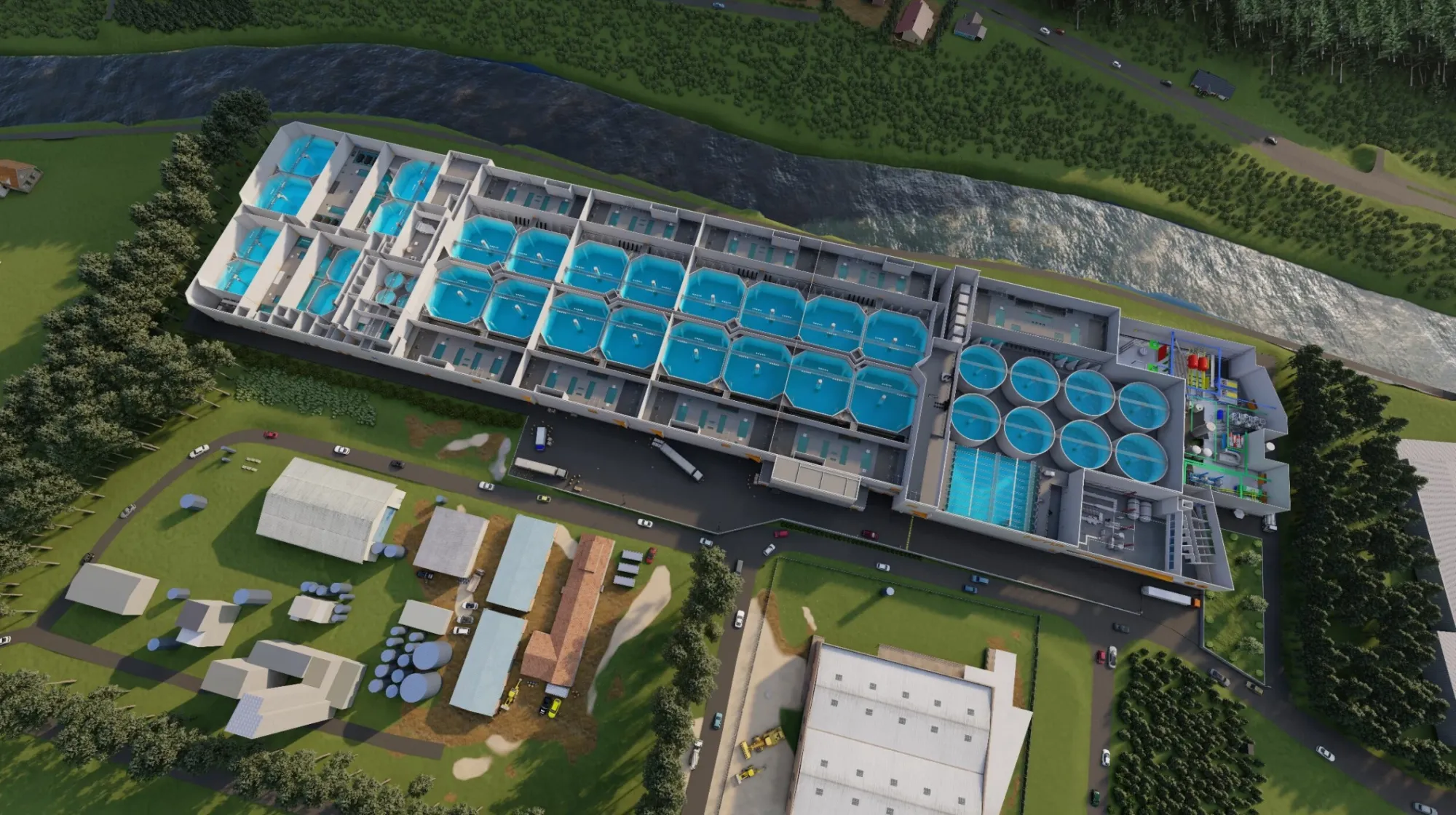
RAS salmon farm
Daniel Persen, project manager at Sterner, said: “What really sets this solution apart from others is the special drying method. We dry and sterilize the sludge in the same process to meet the requirements of fertilizer product regulations.
“It should also be mentioned that the residual heat from the sludge treatment process at Hima Seafood will be used to heat the building, making this an extremely energy-efficient facility.”
Hima Seafood's RAS facility in Rjukan, in Norway's inland Telemark region, is designed to produce 9,000 tonnes of fish annually.
Last year, another sludge treatment specialist, Blue Ocean Technology, announced that it had secured 30 million NOK to supply the Rjukan project, but today Sterner confirmed that their equipment has been chosen as a replacement.
Source: Fishfarming expert