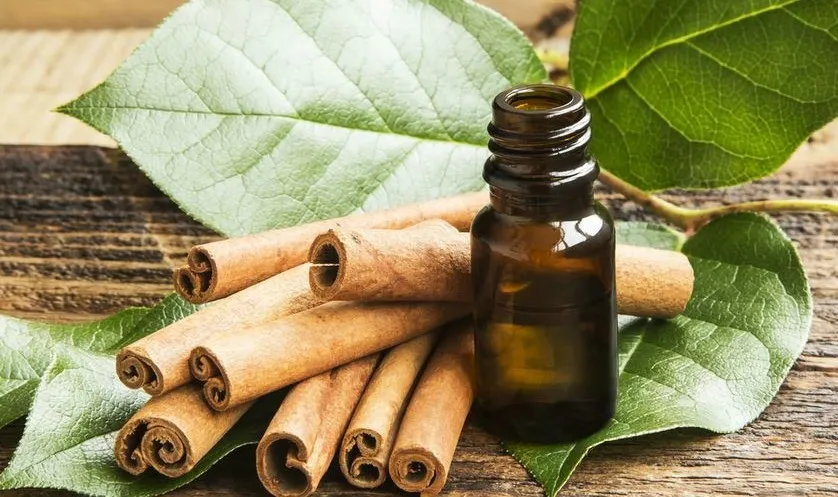
Cinnamon Essential Oil
A recent study by Tran Thi Thuy Ha et al. at the Research Institute for Aquaculture evaluated the bacterial communication ability (QS - quorum sensing) and the effects of cinnamon essential oil on them.
Aquaculture in Vietnam has been developing strongly in recent years and has become an important economic sector of the country. However, aquaculture farmers often face heavy losses due to disease outbreaks. Among the groups of pathogenic microorganisms in aquaculture, bacteria of the genus Vibrio are most widely known as the cause of many diseases and mortalities in aquatic animals.
In recent years, Acute Hepatopancreatic Necrosis Disease (AHPND), commonly known as EMS, has caused significant damage to the farming industry. The disease first appeared in Vietnam in 2010, causing serious losses in both production volume and economic value. The causative agents of AHPND have been identified as V. parahaemolyticus (Tran et al., 2013), V. harveyi (Kondo et al., 2015), and V. campbellii (Han, 2017). These three bacterial strains all contain the pirAB vp gene, a type of virulent gene causing AHPND in shrimp. This also indicates that the toxin-producing gene causing AHPND can be horizontally transferred between bacterial species (from V. parahaemolyticus to V. harveyi, V. campbellii) in shrimp ponds through the QS mechanism of the pathogenic bacteria.
Quorum Sensing (QS) is a form of bacterial communication, allowing them to communicate and exchange information to cooperate through signal-carrying substances. Bacterial cells continuously produce signal molecules, which accumulate to a certain threshold, activating changes in gene expression and leading to altered behavior of the entire bacterial community.
Quorum sensing is an important factor for bacterial virulence, especially for pathogens related to aquaculture such as Aeromonas, Vibrio, or Yersinia. Vibrio harveyi, the causative agent of luminous vibriosis in shrimp, uses quorum sensing signals to regulate its virulence depending on environmental conditions and host health.
Currently, research focuses on reducing QS efficiency, meaning using substances to inhibit or disrupt the sending and receiving of signals by pathogenic bacteria to control their growth. Therefore, the research group of Tran Thi Thuy Ha et al. evaluated QS between Vibrio parahaemolyticus and Vibrio alginolyticus, and simultaneously determined the role of cinnamon essential oil in QS between V. parahaemolyticus and V. alginolyticus.
Experimental Method
Five Eppendorf tubes (1, 2, 3, 4, and 5) were used, each containing 300 μL V. parahaemolyticus and 300 μL V. alginolyticus.
- Tube 1: The bacterial mixture was added to 100 mL NB 2% NaCl, cultured by shaking at 200 rpm at 29oC for 15 hours, then bacteria were plated on TCBS agar.
- Tubes 2, 3: The bacterial suspension was heat-shocked at 40oC for 5 minutes, 3 times, and at 70oC for 2 minutes, 3 times, respectively.
- Tubes 4, 5: The procedure was similar to tubes 3 and 4, but with the addition of 0.1 μL cinnamon essential oil before heat shock.
- Tubes 2, 3, 4, and 5 were further cultured at 29oC for 3 hours before plating on TCBS agar.
Results
V. alginolyticus acquired the AHPND-causing toxin gene from V. parahaemolyticus under culture conditions with heat shock at 40oC for 5 minutes (3 times) and 70oC for 2 minutes (3 times) through the QS (quorum sensing - bacterial communication) mechanism.
Cinnamon bark essential oil, used at a dose of 0.1 μL/600 μL, disrupted the specific QS communication system of bacteria, preventing V. alginolyticus from receiving information about the AHPND-causing toxin gene in brackish water shrimp from V. parahaemolyticus.
This demonstrates that cinnamon essential oil affected the specific QS communication system of V. alginolyticus, preventing them from receiving information about the pirABvp gene causing AHPND in brackish water shrimp from V. parahaemolyticus.
The results have practical value, suggesting a direction for further research on creating herbal products derived from cinnamon that are effective in preventing AHPND in shrimp.
Environmental conditions play an important role in influencing the process of sending and receiving information (QS) by pathogenic bacteria, and different species and strains of pathogenic bacteria are affected by different environmental conditions.
Therefore, to ensure good growth and development of farmed species, farmers should maintain appropriate environmental factors, and simultaneously use cinnamon bark essential oil at 0.1 μL/600 μL for disease prevention to minimize disease outbreaks and spread.
Source: Vietnam Journal of Agricultural Sciences