(Vietnam Aquaculture) - In Vietnam, there are currently two sources of broodstock shrimp: imported or wild-caught from domestic waters. For black tiger shrimp, wild broodstock still predominates, but for whiteleg shrimp, broodstock is primarily imported from abroad.
Given the characteristic small-scale production, many shrimp hatchery facilities currently have to opt for purchasing Nauplii larvae from specialized broodstock shrimp exploitation facilities that trade Nauplii for production. Consequently, these facilities have limited opportunities to directly contact broodstock suppliers or to research and compare the quality of broodstock among different suppliers. Nauplii produced from genetically selected broodstock will be of significantly higher quality than Nauplii from broodstock of unknown origin.
Currently, the quality of shrimp postlarvae (PLs) is a matter of concern for local authorities and farmers. The problem is that those purchasing PLs often lack information regarding their origin (e.g., which supplier's selected broodstock, wild-caught or unknown origin; self-produced or purchased Nauplii) and quality (production process, main raw materials used, disease-free test results, etc.). In reality, there have been cases where PLs met quality standards upon leaving the hatchery but deteriorated by the time they reached the consumer due to poor transportation, not to mention the practice of mixing poor-quality PLs with good ones for sale or counterfeiting reputable brands. PL buyers often choose reputable or familiar hatcheries and only switch if a problem occurred in the previous crop or if their usual hatchery does not have PLs available. During peak seasons, those who want to buy PLs cannot find them, while those who have PLs do not know whom to sell them to if their production facility is not well-known. Shrimp PLs are a special commodity that must be shipped out by a certain time; keeping them longer results in significant losses and costs, often necessitating their disposal. This is truly a huge waste on a national scale, as it takes immense dedication, time, effort, and money to create a good product. This lack of information, especially information that could help assess PL quality, has led to a situation where our country's PL market is currently a 'mix of gold and brass' (i.e., good and bad quality).
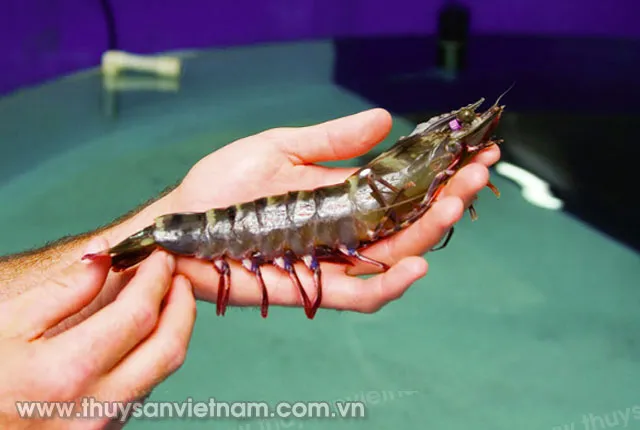
Illustrative photo
In 2010, India's main shrimp farming region produced approximately 2 billion shrimp postlarvae. The survival rate achieved in commercial farming was 80%. By 2017, as the country's shrimp farming industry rapidly developed, PL production increased to 60 billion, but the survival rate in commercial farming dropped to only 40%. In Vietnam, if production volume is compared with the total amount of PLs produced, the estimated survival rate in commercial shrimp farming is only about 24-25%. Consequently, the production efficiency of the shrimp industry is not high and struggles to compete with other countries. If no solutions are found, the national benefits from shrimp farming may not meet expectations. We are all in the same boat and need to work together for development, because if grow-out shrimp farmers suffer losses, the PL production industry cannot develop either.
Shrimp PL production in Vietnam has several weaknesses, but the biggest is the lack of information connectivity and quality feedback among production stages: broodstock, Nauplii, postlarvae, and grow-out shrimp. With over 2,000 shrimp hatcheries and hundreds of thousands of commercial shrimp farms, quality management by the Directorate of Fisheries and local specialized agencies faces many challenges. The current management system is still primarily paper-based, making quick cross-referencing and verification difficult. Anyone who creates a product wants feedback from its users, because without feedback, producers lack the opportunity to improve and enhance quality. To address these difficulties, CSIRO is currently assisting the Directorate of Fisheries in developing a smart management system (CSI) that allows for continuous updates of selected information related to broodstock origin and PL quality throughout the production process. Through CSI, buyers (of broodstock, Nauplii, or PLs) can assess quality and provide direct feedback to the management agency. CSI is expected to be piloted in 2020, providing useful support for Vietnam's shrimp farming industry.
Assoc. Prof. Dr. Hoang Tung
Commonwealth Scientific and Industrial Research Organisation (CSIRO)
Source: thuysanvietnam.com.vn