
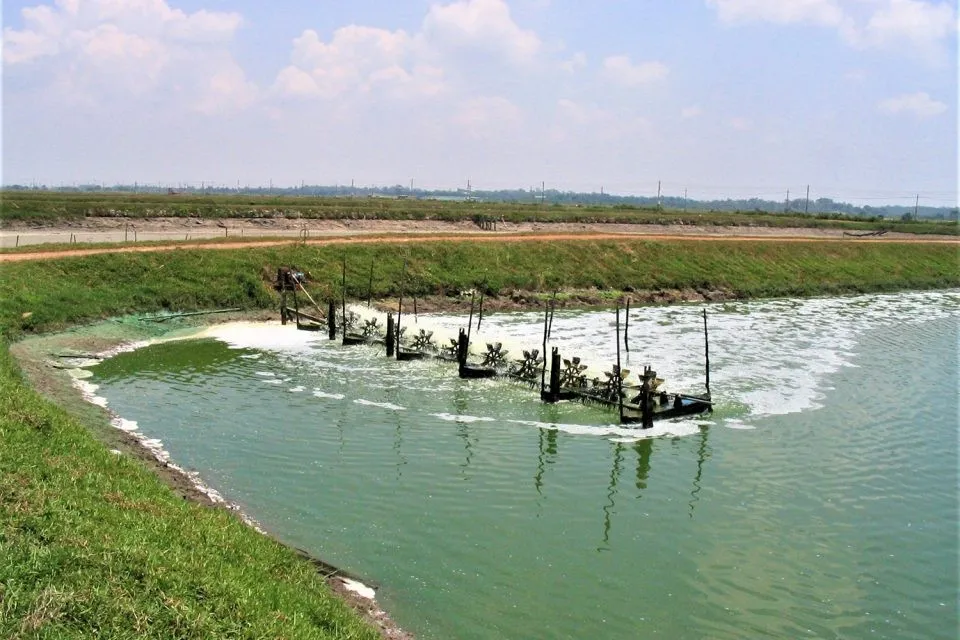
 In this Part 3, the authors discuss energy use in shrimp farming in the five major farmed shrimp exporting countries: Ecuador, India, Indonesia, Thailand, and Vietnam. The main purposes of energy use on shrimp farms are farm construction and maintenance, water pumping, and aerator operation. Photo by Darryl Jory.
Energy use is a major issue because there is a great shortage of fossil fuels, which supply most of the world's primary energy. In addition, the combustion of fossil fuels leads to the emission of carbon dioxide into the atmosphere, increasing the atmospheric greenhouse effect. Shrimp farming, like most other human activities, requires energy and generates greenhouse gas emissions.
Energy use data for whiteleg shrimp production is based on surveys of farms in the five major farmed shrimp exporting countries. The number of farms included for each country is as follows: 101 farms in Ecuador; 89 in India; 131 in Indonesia; 34 in Thailand; and 30 in Vietnam.
Main Purposes of Use
The purposes of energy use on shrimp farms are farm construction and maintenance, water pumping, and aerator operation. There are also forms of energy use related to the management of input resources, especially with feed and fuel.
All farms use feed, and all Asian farms use aerators or paddlewheel aerators. In Ecuador, 47% of farms use aerators. Water exchange is also commonly practiced on farms: 21% in India; 37% in Vietnam; 50% in Thailand; 86% in Ecuador; 94% in Indonesia. Farms in all five countries used various pond supplements including fertilizers, lime, disinfectants, oxidizing agents, molasses and sugar, zeolite, various minerals, and probiotics.
|
Type |
Construction |
Operation |
|
Diesel |
0.0387 GJ/L |
0.007 GJ/L (»0.0007 GJ / kWh) |
|
Gasoline |
0.0349 GJ/L |
0.0084 GJ/L (»0.008 GJ / kWh) |
|
Electricity |
0.0036 GJ/kWh |
0.00539 GJ/kWh |
|
Shrimp feed |
--- |
9.59 GJ/ton |
|
Agricultural lime |
--- |
1.29 GJ/ton |
|
Quicklime |
--- |
5.30 GJ/ton |
|
Molasses |
--- |
0.48 GJ/ton |
|
Sugar |
--- |
1.90 GJ/ton |
|
Urea |
--- |
29.2 GJ / ton |
|
Phosphate fertilizer |
--- |
4.3 GJ / ton |
|
Compound fertilizer |
--- |
14.2 GJ / ton |
|
Mixed minerals |
--- |
4.8 GJ / ton |
|
Zeolite |
--- |
8.4 GJ / ton |
|
Calcium hypochlorite |
--- |
0.30 GJ / kg |
|
Other disinfectants |
--- |
0.18 GJ / kg |
Table 1. Energy content of fuels, feed, and pond-applied substances in shrimp farming.
Fuel is used by pumps, aerators, tractors, vehicles, and other mechanized farm equipment. In Asia, electricity is the primary fuel used, but in Ecuador, diesel fuel use exceeded electricity use. Gasoline is a minor fuel in all countries.
Total energy use (Table 2) ranged from 56.0 GJ/ton of shrimp in Ecuador to 98.8 GJ/ton of shrimp in Thailand. The average energy use for all countries was 76.8 GJ/ton.