
Technical Article

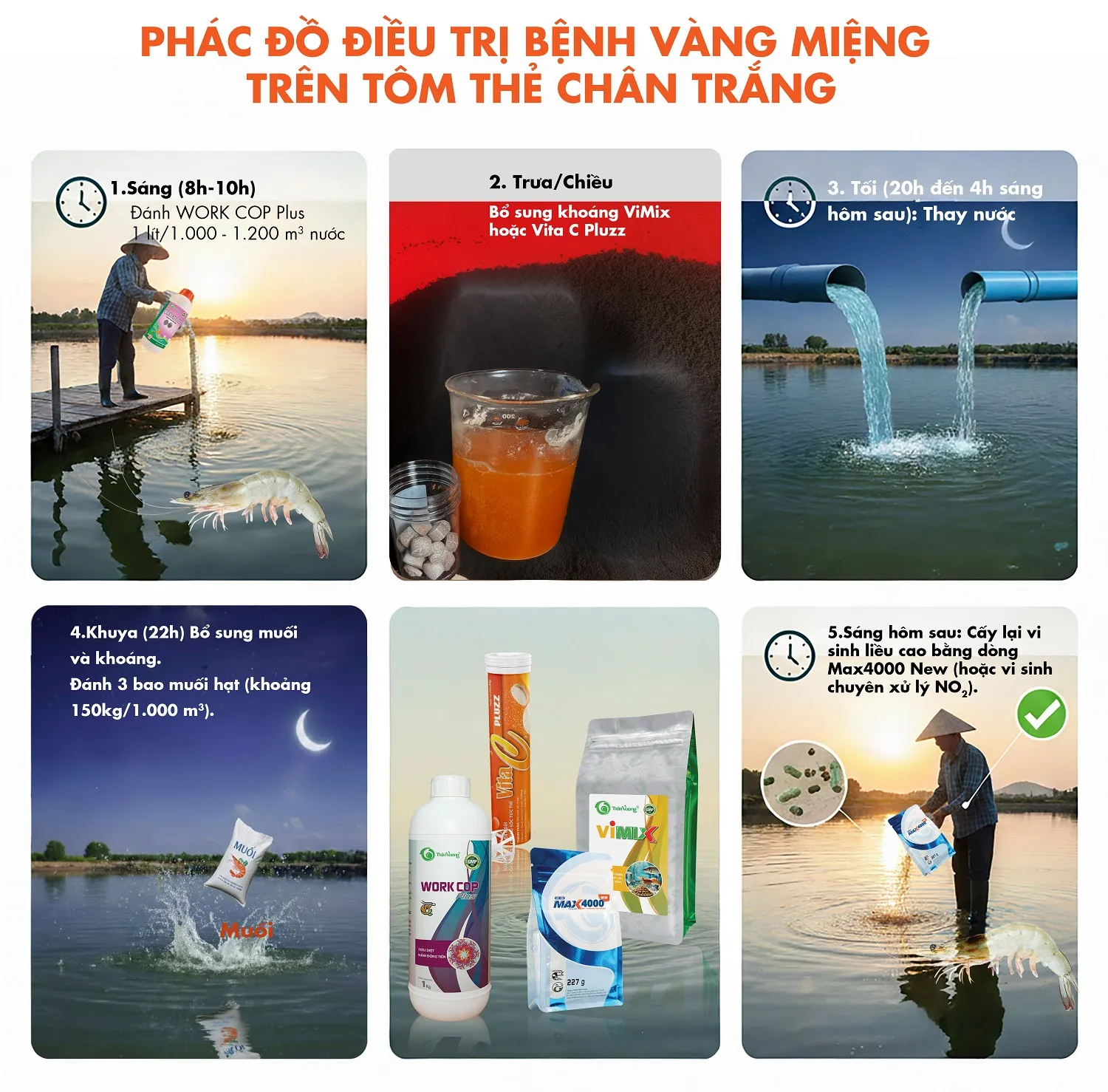
TREATMENT PROTOCOL FOR YELLOW MOUTH DISEASE IN WHITELEG SHRIMP

Yellow mouth disease (often accompanied by yellow gills) is an indication that the pond environment is at low salinity (5ppt) or experiencing a fungal bloom. Below is the optimal treatment process.

ProtocolShrimpJanuary 29, 2026👁 39 views
Click to listen to AI-narrated summary (1.2×)
AI Summary

Generate an English summary for TREATMENT PROTOCOL FOR YELLOW MOUTH DISEASE IN WHITELEG SHRIMP

AI-generated summary based on the full article content below.

Editorial Framing

Why this article matters

    Full Article
    PHAC_YY_YIYU_TRY_BYNH_VANG_MIYNG_CYp_nhYt

    I. Main Causes

    Microfungi: Fungi adhere to the shrimp's mouthparts and gills, obstructing respiration.

    Low salinity: Causes shrimp to weaken, have thin shells, and be susceptible to external parasite attacks.

    Organic pollution: Towards the end of the culture cycle, there is a large accumulation of shrimp waste and excess feed, but the microbial system cannot process it in time.

    II. Detailed Treatment Procedure

    Step 1: Inspection

    Measure toxic gas: Check NO2 concentration. If NO2 is low, proceed with treatment.

    Health check: Observe for "meat drop" (scattered dead shrimp at the bottom).

    If shrimp are healthy: Proceed with disinfection immediately.

    If shrimp are weak/dropping to the bottom: treatment is not possible.

    Step 2: Chemical and Environmental Intervention

    Morning (8 - 10 AM): Apply fungicide using Work Cop Plus.

    Dosage: 1 liter per 1,000 - 1,200 m3 of water.

    Note: Run oxygen aerators at maximum capacity to support shrimp.

    Evening (8 PM to 4 AM the next day): Gradually change water.

    Slowly drain old water and replenish with clean new water, approximately 50% of the pond's volume. This helps dilute toxins and stimulates shrimp molting.

    Late night (10 PM): Supplement with salt and minerals.

    Apply 3 bags of granular salt (approximately 150 kg/1,000 m3). Salt helps reduce the toxicity of NO2 and supports rapid shell hardening after molting.

    Combine with additional broadcast minerals to support synchronized molting.

    Step 3: Restore Microbial System

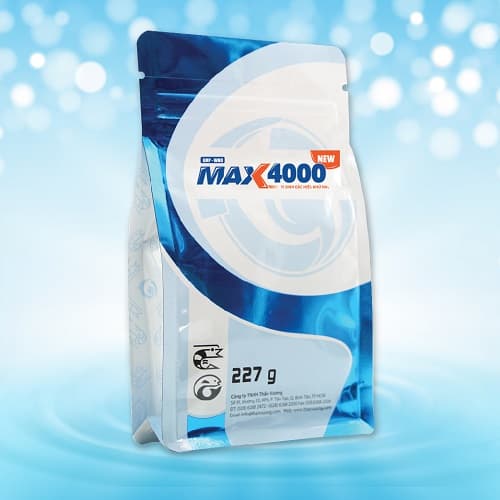
    The next morning: Re-inoculate with high-dose probiotics using Max 4000 (or specialized probiotics for environmental balance and NO2 treatment). Purpose: Decompose organic matter, clean the pond bottom, and regain control of toxic gases.

    Check: Observe if the shrimp have completely shed the yellow layer around their mouthparts. If the incidence of yellow mouthparts is still high, above 30%, repeat the procedure after 24-48 hours.
    Related Products

    Products linked to this topic

    Product reference for MAX 4000
    shrimpThần Vương Blue

    MAX 4000

    Vi sinh đặc hiệu khử NO2

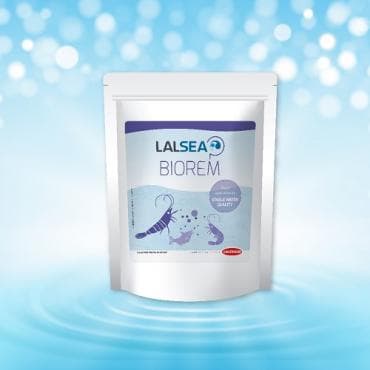
    Product reference for LALSEA BIOREM
    allNguyên liệu

    LALSEA BIOREM

    Khử NH3, xử lý hữu cơ sinh học, hiệu quả ở độ mặn cao

    More Reading

    Related technical articles

    SỰ THAY ĐỔI CỦA HỆ VI SINH ĐƯỜNG RUỘT DO SỰ NÓNG LÊN TOÀN CẦU. ĐIỀU HÒA SỨC KHỎE VẬT CHỦ VÀ TÌNH TRẠNG BỆNH Ở ĐỘNG VẬT BIẾN NHIỆT
    Research InsightShrimpFebruary 28, 2026

    CHANGES IN GUT MICROBIOTA DUE TO GLOBAL WARMING. REGULATING HOST HEALTH AND DISEASE STATUS IN POIKILOTHERMIC ANIMALS

    Tóm tắt nội dung chính: Sự nóng lên toàn cầu làm thay đổi hệ vi sinh vật đường ruột của tôm thẻ chân trắng Thái Bình Dương bằng cách[...]

    Toàn cảnh thị trường tôm thế giới 2025 — Dữ liệu từ Shrimp Insights (Tháng 2/2026)
    Technical articleShrimpApril 9, 2026

    Global Shrimp Market 2025 Overview — Shrimp Insights Bulletin February 2026

    Tổng hợp thị trường tôm thế giới 2025: Ecuador dẫn đầu xuất khẩu (1.39M tấn, +15%), EU tăng nhập khẩu mạnh nhất (+21%), Mỹ biến động[...]

    CÁ HỒI TRONG ĐIỀU KIỆN STRESS: CỦNG CỐ TUYẾN PHÒNG THỦ ĐẦU TIÊN
    Solution TrackShrimpFebruary 27, 2026

    SALMON UNDER STRESS CONDITIONS: REINFORCING THE FIRST LINE OF DEFENSE

    As the aquaculture industry increasingly develops strategies for animal health protection, functional nutrition has become a key fac[...]

    Technical Advisor

    Aquaculture Q&A

    🦐

    Help us serve you better

    Share your name + phone so we remember your pond next time — no repeating yourself.

    • 🔒 Tech team only — never shared with third parties
    • 📨 No spam, no promotional SMS
    • 💾 History saved on your device — clear anytime