Water Sac Syndrome or Big Head Syndrome in shrimp, in some cases, causes the shrimp's head size to nearly double. This deformed head phenomenon has been observed in shrimp during the second month of culture and just before harvest. The growth process is completely altered. Some shrimp develop normally with a “water sac” on their head, while others stop growing and die. The most probable cause of this syndrome is chronic toxicity from Melamine – a substance banned in shrimp feed. Melamine is added to feed to increase its protein content. Histopathological changes in Pacific whiteleg shrimp (Litopenaeus vannamei) were tested by inducing infection with Melamine along with Acid cyanuric in pelleted feed.
This study aimed to determine the effects of Melamine and Acid cyanuric on the clinical signs and histopathological changes in Litopenaeus vannamei shrimp. 60 whiteleg shrimp weighing 2 g were fed 4 times/day with pelleted feed containing 100-120 mg Melamine and 80-100 mg Acid cyanuric/kg feed and cultured in seawater at 25 ppt salinity for 70 days. Water temperature was maintained stably at 28 ± 1°C. Some shrimp showed signs of hepatopancreatic disease after 30 days and became clearly visible by day 70. Some shrimp developed a medium to large “water sac” on their head, some had white spots or patches on the hepatopancreas. The white spots indicated the presence of crystalline precipitates when observed under a light microscope.
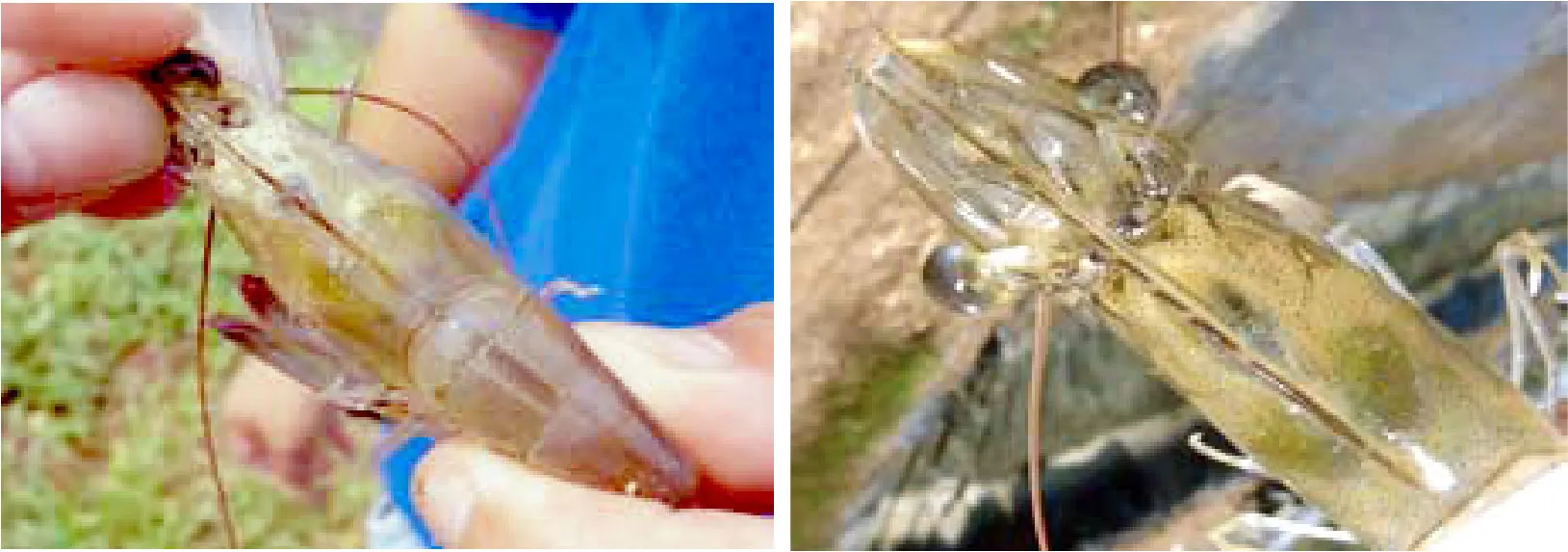
Histopathological changes were observed in both groups of shrimp with swollen cephalothorax and white spots. Irregularly shaped crystals were retained in the antennal glands, and diffuse necrotic cells associated with crystals were found in the coelomosac complex. Spheroids formed from the lymphoid organ were also found, as well as crystalline precipitates in the hepatopancreas and hematopoietic tissue. These results indicate that shrimp feed containing Melamine and Acid cyanuric can produce insoluble crystals in the antennal glands, obstructing and weakening the excretory system, leading to the swollen cephalothorax phenomenon (Big Head Syndrome in shrimp).
Source: Aquaculture times
Translated by: Trần Thị Thúy Quyên