Technical Article

HOW DOES SALINITY AFFECT EHP INFECTION RATE IN WHITELEG SHRIMP?

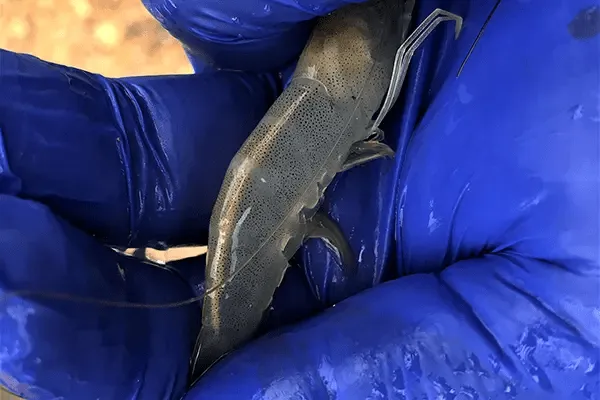
EHP causes lesions in the hepatopancreatic tubule epithelial cells (HP), and its main clinical signs are slow growth leading to increased size variation. White fecal strings floating on the pond water surface and the presence of shrimp with white coloration in the gastrointestinal tract (GI tract) in these ponds are also associated with EHP. In the advanced stage of the disease, EHP-infected shrimp often exhibit soft shells, lethargy, reduced feed intake, an empty midgut, and chronic mortality.

ProtocolShrimpDecember 3, 2024👁 40 views
Click to listen to AI-narrated summary (1.2×)
AI Summary

Generate an English summary for HOW DOES SALINITY AFFECT EHP INFECTION RATE IN WHITELEG SHRIMP?

AI-generated summary based on the full article content below.

Editorial Framing

Why this article matters

    Full Article

    Results show that shrimp feces can be a route of infection
    ARANGUREN-Photo-1_600-min

    This study evaluated the effect of different salinities on infection by the intracellular microsporidian Enterocytozoon hepatopenaei (EHP) in Pacific white shrimp under experimental conditions. Results showed that shrimp feces can be a route of EHP infection occurring at salinities as low as 2 ppt, but the prevalence and severity of EHP infection were higher at 30 ppt salinity

    Hepatopancreatic Microsporidiosis (HPM), caused by the intracellular microsporidian Enterocytozoon hepatopenaei (EHP), has been reported in several penaeid shrimp species, including black tiger shrimp and Pacific white shrimp. EHP has been reported in various regions, including Asian countries such as China, Indonesia, Malaysia, Vietnam, Thailand, and India. Recently, EHP has also been reported in Venezuela, located in the western hemisphere.

    EHP causes lesions in the hepatopancreatic tubule epithelial cells (HP), and its main clinical signs are growth retardation leading to increased size variation. White fecal strings floating on the pond water surface and the presence of shrimp with white coloration in the gastrointestinal tract (GI tract) in these ponds are also associated with EHP. In advanced stages of the disease, EHP-infected shrimp often exhibit soft shells, lethargy, reduced feed intake, empty midguts, and chronic mortality.

    In countries where EHP has been reported, such as India, China, Vietnam, and Venezuela, shrimp farming is conducted under various environmental conditions, including coastal marine, estuarine, and
    Related Products

    Products linked to this topic

    Product reference for MAX 4000
    shrimpThần Vương Blue

    MAX 4000

    Vi sinh đặc hiệu khử NO2

    Product reference for AQUAMOS
    shrimpThần Vương Blue

    AQUAMOS

    Tăng sức đề kháng và tối ưu tốc độ tăng trưởng

    Product reference for HERB GUARD
    shrimpThần Vương Blue

    HERB GUARD

    Tăng cường chức năng gan, cải thiện màu sắc khối gan tụy

    Product reference for FLASH
    shrimpThần Vương Blue

    FLASH

    Giảm bùng phát EHP, tôm phục hồi nhanh, bệnh phân trắng được kiểm soát

    More Reading

    Related technical articles

    SỰ THAY ĐỔI CỦA HỆ VI SINH ĐƯỜNG RUỘT DO SỰ NÓNG LÊN TOÀN CẦU. ĐIỀU HÒA SỨC KHỎE VẬT CHỦ VÀ TÌNH TRẠNG BỆNH Ở ĐỘNG VẬT BIẾN NHIỆT
    Research InsightShrimpFebruary 28, 2026

    CHANGES IN GUT MICROBIOTA DUE TO GLOBAL WARMING. REGULATING HOST HEALTH AND DISEASE STATUS IN POIKILOTHERMIC ANIMALS

    Tóm tắt nội dung chính: Sự nóng lên toàn cầu làm thay đổi hệ vi sinh vật đường ruột của tôm thẻ chân trắng Thái Bình Dương bằng cách[...]

    Toàn cảnh thị trường tôm thế giới 2025 — Dữ liệu từ Shrimp Insights (Tháng 2/2026)
    Technical articleShrimpApril 9, 2026

    Global Shrimp Market 2025 Overview — Shrimp Insights Bulletin February 2026

    Tổng hợp thị trường tôm thế giới 2025: Ecuador dẫn đầu xuất khẩu (1.39M tấn, +15%), EU tăng nhập khẩu mạnh nhất (+21%), Mỹ biến động[...]

    CÁ HỒI TRONG ĐIỀU KIỆN STRESS: CỦNG CỐ TUYẾN PHÒNG THỦ ĐẦU TIÊN
    Solution TrackShrimpFebruary 27, 2026

    SALMON UNDER STRESS CONDITIONS: REINFORCING THE FIRST LINE OF DEFENSE

    As the aquaculture industry increasingly develops strategies for animal health protection, functional nutrition has become a key fac[...]

    Technical Advisor

    Aquaculture Q&A

    🦐

    Help us serve you better

    Share your name + phone so we remember your pond next time — no repeating yourself.

    • 🔒 Tech team only — never shared with third parties
    • 📨 No spam, no promotional SMS
    • 💾 History saved on your device — clear anytime