Nucleotide enhances immunity, thereby increasing resistance to Ammonia
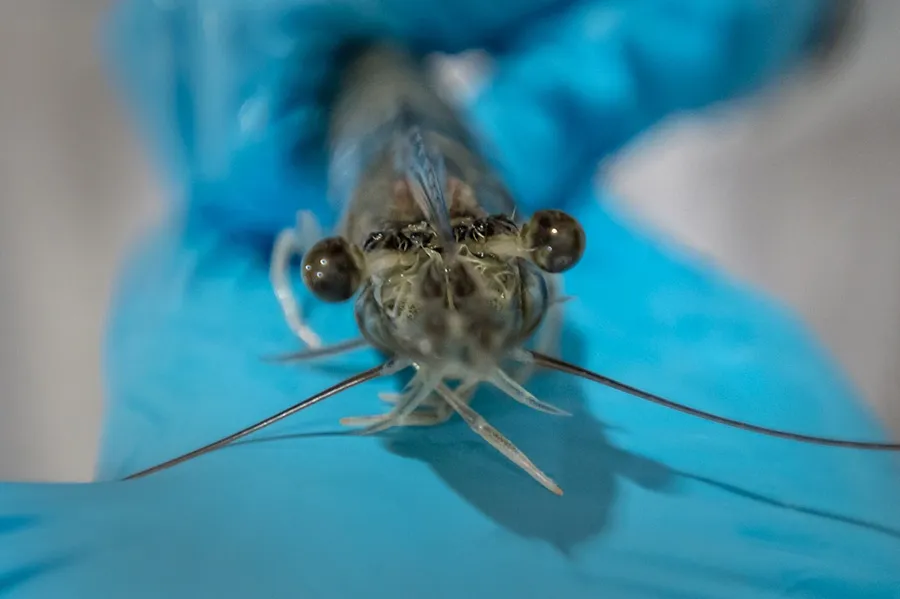
Supplementing Nucleotide (Guanosine MonoPhosphate) into feed helps whiteleg shrimp grow well, increases survival rate, improves feed utilization efficiency, stimulates immunity, and thereby enhances stress resistance to Ammonia.
Nucleotides are chemical compounds consisting of three main parts: a heterocyclic group, a sugar group, and one or more phosphate groups. Nucleotides play a crucial role in metabolic processes such as DNA and RNA synthesis, biosynthesis activation, energy metabolism, and signal transduction. Therefore, Nucleotides offer benefits such as enhancing immunity, reducing stress, and combating pathogens.
Currently, due to the increasing scarcity and high prices of fishmeal, many studies are being conducted to use soybean meal as a substitute for fishmeal in aquaculture, as it ensures amino acid balance, is readily available, and low-cost. However, diets with high levels of soybean meal replacement have shown lower growth performance and feed utilization efficiency, affecting immune processes and altering the gut microbial community. Therefore, to minimize the fishmeal content in the diet, supplementing Nucleotides into the diet is necessary.
Studies have shown that whiteleg shrimp fed diets with 2,000 or 5,000 mg/kg Nucleotides had higher harvest weights compared to the basal diet (36.5% fishmeal) without Nucleotide supplementation. Furthermore, the results indicated that 5,000 mg/kg Nucleotide in the diet led to significantly higher harvest weights compared to the 2,000 mg/kg level. However, there was no significant difference with the fed diet (46% fishmeal) with classified Nucleotide levels (2,000, 4,000, and 6,000 mg/kg). Both of the above studies used high fishmeal content, so the current study will investigate the effects of Nucleotide on growth performance, immune response, disease resistance, and gut morphology of whiteleg shrimp fed a low-fishmeal diet.
This experiment was conducted to evaluate the effects of Nucleotide on the growth of whiteleg shrimp and their immune and metabolic responses when exposed to Ammonia stress.
The experimental diets were as follows: a low-fishmeal diet and four experimental low-fishmeal diets supplemented with different types of Nucleotides as follows:
- 0.1% Guanosine MonoPhosphate (GMP)
- 0.1% Inosine MonoPhosphate (IMP)
- 0.1% mixture of GMP and IMP
- 0.1% mixture of GMP, IMP, Uridine MonoPhosphate (UMP), and Cytidine MonoPhosphate (CMP).
Shrimp samples (initial body weight: 0.99 ± 0.01 g) were randomly divided into 5 groups and fed 4 times/day for 8 weeks. The shrimp were then challenged with 70 mg/L Ammonia (LC50) for 10 days, and immune parameters and survival rates were examined.
Results showed that the highest growth performance was recorded in the diet supplemented with Guanosine MonoPhosphate (p < 0.05). In the Ammonia challenge test, the highest survival rate was also observed in shrimp fed the Guanosine MonoPhosphate-supplemented diet compared to other treatments.
Plasma concentrations of Protein, Glucose, and Cholesterol increased in all Nucleotide-supplemented treatments, while triglyceride levels decreased after the Ammonia challenge. Cortisol levels recovered by day 10 post-challenge. Shrimp fed Nucleotide diets showed higher Protein and Glucose levels compared to the control group.
In summary, Nucleotide (especially Guanosine MonoPhosphate), when supplemented into the diet, promotes rapid growth, improves stress resistance, and enhances immunity in whiteleg shrimp under Ammonia exposure. Supplementing 0.1% Guanosine MonoPhosphate yielded the highest growth performance and survival rate.
Source: https://tepbac.com/