1. Overview of White Spot Disease
- White spot disease is also known as red body, pink body. The disease is caused by whispovirus belonging to the genus Nimaviridae.
- The disease was first detected in 1992 in Taiwan, then spread to other regions such as Southeast Asia, India, South America, etc. The disease usually breaks out during the cold season, which is from November to February of the following year.
- White spot has a high mortality rate, which can be up to 90-100% after 3-5 days. The spread rate is also very fast. The disease is transmitted both vertically (from broodstock to postlarvae) and horizontally (from intermediate hosts, from sick shrimp to healthy shrimp due to cannibalism).
- Intermediate hosts in farming areas include: various species of crabs, fiddler crabs, and other crustaceans which are extremely dangerous vectors; birds such as egrets, herons, and cormorants feeding from mudflats or eating diseased shrimp from other ponds cause the disease to spread.
- On the other hand, pathogens can also be latent in the pond beforehand without causing disease. When encountering unfavorable farming conditions for shrimp (stress, environmental degradation, fluctuating water quality, low temperature) but favorable for the spread of viral pathogens, it greatly affects shrimp health and immune suppression, leading to disease outbreaks.
2. Disease Symptoms
- Shrimp reduce feed intake, swim sluggishly near the pond edge, shrimp color turns pale pink, muscles become opaque, and in more severe cases, the cephalothorax shell becomes loose due to hepatopancreas damage. White spots appear on the shell, with small black dots in the center of these spots. White spots usually appear on the cephalothorax and the last tail segment. Sometimes, shrimp with severe pink body, atrophied hepatopancreas, and empty gut due to strong virulence spread will die before white spots appear, and the rate of sluggishly swimming, dying shrimp near the edge increases. The peak of heavily spotted ponds is characterized by water discoloration, complete cessation of feeding, and significant accumulation of debris in feed trays.
- It should also be noted that before the appearance of spots, shrimp feed abnormally vigorously for 2-3 days (even if the weather is not hot). In earthen ponds, bird tracks are visible on the pond banks near the water surface in the morning. Farming areas with many birds (due to their habit of foraging during flood season, which easily spreads disease over a wide area). We often think that white spot usually occurs mainly in the first and second months, which is very accurate, but shrimp can still get white spot at all other farming stages, albeit with less frequency. Therefore, white spot prevention requires caution at all farming stages.
3. Distinguishing White Spots Caused by Viruses, Bacteria, and Environment
- White spots caused by viruses: small, uniform in size, appearing on the cephalothorax shell and the 5th, 6th tail segments, or the entire body. There is a small black dot in the center of the spot. Shrimp suffer damage to mesodermal and ectodermal tissues, causing their color to turn pink.
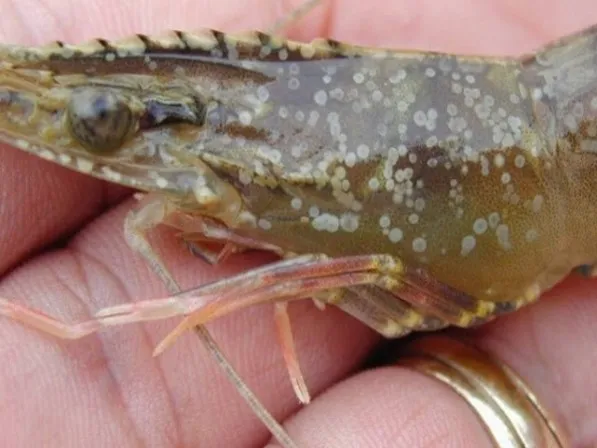
- White spots caused by bacteria: the spots are also on the inner surface of the shell but vary in size. These spots are the result of shell erosion; there is no black dot in the center of the spot, but rather a hollow cavity. Shrimp die during molting, usually sinking to the bottom of the pond instead of floating on the surface. Bacterial white spots usually do not cause significant damage, and the infection rate is not high. By simply disinfecting, cleaning the environment, and removing infected individuals, farming can continue normally. Caution and clear judgment are needed in this case to make the right decision.
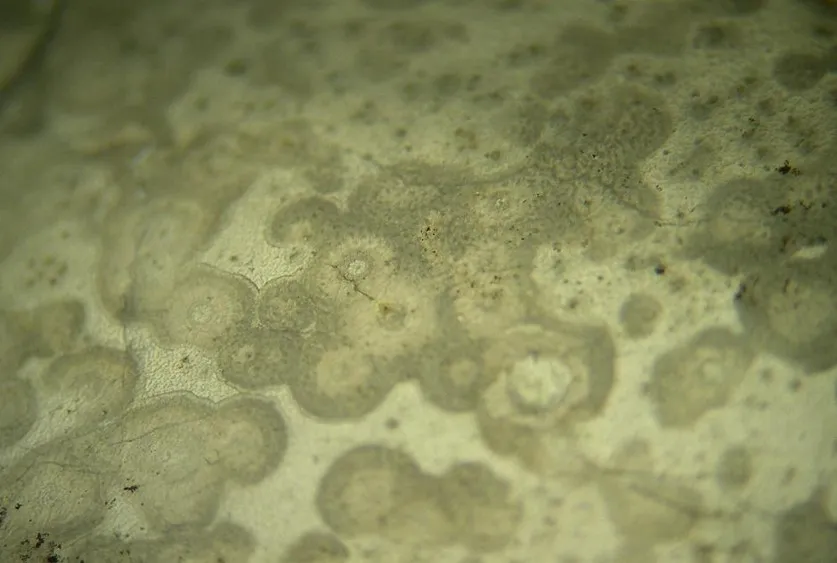
- Environmental white spots (calcium spots): adhere to the outer surface of the shrimp, spots are large in size, making the shrimp shell not smooth. Environmental white spots are mainly caused by high water hardness in the pond (excess Ca++ and Mg++), leading to deposition on the shrimp shell, forming white spots. Calcium spots will have little impact on shrimp health if water is partially changed and water is softened with PreMix EDTA in a timely manner..
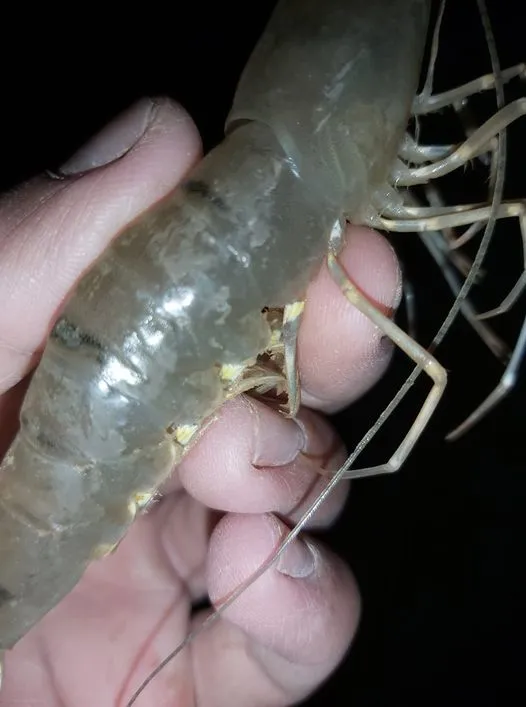
- Another issue to note is that when algae collapse in the pond, toxic gases (especially NH3) cause stress shock in shrimp (shrimp attempt to molt but cannot), leading to a very high incidence of spots on the body. In this case, a comprehensive approach is needed: water exchange, toxic gas absorption, provision of oxygen tablets, and environmental remediation to restore normal shrimp health.
4. Prevention Measures
Not only for white spot disease, but also for other diseases, prevention should be carried out through comprehensive solutions. It is always “Prevention is better than cure”.
- Thoroughly clean the pond before stocking, carefully fill holes and crevices on the pond banks to prevent crabs from finding shelter. Thoroughly eliminating intermediate hosts in earthen ponds is very important.
- Establish a "defense" system against disease-transmitting intermediate hosts: fence the pond banks with nets to prevent crabs, and cover the pond with nets to prevent birds from accessing the farming pond.
- Thoroughly treat inlet water: use Chlorine > 30ppm to ensure clean, pathogen-free water.
- In lined ponds with various farming systems, in addition to cleaning the liner surface, all factors in the water supply system need to be reviewed to develop appropriate water treatment solutions for subsequent farming cycles.
- Select reputable, disease-free seed sources, as the quality of postlarvae greatly determines the success or failure of the farming cycle.
- Manage the pond through: sanitation, siphoning, feed management, and water color to prevent environmental deterioration that can be detrimental to shrimp.
- For ponds already infected with white spot, thorough isolation from surrounding ponds is necessary. Spread lime around the banks to prevent cross-contamination, and properly dispose of shrimp to prevent pathogens from escaping into the environment. Soak the pond for 5-7 days with Chlorine >50ppm, drain the water, allow time for pond drying, and then proceed with pond preparation for a new cycle.
- Enhance health and boost resistance for farmed shrimp, especially during the cold season, with the product AQUAMOS.
The above are comprehensive solutions that need to be implemented synchronously to minimize risks.
For more details, readers can watch the presentation in the video: https://www.youtube.com/watch?v=sMBgId-ZM1E&t=2s
Hoàng Tấn Phát