
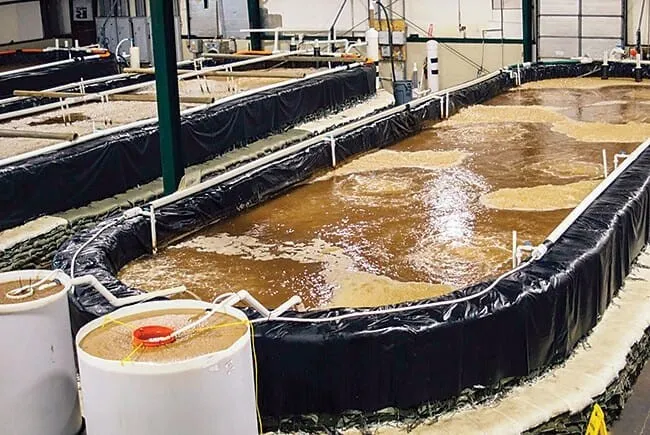
New research from Suez University has concluded that using wheat flour as a carbohydrate source in biofloc systems for whiteleg shrimp culture is associated with improved production parameters such as FCR (feed conversion ratio), survival rate, microbial composition, muscle composition, and growth performance.
Biofloc Systems
In biofloc systems, the addition of carbohydrates allows heterotrophic bacteria to proliferate and balance nitrogen concentrations in the water, helping farmers maintain good water quality parameters without the need for water exchange and balancing the bacterial population in the system. This addition can also lead to better shrimp quality at harvest.
Various carbon sources have been used to promote microbial growth in biofloc, including molasses, glycerol, and glucose. The use of organic carbon sources promotes the development of beneficial heterotrophic bacterial communities.
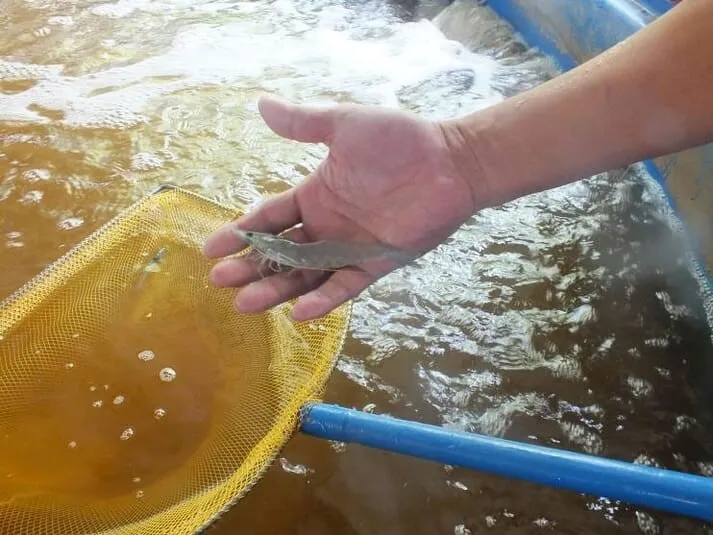
Although the system can offer production and environmental benefits, maintaining microbial quality in the system requires continuous management. This is also a challenge and a reason why operators need to possess high technical expertise.
Experimental research at Suez University aimed to determine which carbon source would perform better in a shrimp biofloc system – testing molasses and wheat flour during the production process. Their experiment compared the effect of the substrate on water quality, growth performance, feed utilization efficiency, floc composition, shrimp muscle composition, and the surrounding microbial community.
Results
Water quality analysis showed that using wheat flour resulted in higher dissolved oxygen concentrations. There was no significant difference in ammonia, nitrite, and pH concentrations between molasses and wheat flour, but an increase in turbidity (64.27 NTU) and floc volume (18.40 mL/L) was recorded when treated with molasses.
Growth performance in the wheat flour treatment, including harvest weight, average daily weight gain, and weekly weight gain, was significantly higher compared to the molasses treatment. The researchers reported that, “wheat flour treatment was associated with a higher survival rate (99%), higher biomass (71.16 kg), and a higher percentage increase in biomass (395,337). The feed conversion ratio was also lower (1.37), and the chemical composition of the biofloc and the meat quality of the shrimp were also more nutritious when treated with wheat flour.”
Regarding bacterial parameters in the culture water, the researchers noted that the total heterotrophic bacterial count was similar between the wheat flour and molasses treatments – finding no significant difference between the groups.
Therefore, this study concluded that wheat flour is an ideal carbohydrate source for use in shrimp biofloc systems and can be used as a substitute for molasses.
Tan Phat – summarized and translated from the report by Mohamed M. Said and Omaima M. Ahmed