Feeders for Fish Farms
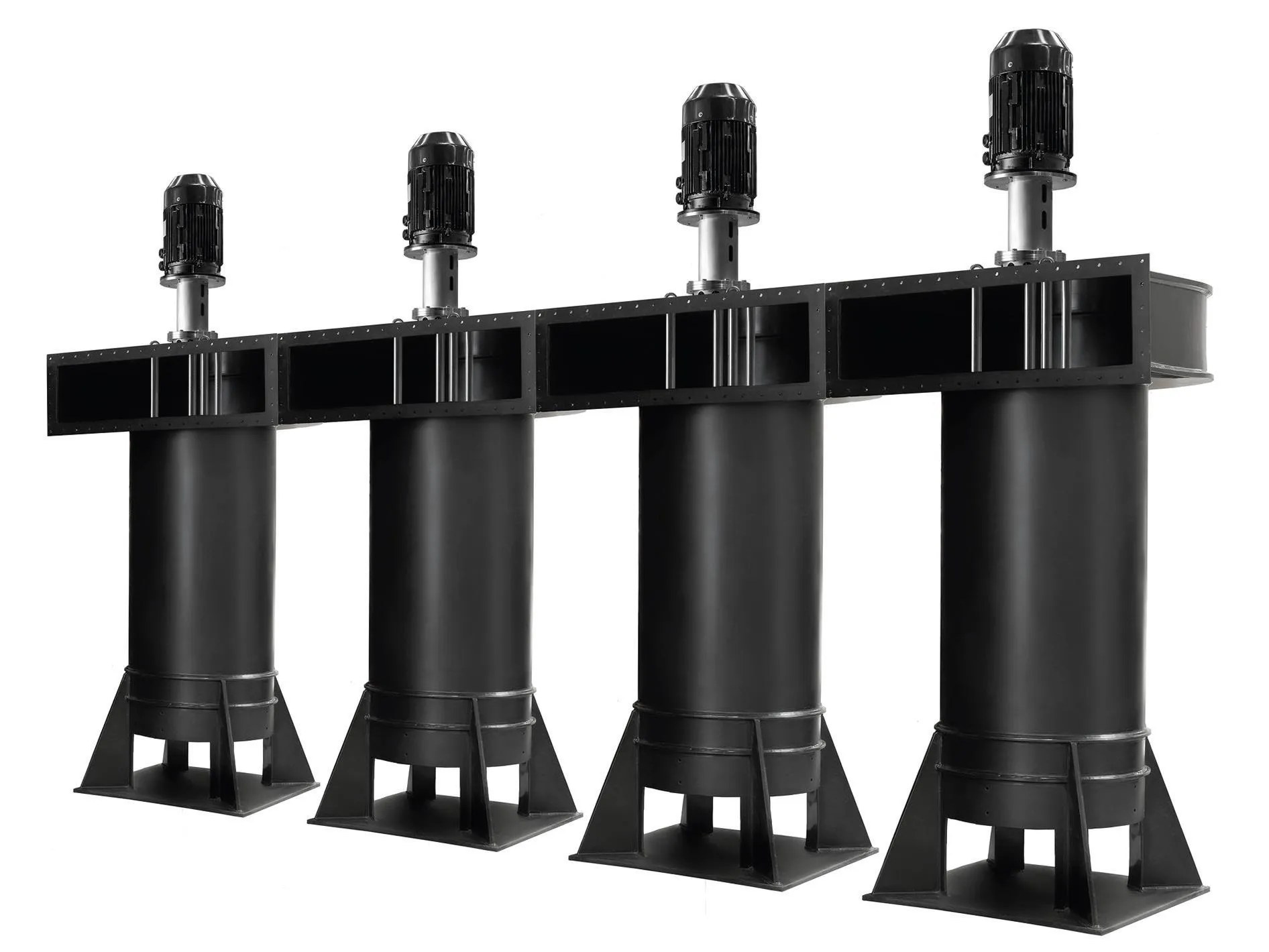
Propeller pumps are well-known and widely used in aquaculture farms in cases requiring high flow rates and low heads. However, they require excellent craftsmanship to avoid energy losses, noise, and premature wear. Furthermore, while good tools are available for freshwater applications, their resistance under seawater constraints proves to be poor. FishFarmFeeder (FFF) has developed a propeller pump with a new approach, aiming for use in most modern aquaculture facilities.
For easy maintenance and handling, and to enhance the efficiency of existing propeller pumps, the pump's leg, made of HDPE plastic, is used to guide the pumped water to the desired water level. The shaft line and propeller can be separated from the support as a single unit.
The HDPE support is easy to install, providing optimal hydraulic conditions including low submergence and being virtually indestructible. Its shaft line and frame are made of stainless steel. The separation between the water pipe and the shaft line makes the latter much lighter than traditional propeller pumps. Consequently, handling and maintenance are much easier.
Applications
This technology has been applied in three different aquaculture facilities under severe constraints.
- On-land Shellfish Nursery
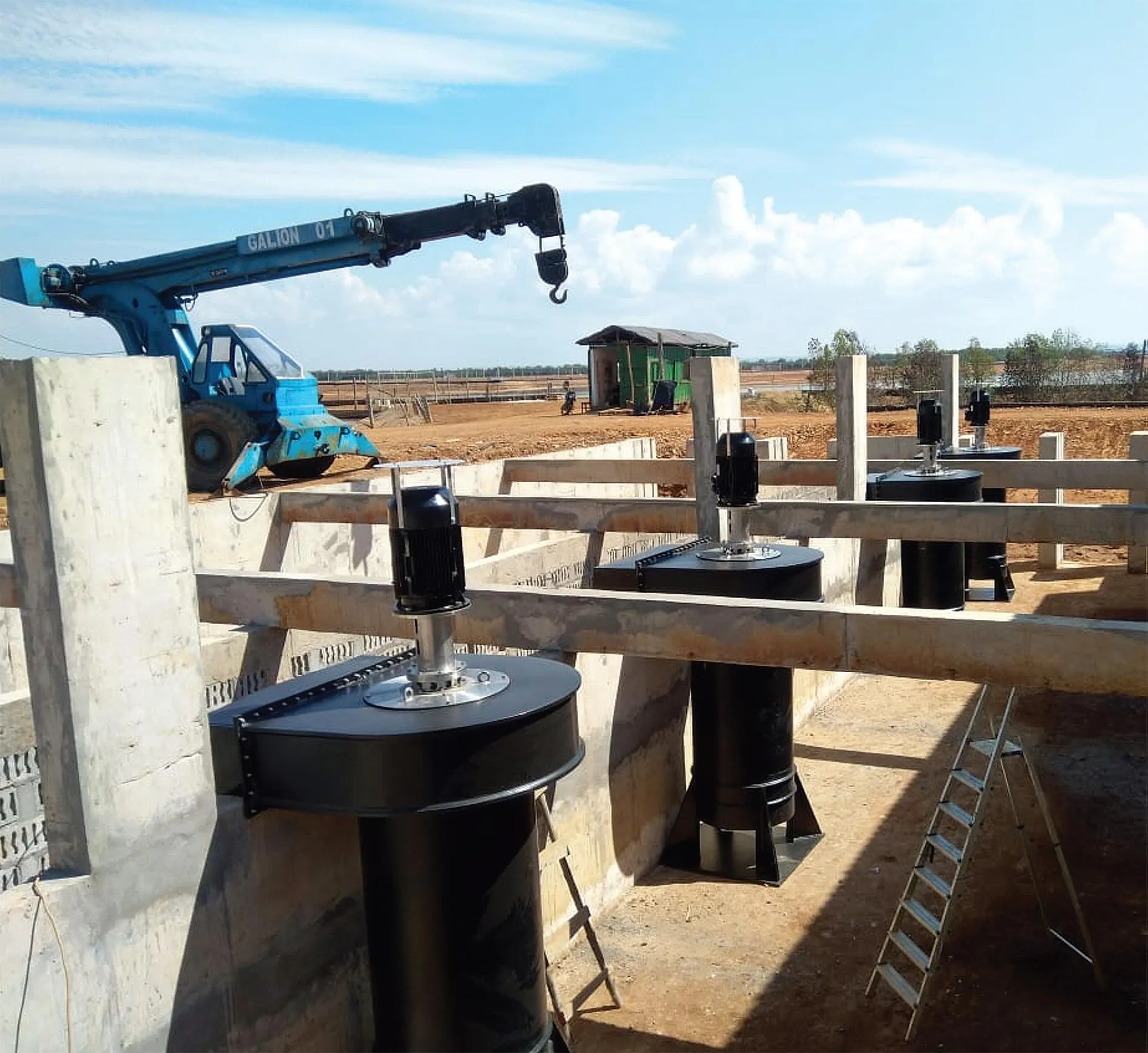
Propeller pumps are applied in a semi-closed oyster nursery system for several weeks to increase the size and resistance of oysters before their transfer to the sea. The head is 1.1m, and a standard-sized equipment group consists of three pumps, each developing 210 L/sec (750 m³/hour). The recirculating flow, which also carries plankton, is key to success in maintaining a 24/7 flow.
- Salmon and Trout RAS Farms
The pumps have been successfully applied in salmon farms operating in "water reuse" mode and on-land trout RAS. Heads ranging from 1 to 1.3m are typical, and flow rates are provided at 200 - 225 L/sec per pumping unit, respectively.
- Shrimp Farms
When shrimp farmers want to switch to intensive farming, water usage conditions require improving inlet water quality through fine filtration and ozone disinfection. To operate the water treatment unit with continuous and 24/7 flow, this technology has been implemented with a low head (approximately 1.05m) and a stable high flow rate (250 L/sec/unit).
Shrimp farmers have been using this initial model from the supplier for over ten years. The manufacturer is responsible for the installation and fabrication of mechanical parts, including the composite propeller. Traditional regular lubrication of bearings has disappeared thanks to better technology. The motor is adapted to the circumstances, but still presents some operational challenges, with the continuous aim of achieving optimal efficiency and profitability. Maintenance has been successfully organized at the customer's facility, with the final version not requiring transport back to the factory.
The main advantages of the propeller pumps supplied by FFF are low noise, low maintenance, and light weight; resilience under harsh conditions; the shaft line is separated from the water pipe; competitive operating costs over time; and standard units operate within a head range of 0.6-1.5m and 100 to 250 L/sec.
FFF maintains its focus on providing customized feeding systems but will widely support this new technical proposal, which clearly aligns with its usual innovative and quality portfolio.

Didier Leclercq
Aquaculture Expert and Fish FarmFeeder Partner
E: didier.leclercq@fishfarmfeeder.com